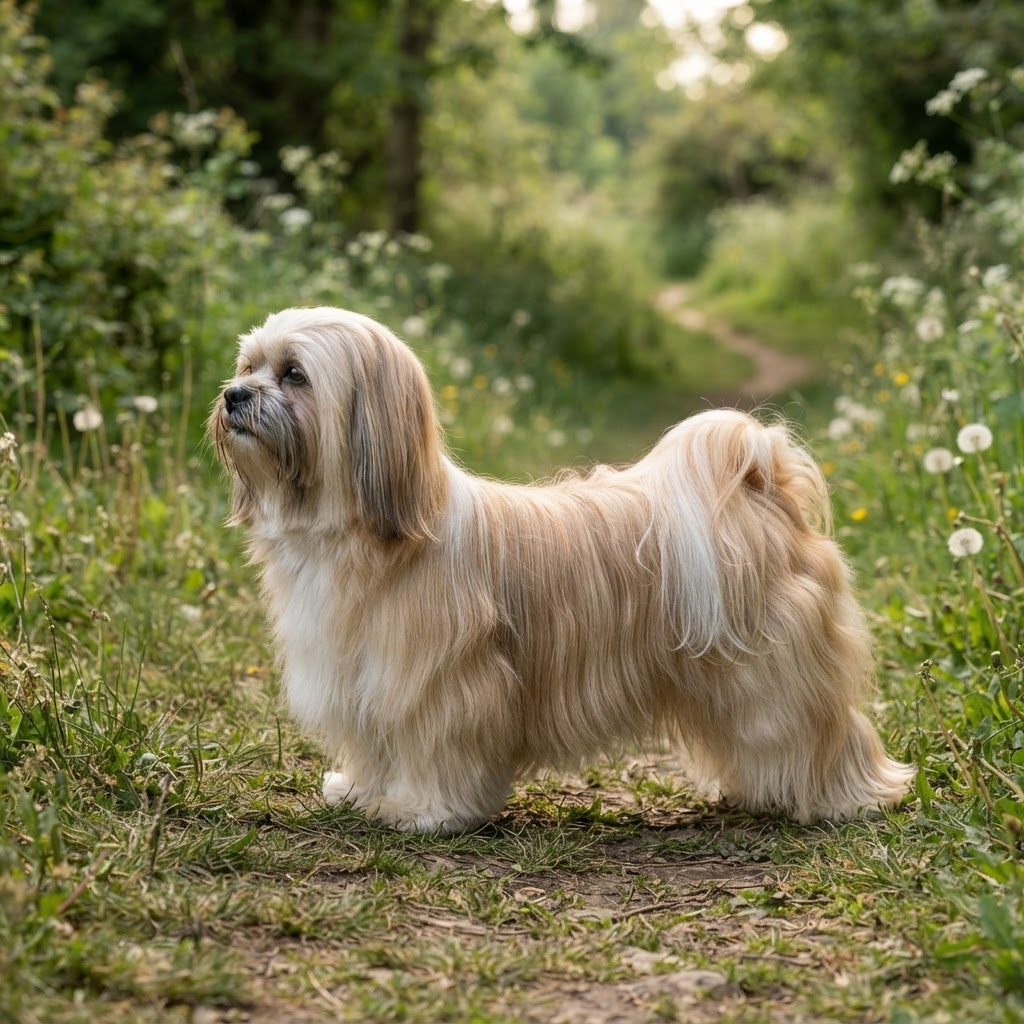
Lhasa Apso
Male: 6-8 kg, Female: 5-7 kg
Ideally 25.4 cm at the shoulder for males; females slightly smaller.
12-15 years
Tibet
About the Lhasa Apso
The Lhasa Apso is a small but hardy breed originating from the Himalayan mountains of Tibet. Known as the 'Bark Lion Sentinel Dog' (Abso Seng Kye), they served as indoor guards for monasteries, alerting monks to any intruders. Their distinctive long, floor-length coat evolved as protection against the extreme cold of their native high-altitude climate. Despite their small stature, they possess a grand, lion-like personality and a dignified, independent spirit. In a domestic setting, the Lhasa Apso is a devoted companion that retains its watchdog instincts. They are known for being discerning with strangers, often taking time to assess a person before offering affection. Their intelligence and independence mean they require consistent, positive reinforcement training. For Australian families, they offer a sturdy, long-lived companion suitable for various living arrangements, provided their significant grooming needs are met.
Breed Standard
Key characteristics from the breed standard
In the show ring, the Lhasa Apso presents a silhouette of profound balance and historical dignity. The breed standard demands a heavy, straight coat that cascades like a waterfall, yet never impedes a free, jaunty movement. Their head carriage is regal, featuring a well-feathered tail carried over the back in a 'screw' fashion. What sets the Lhasa Apso apart is their 'Monastic Presence'—a unique combination of steadfast calm and sharp-eyed alertness that reflects their centuries as sacred temple guardians.
In Australia
The Lhasa Apso breed was established in Australia through imports from the United Kingdom, as recorded by Dogs Victoria.
Bred For
Interior sentinel and companion in Tibetan monasteries and palaces
Temperament
Confident, assertive, aloof with strangers, and deeply loyal to their family.
Health Conditions Reported in the Breed
Hereditary Renal Dysplasia (RD), (), , , and Keratoconjunctivitis Sicca (Dry Eye).
Exercise Needs
Moderate daily exercise consisting of a 30-minute walk and indoor play sessions.
Grooming Needs
Extremely high; requires daily brushing to prevent matting or regular professional clipping every 6-8 weeks.
Living Suitability
Excellent for apartment living or small yards; they are active indoors and do not require large outdoor spaces.
Good with Kids
Better suited to families with older, respectful children due to their independent nature and small size.
Good with Other Pets
Generally good with other household pets if socialised early, though they can be assertive with other dogs.
Trainability
Highly intelligent but independent; they require patience and variety to keep them engaged in training.
Coat & Colours
Double coat; long, heavy, straight, and hard topcoat with a moderate undercoat.. Golden, sandy, honey, dark grizzle, slate, smoke, parti-color, black, white, or brown.
Exercise needs vary by age, fitness, health, weather and individual temperament. Consult your veterinarian for an exercise plan appropriate for your dog.
Things to Consider
Every breed has its quirks — here's what to know
Prospective owners should be aware that Lhasa Apsos are more likely to experience certain health and lifestyle quirks. Hereditary Renal Dysplasia is a breed-specific kidney condition; while not every dog is affected, it is a known predisposition that warrants veterinary screening. Their beautiful long coats are prone to severe matting if not brushed daily, which can lead to skin infections and discomfort. Their small mouths and crowded teeth make them more likely to develop dental disease, so regular teeth cleaning and raw meaty bones are essential. As natural sentinels, they are predisposed to frequent barking at outside noises, which requires consistent training to manage. Their independent 'Lion' spirit means they can be stubborn during training, but they respond beautifully to patient, reward-based methods. Additionally, their heavy, hanging ears can trap moisture, making them more likely to develop yeast or bacterial ear infections; regular ear cleaning is a must. Many Lhasa Apsos also have sensitive digestive systems and may develop gas or skin irritations on standard commercial kibbles, often thriving much better on a fresh, species-appropriate raw diet.
Feeding Guide for Your Lhasa Apso
Healthy Weight
5.5-8 kg
Daily Feeding Amount (general starting estimate)
140-210 grams
Lhasa Apsos thrive on a fresh, raw diet that prioritises high-quality proteins like Kangaroo or Beef to maintain muscle mass and coat lustre. As a small breed, they benefit from 2-3% of their ideal body weight daily. For an average 7kg adult, this equates to approximately 140g to 210g per day, split into two meals. Adjust portions based on activity levels to prevent obesity, which can strain their joints.
Feeding quantities are general starting estimates only. Individual needs vary with body condition, weight trends, age, health and activity. Ingredient percentages alone do not guarantee complete and balanced nutrition — consult a veterinarian for individualised dietary guidance.
Ingredient percentages alone do not guarantee complete and balanced nutrition. Seek veterinary or qualified canine nutrition guidance for individualised dietary advice. Raw feeding, specific proteins or fresh foods should not be presented as preventing, treating or managing breed health conditions without veterinary diagnosis and supervision.
Majestik's Recommended Feeding Approach
Breed Diet Notes
A high-quality, protein-rich diet focusing on fresh or raw whole foods to support coat health and prevent skin sensitivities.
Given their predisposition to skin and coat issues, incorporating fresh fish or Omega-3 supplements is highly beneficial. Including small amounts of pureed leafy greens provides essential antioxidants. Portions should be carefully monitored to maintain a lean silhouette, particularly as they age.
These are general breed-level notes only. The appropriate food and serving amount depend on the individual dog's age, health, body condition, activity and tolerance.
Majestik Recommendation
Majestik BARF meals follow our practical 70/10/10/10 approach: approximately 70% quality meat and protein ingredients, 10% edible bone, 10% vegetables and 10% offal. This gives customers a convenient fresh-food option without needing to source and portion every ingredient themselves.
Our Beef, Lamb and Roo BARF meals provide convenient fresh-food options, with suitable proteins chosen or rotated according to the individual dog.
Suitable for different needs
- Healthy adult: Majestik adult Beef, Lamb or Roo BARF meal.
- Puppy: Majestik Premium Puppy.
- Senior: Majestik Senior Blend.
- Working or highly active dog: Suitable Majestik adult meal with quantity adjusted to workload and body condition.
- Protein trial: One Majestik protein at a time.
Recommended Majestik BARF Meals


This is a practical starting recommendation for healthy dogs. Individual needs vary with age, health, body condition and activity.
Lhasa Apso Feeding Calculator
Personalised raw and cooked feeding recommendations based on your dog's profile
Ideal — Ribs palpable without excess fat. Visible waist. Abdominal tuck present.
Have a question about your Lhasa Apso? Dog Health AI
Why Majestik?
Fresh, raw pet food made with integrity in South Australia
Australian Made
Made in Two Wells, South Australia
Freshly Prepared
Real meat, organs, bone & wholefood ingredients
No Fillers
No cheap fillers or artificial preservatives
Family Owned
Locally owned and operated
Local Delivery
Delivery across Adelaide & selected areas
Secure Checkout
Secure payment via Shopify checkout
Subscribe & Save on Lhasa Apso Meals
Get your Lhasa Apso's fresh and raw meals delivered every two or four weeks. Small subscriptions are combined into a four-week box. Pause, skip or cancel anytime.
Breed Records & Facts
Oldest Recorded
29 years (Billy, verified by various breed history records, though modern lifespan typically reaches 15-18 years)
Average Litter Size
4-6 puppies
Lhasa Apso Owner Feedback
Real experiences and tips from Lhasa Apso owners
No reviews yet
Be the first to share your experience with this breed
Other Small Breeds
References & Sources
Breed information verified against recognised breed authorities and veterinary evidence.