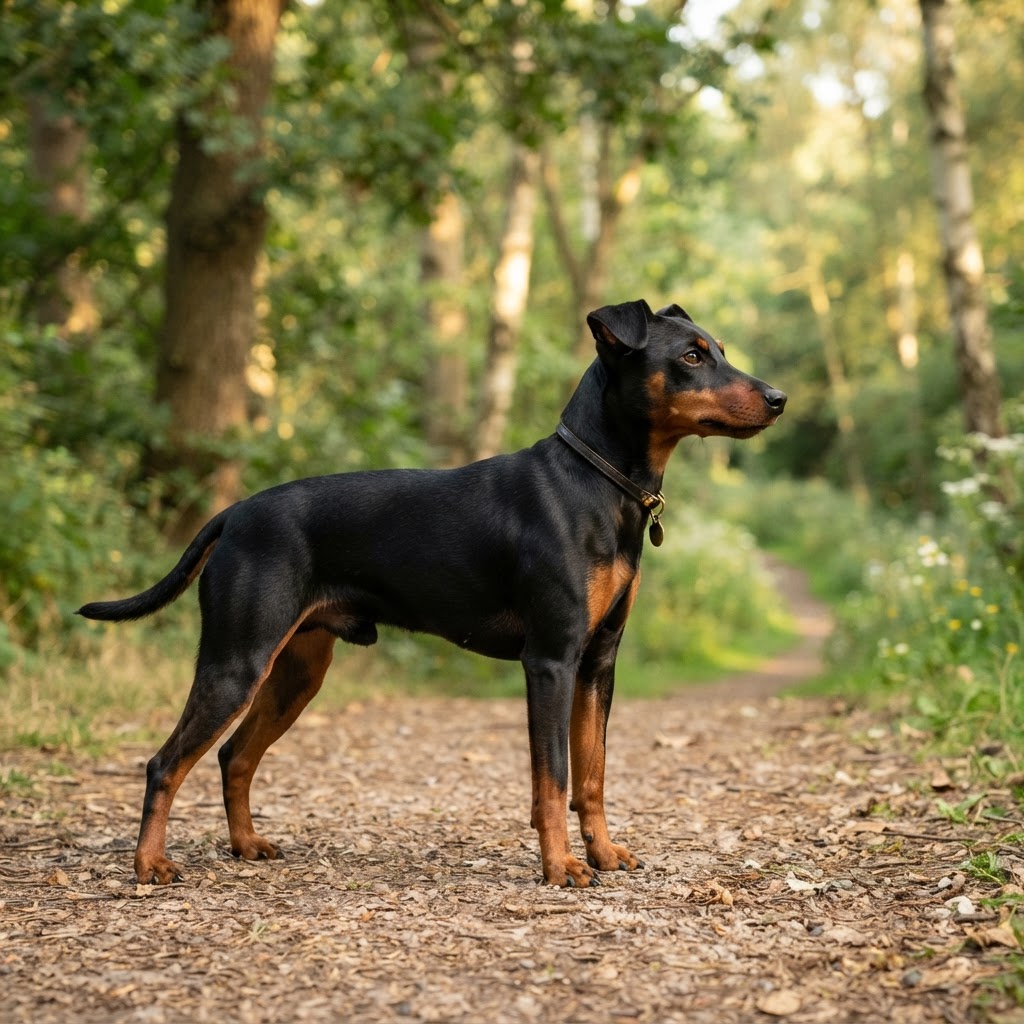
Manchester Terrier
Male: 5.4-10 kg, Female: 5.4-10 kg
38-41 cm at the shoulder
12-15 years
England
About the Manchester Terrier
The Manchester Terrier is a sophisticated and sleek breed, often described as the 'gentleman's terrier' due to its elegant appearance and discerning nature. Originating in the 19th-century Manchester district of England, they were developed by crossing the Black and Tan Terrier with Whippet blood to create a swift, efficient ratter capable of excelling in both the rat-pit and the field. They possess a distinctive wedge-shaped head, candle-flame ears, and a striking black-and-tan coat that is smooth and tight to the body. Unlike many other terriers, the Manchester is generally more responsive to their owner and less prone to mindless scrapping, though they retain a sharp, watchful spirit. They are incredibly clean dogs that lack the typical 'doggy' odor, making them excellent indoor companions. In a home environment, they are devoted 'shadows' who prefer to be in the same room as their humans, often seeking out the warmest spot in the house for a nap. Their keen intelligence means they learn quickly, but they require consistent, positive engagement to prevent boredom. Despite their refined look, they are sturdy and athletic, capable of surprising speed and agility during play.
Breed Standard
Key characteristics from the breed standard
In the show ring, the Manchester Terrier is the epitome of refined power and clean lines. They are judged on their distinctive 'candle-flame' ears and the precise distribution of mahogany tan markings—specifically the 'thumb marks' on the front legs and the 'kiss marks' on the cheeks. Their movement is free and effortless, showing surprising reach and drive for their size. They possess a level of structural elegance rarely seen in the Terrier group, coupled with a glossy, porcelain-like coat finish that highlights every ripple of their athletic musculature. A top-tier Manchester exudes a quiet, dignified confidence that demands attention without the frantic energy of other small breeds.
Bred For
Rat-killing, vermin control, and rabbit coursing
Temperament
Discerning, alert, intelligent, and fiercely loyal
Health Conditions Reported in the Breed
() Type 1, , , and
Exercise Needs
Daily walks and mental stimulation totaling 45-60 minutes
Grooming Needs
Minimal; weekly brushing and regular nail trimming
Living Suitability
Highly suited to apartment living or small yards, provided they receive daily outdoor exercise and plenty of indoor companionship.
Good with Kids
Good with older, respectful children; their small size and fine limbs make them less suited to very boisterous toddlers.
Good with Other Pets
Generally good with other dogs if socialized early; high prey drive means caution is needed with small pocket pets or rodents.
Trainability
Highly intelligent and eager to please, though they can possess a typical terrier streak of independence; responds best to positive reinforcement.
Coat & Colours
Smooth, short, and glossy. Jet black and rich mahogany tan
Exercise needs vary by age, fitness, health, weather and individual temperament. Consult your veterinarian for an exercise plan appropriate for your dog.
Things to Consider
Every breed has its quirks — here's what to know
The Manchester Terrier is a sensitive soul who truly thrives on human presence; they may experience separation anxiety if left alone for extended periods, but this is easily managed with routine and mental puzzles. Their short, single coat means they are more likely to feel the cold during South Australian winters—a stylish dog coat is often a necessity rather than a fashion choice. While they are lighter shedders than many breeds, their dark nails grow quickly and can be tricky to trim, so early desensitization to paw handling is a must. Owners should be aware that this breed is predisposed to von Willebrand's Disease, a blood clotting disorder; while not every dog is affected, it is wise to have a vet perform a screening before any surgery. They also have a very high prey drive, so a secure yard is essential to prevent them from chasing local wildlife. Despite these quirks, their devotion and clean habits make them a joy to live with.
Feeding Guide for Your Manchester Terrier
Healthy Weight
5.4-10 kg
Daily Feeding Amount (general starting estimate)
160-240 grams
A fresh, raw-food diet is ideal for maintaining the Manchester Terrier's lean, muscular frame. Focus on high-quality proteins like Kangaroo or Beef, supplemented with essential organs and crushed bone for calcium. As a small but active breed, an adult Manchester Terrier weighing 8 kg should consume approximately 160g to 240g of fresh food daily, divided into two meals. Owners should monitor their weight closely, as their fine-boned structure does not carry excess weight well.
Feeding quantities are general starting estimates only. Individual needs vary with body condition, weight trends, age, health and activity. Ingredient percentages alone do not guarantee complete and balanced nutrition — consult a veterinarian for individualised dietary guidance.
Ingredient percentages alone do not guarantee complete and balanced nutrition. Seek veterinary or qualified canine nutrition guidance for individualised dietary advice. Raw feeding, specific proteins or fresh foods should not be presented as preventing, treating or managing breed health conditions without veterinary diagnosis and supervision.
Majestik's Recommended Feeding Approach
Breed Diet Notes
High-protein, moderate-fat fresh diet supporting lean muscle mass and skin health
The Manchester Terrier thrives on a lean raw diet. Majestik's Kangaroo or Lean Beef options are excellent primary protein sources to maintain their sleek physique. Including small amounts of leafy greens and omega-3 fatty acids from fish can support their skin health. Due to their predisposition for von Willebrand's Disease, ensuring a nutrient-dense diet that supports overall vascular health is beneficial.
These are general breed-level notes only. The appropriate food and serving amount depend on the individual dog's age, health, body condition, activity and tolerance.
Majestik Recommendation
Majestik BARF meals follow our practical 70/10/10/10 approach: approximately 70% quality meat and protein ingredients, 10% edible bone, 10% vegetables and 10% offal. This gives customers a convenient fresh-food option without needing to source and portion every ingredient themselves.
Our Beef, Lamb and Roo BARF meals provide convenient fresh-food options, with suitable proteins chosen or rotated according to the individual dog.
Suitable for different needs
- Healthy adult: Majestik adult Beef, Lamb or Roo BARF meal.
- Puppy: Majestik Premium Puppy.
- Senior: Majestik Senior Blend.
- Working or highly active dog: Suitable Majestik adult meal with quantity adjusted to workload and body condition.
- Protein trial: One Majestik protein at a time.
Recommended Majestik BARF Meals


This is a practical starting recommendation for healthy dogs. Individual needs vary with age, health, body condition and activity.
Manchester Terrier Feeding Calculator
Personalised raw and cooked feeding recommendations based on your dog's profile
Ideal — Ribs palpable without excess fat. Visible waist. Abdominal tuck present.
Have a question about your Manchester Terrier? Dog Health AI
Why Majestik?
Fresh, raw pet food made with integrity in South Australia
Australian Made
Made in Two Wells, South Australia
Freshly Prepared
Real meat, organs, bone & wholefood ingredients
No Fillers
No cheap fillers or artificial preservatives
Family Owned
Locally owned and operated
Local Delivery
Delivery across Adelaide & selected areas
Secure Checkout
Secure payment via Shopify checkout
Subscribe & Save on Manchester Terrier Meals
Get your Manchester Terrier's fresh and raw meals delivered every two or four weeks. Small subscriptions are combined into a four-week box. Pause, skip or cancel anytime.
Breed Records & Facts
Average Litter Size
2-4 puppies
Manchester Terrier Owner Feedback
Real experiences and tips from Manchester Terrier owners
No reviews yet
Be the first to share your experience with this breed
Other Small Breeds
References & Sources
Breed information verified against recognised breed authorities and veterinary evidence.