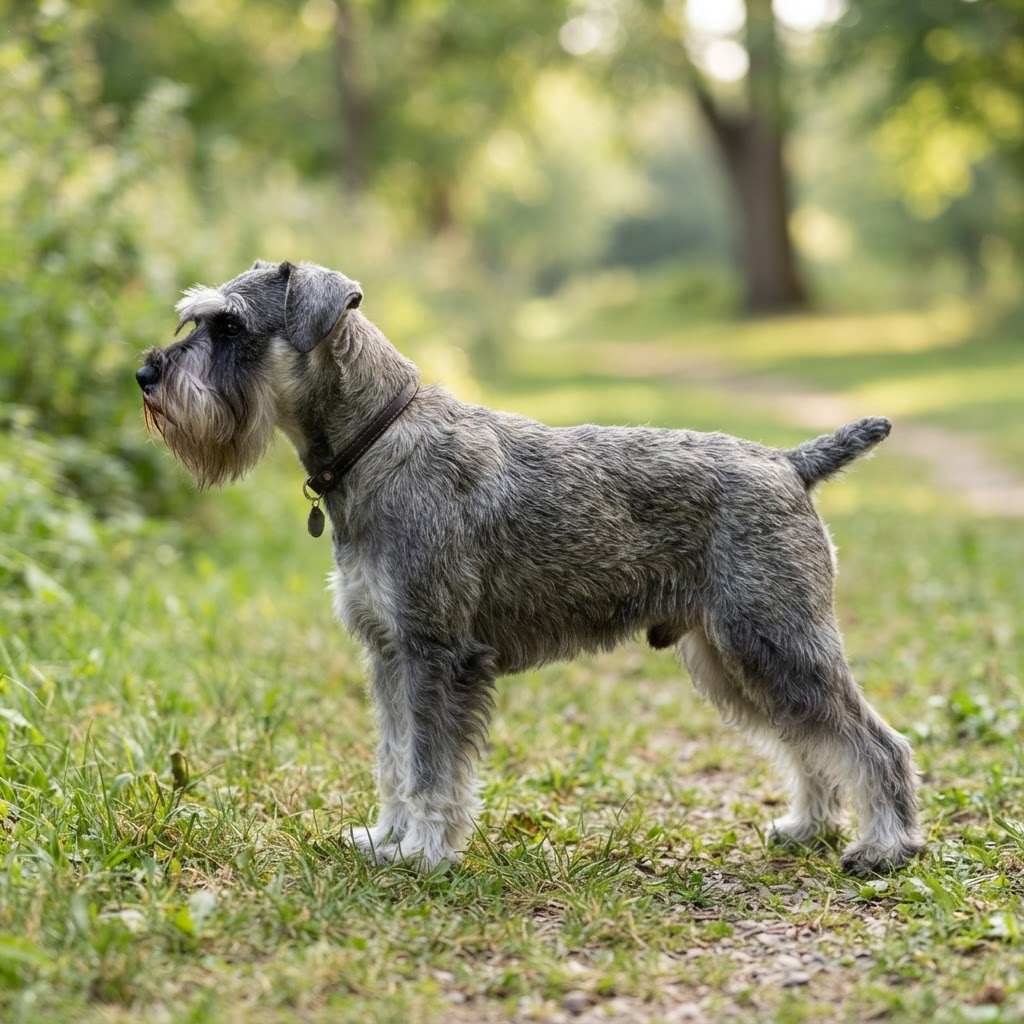
Schnauzer (Miniature)
Male: 5.4-9.1 kg, Female: 5.4-8.2 kg
30-36 cm at the shoulder
12-15 years
Germany
About the Schnauzer (Miniature)
The Miniature Schnauzer is a robust, active dog of the terrier type, distinguished by its rectangular head, bushy beard, and prominent eyebrows. Originally developed in Germany by crossing the Standard Schnauzer with smaller breeds like the Affenpinscher, they were designed to be efficient ratters and alert companions. Despite their small stature, they retain the sturdy build and courageous spirit of their larger ancestors, appearing square-proportioned and always ready for action. In the home, they are known for their unwavering devotion and keen intelligence. They are highly adaptable, making them excellent companions for both active individuals and families living in varied environments. Their spirited personality is balanced by a deep desire to please their owners, though their alert nature means they often take their role as household watchdog very seriously. With their distinctive 'old man' face and playful heart, they remain one of the most popular small breeds globally.
Breed Standard
Key characteristics from the breed standard
In the show ring, the Miniature Schnauzer must exhibit a perfectly square profile and a hard, wiry coat that is 'plucked' to highlight the dog's powerful, clean-cut lines. The head should be strong and rectangular with a blunt muzzle and dark, oval eyes that convey a keen, 'on-toes' expression. Their movement is a hallmark of the breed: a free, ground-covering trot with a strong reach and drive that remains true and straight.
In Australia
The Miniature Schnauzer was first introduced to Australia in 1962 from the United States with the importation of a dog named 'Dorem Display', according to the Miniature Schnauzer Club of Victoria.
Bred For
Originally bred as small farm dogs for ratting and guarding property.
Temperament
Alert, spirited, obedient, intelligent, and friendly.
Health Conditions Reported in the Breed
, Hyperlipidemia (high blood fat), Urolithiasis (urinary stones/calcium oxalate crystals), (), Myotonia Congenita (muscle stiffness), , and Schnauzer Comedo Syndrome.
Exercise Needs
Moderate; requires approximately 45–60 minutes of daily activity including walks and mental stimulation through play or training.
Grooming Needs
High; requires regular professional grooming every 6–8 weeks for clipping or hand-stripping, plus daily brushing of the beard and leg furnishings to prevent matting.
Living Suitability
Excellent for apartment living or small homes with yards, provided they receive daily walks. They are indoor-oriented dogs who thrive on human proximity.
Good with Kids
Generally good with children, particularly older children who understand how to respect a small dog's boundaries.
Good with Other Pets
Usually good with other dogs; however, they may possess a high prey drive toward small pets like rodents or birds due to their ratting heritage.
Trainability
Highly intelligent and quick to learn, but can occasionally show a stubborn streak. They respond best to positive reinforcement and varied training sessions.
Coat & Colours
Double coat with a wiry, hard outer coat and a dense undercoat.. Pepper and Salt, Black and Silver, Solid Black, and Solid White.
Exercise needs vary by age, fitness, health, weather and individual temperament. Consult your veterinarian for an exercise plan appropriate for your dog.
Things to Consider
Every breed has its quirks — here's what to know
Miniature Schnauzers are predisposed to hyperlipidemia and pancreatitis, meaning they are more likely to develop serious digestive issues if fed high-fat treats or standard commercial diets—this doesn't mean every Schnauzer will, but a low-fat diet is a vital preventative measure. They are also prone to urolithiasis (bladder stones), so ensuring constant access to fresh water is essential. Their alert nature makes them frequent barkers; they will often 'report' any movement outside the home, which can be managed with consistent 'quiet' training from a young age. Their iconic beard and leg furnishings are prone to matting and can trap food and debris, requiring daily wiping and brushing to maintain hygiene. Furthermore, they are more likely to develop dental disease due to their small mouths, meaning regular dental checks and professional cleaning are important for their long-term health. While they are intelligent, their independent spirit can sometimes manifest as stubbornness, but they remain deeply affectionate companions who thrive with clear, kind leadership.
Feeding Guide for Your Schnauzer (Miniature)
Healthy Weight
6-8.5 kg
Daily Feeding Amount (general starting estimate)
120-250 grams
For a healthy adult Miniature Schnauzer weighing between 6kg and 9kg, a fresh food diet should be calculated at 2-3% of their ideal body weight. Given their sensitivity to fats, lean proteins like kangaroo or white fish are preferred. For a 7kg dog, this equates to approximately 140g to 210g of fresh food daily, divided into two meals. Always monitor body condition and adjust portions to ensure they remain lean.
Feeding quantities are general starting estimates only. Individual needs vary with body condition, weight trends, age, health and activity. Ingredient percentages alone do not guarantee complete and balanced nutrition — consult a veterinarian for individualised dietary guidance.
Ingredient percentages alone do not guarantee complete and balanced nutrition. Seek veterinary or qualified canine nutrition guidance for individualised dietary advice. Raw feeding, specific proteins or fresh foods should not be presented as preventing, treating or managing breed health conditions without veterinary diagnosis and supervision.
Majestik's Recommended Feeding Approach
Breed Diet Notes
A low-fat, high-quality diet is essential to manage the breed's predisposition to hyperlipidemia and pancreatitis. Fresh, lean proteins with controlled fat content are highly recommended.
The ideal raw diet for a Miniature Schnauzer focuses on lean proteins to prevent pancreatitis. Majestik's Kangaroo or Lean Beef options are excellent choices. The diet should consist of approximately 70% lean muscle meat, 10% edible bone (finely ground to prevent dental issues in small mouths), 10% organ meat (liver and kidney), and 10% blended green vegetables to provide fiber. Avoiding high-fat proteins like duck or fatty lamb is critical for this breed's metabolic health.
These are general breed-level notes only. The appropriate food and serving amount depend on the individual dog's age, health, body condition, activity and tolerance.
Majestik Recommendation
Majestik BARF meals follow our practical 70/10/10/10 approach: approximately 70% quality meat and protein ingredients, 10% edible bone, 10% vegetables and 10% offal. This gives customers a convenient fresh-food option without needing to source and portion every ingredient themselves.
Our Beef, Lamb and Roo BARF meals provide convenient fresh-food options, with suitable proteins chosen or rotated according to the individual dog.
Suitable for different needs
- Healthy adult: Majestik adult Beef, Lamb or Roo BARF meal.
- Puppy: Majestik Premium Puppy.
- Senior: Majestik Senior Blend.
- Working or highly active dog: Suitable Majestik adult meal with quantity adjusted to workload and body condition.
- Protein trial: One Majestik protein at a time.
Recommended Majestik BARF Meals


This is a practical starting recommendation for healthy dogs. Individual needs vary with age, health, body condition and activity.
Schnauzer (Miniature) Feeding Calculator
Personalised raw and cooked feeding recommendations based on your dog's profile
Ideal — Ribs palpable without excess fat. Visible waist. Abdominal tuck present.
Have a question about your Schnauzer (Miniature)? Dog Health AI
Why Majestik?
Fresh, raw pet food made with integrity in South Australia
Australian Made
Made in Two Wells, South Australia
Freshly Prepared
Real meat, organs, bone & wholefood ingredients
No Fillers
No cheap fillers or artificial preservatives
Family Owned
Locally owned and operated
Local Delivery
Delivery across Adelaide & selected areas
Secure Checkout
Secure payment via Shopify checkout
Subscribe & Save on Schnauzer (Miniature) Meals
Get your Schnauzer (Miniature)'s fresh and raw meals delivered every two or four weeks. Small subscriptions are combined into a four-week box. Pause, skip or cancel anytime.
Breed Records & Facts
Average Litter Size
3-6 puppies
Schnauzer (Miniature) Owner Feedback
Real experiences and tips from Schnauzer (Miniature) owners
No reviews yet
Be the first to share your experience with this breed
Other Small Breeds
References & Sources
Breed information verified against recognised breed authorities and veterinary evidence.