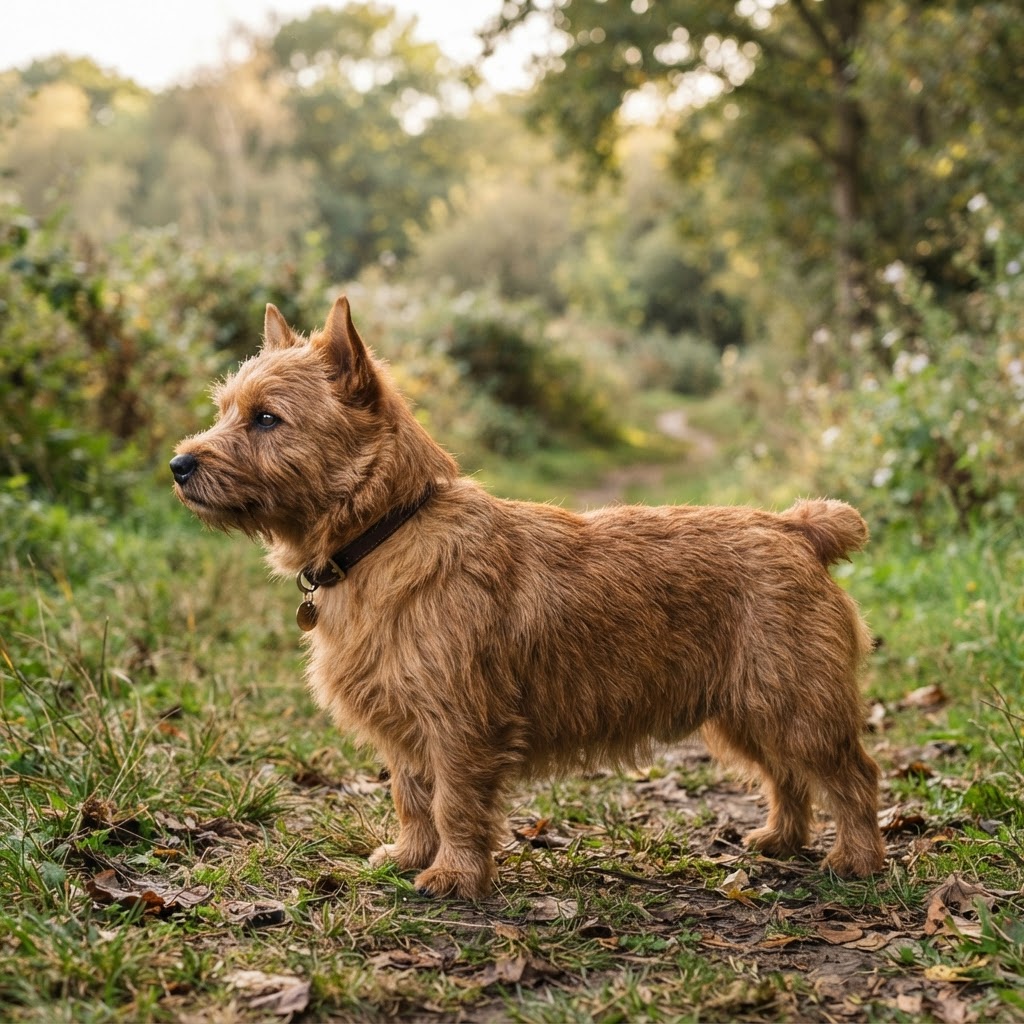
Norfolk Terrier
Male: 5-5.4 kg, Female: 5-5.4 kg
25-26 cm at the shoulder
12-15 years
Great Britain (East Anglia)
About the Norfolk Terrier
The Norfolk Terrier is one of the smallest of the working terriers, characterized by its compact, low-to-the-ground stature and distinctive drop ears. Originally developed in the late 19th century in the East Anglia region of England, it was long considered the same breed as the Norwich Terrier until they were officially separated in 1964 based on ear carriage. Despite their diminutive size, they possess a robust 'big dog' personality and a remarkably hardy constitution. In the home, the Norfolk is an endearing companion known for its social nature. Unlike many of its terrier cousins who can be aloof or overly reactive, the Norfolk tends to be more outgoing and thrives on human interaction. They are exceptionally intelligent and maintain a spirited curiosity well into their senior years. While they are adaptable to various living situations, they remain hunters at heart, retaining a keen interest in exploring and a courageous, albeit charmingly stubborn, streak.
Breed Standard
Key characteristics from the breed standard
In the show ring, the Norfolk Terrier is judged on its 'demon-like' expression and sturdy, substance-filled frame. Its movement should be true, low, and powerful, covering ground with ease despite its short legs. The coat must be hard and wiry, never soft or silky, and the drop ears should be neatly folded, adding to its alert appearance.
In Australia
According to the Norfolk Terrier Club of Victoria, the first Norfolk Terriers were imported into Australia in 1968.
Bred For
Small-game hunting, specifically bolting foxes and dispatching rats on farms.
Temperament
Game, hardy, alert, and affectionate. Known for being more gregarious and less quarrelsome than other terrier breeds.
Health Conditions Reported in the Breed
(), , , (), and various skin conditions including .
Exercise Needs
Moderate. Requires daily walks and mental stimulation through play or scent work to satisfy their hunting instincts.
Grooming Needs
Moderate to High. Requires regular brushing and professional 'hand-stripping' twice a year to maintain the weather-resistant texture of the wiry coat.
Living Suitability
Excellent for apartment living or houses with small yards, provided they receive daily walks. They are indoor dogs that require close proximity to their family.
Good with Kids
Generally very good with children, especially those who are taught to respect a small dog's boundaries.
Good with Other Pets
Usually good with other dogs; however, they possess a high prey drive and may not be suitable for households with small pocket pets like hamsters or rats.
Trainability
Highly intelligent but possesses a typical terrier independence. They respond best to positive reinforcement and varied training sessions that keep them engaged.
Coat & Colours
Hard, wiry, and straight; lying close to the body with a definite undercoat.. All shades of red, wheaten, black and tan, or grizzle.
Exercise needs vary by age, fitness, health, weather and individual temperament. Consult your veterinarian for an exercise plan appropriate for your dog.
Things to Consider
Every breed has its quirks — here's what to know
Prospective owners should be aware that Norfolk Terriers are more likely to be predisposed to Mitral Valve Disease (MVD), a heart condition—this doesn't mean every Norfolk will develop it, but regular veterinary check-ups are essential for early detection. They can also be prone to patellar luxation (slipping kneecaps), which may require weight management or, in some cases, surgical correction. Like many small breeds, they are more likely to develop dental disease if oral hygiene is neglected; raw meaty bones or regular brushing can help. Terriers are known for their prey drive, meaning the Norfolk may be inclined to chase local wildlife or the neighbor's cat—a secure yard is a must. They also have a tendency toward skin allergies and atopic dermatitis, which can often be managed through a clean, fresh diet like Majestik, avoiding common commercial allergens. While they are relatively quiet for terriers, they can be stubborn during training, often requiring a 'what's in it for me' approach. Their wiry coat is beautiful but requires specific hand-stripping to maintain its texture and weatherproofing; if clipped, the coat may become soft and lose its vibrant color. Many Norfolks are also predisposed to weight gain, so keeping them on a strict feeding schedule rather than free-feeding is recommended.
Feeding Guide for Your Norfolk Terrier
Healthy Weight
5-5.5 kg
Daily Feeding Amount (general starting estimate)
105-155 grams
For a Norfolk Terrier, a fresh or raw diet should focus on high-quality animal proteins to maintain lean muscle mass without adding unnecessary weight. Based on an average adult weight of 5.2 kg, the daily intake should be approximately 105g to 155g of fresh food. Puppies and highly active adults may require the higher end of this range, while seniors may need the lower end. Always monitor body condition and adjust portions accordingly.
Feeding quantities are general starting estimates only. Individual needs vary with body condition, weight trends, age, health and activity. Ingredient percentages alone do not guarantee complete and balanced nutrition — consult a veterinarian for individualised dietary guidance.
Ingredient percentages alone do not guarantee complete and balanced nutrition. Seek veterinary or qualified canine nutrition guidance for individualised dietary advice. Raw feeding, specific proteins or fresh foods should not be presented as preventing, treating or managing breed health conditions without veterinary diagnosis and supervision.
Majestik's Recommended Feeding Approach
Breed Diet Notes
A high-quality, protein-rich diet focusing on weight management. These dogs are prone to obesity, so a diet free from excessive carbohydrate fillers is ideal. Fresh or raw diets with lean proteins are highly recommended.
Majestik Pet Food's lean protein options such as Kangaroo or Beef are excellent choices to prevent weight gain. Including fish like Salmon can provide essential Omega-3 fatty acids to support their skin health. Due to their small mouths, ensuring bone content is appropriately sized (or ground) is vital for safety.
These are general breed-level notes only. The appropriate food and serving amount depend on the individual dog's age, health, body condition, activity and tolerance.
Majestik Recommendation
Majestik BARF meals follow our practical 70/10/10/10 approach: approximately 70% quality meat and protein ingredients, 10% edible bone, 10% vegetables and 10% offal. This gives customers a convenient fresh-food option without needing to source and portion every ingredient themselves.
Our Beef, Lamb and Roo BARF meals provide convenient fresh-food options, with suitable proteins chosen or rotated according to the individual dog.
Suitable for different needs
- Healthy adult: Majestik adult Beef, Lamb or Roo BARF meal.
- Puppy: Majestik Premium Puppy.
- Senior: Majestik Senior Blend.
- Working or highly active dog: Suitable Majestik adult meal with quantity adjusted to workload and body condition.
- Protein trial: One Majestik protein at a time.
Recommended Majestik BARF Meals


This is a practical starting recommendation for healthy dogs. Individual needs vary with age, health, body condition and activity.
Norfolk Terrier Feeding Calculator
Personalised raw and cooked feeding recommendations based on your dog's profile
Ideal — Ribs palpable without excess fat. Visible waist. Abdominal tuck present.
Have a question about your Norfolk Terrier? Dog Health AI
Why Majestik?
Fresh, raw pet food made with integrity in South Australia
Australian Made
Made in Two Wells, South Australia
Freshly Prepared
Real meat, organs, bone & wholefood ingredients
No Fillers
No cheap fillers or artificial preservatives
Family Owned
Locally owned and operated
Local Delivery
Delivery across Adelaide & selected areas
Secure Checkout
Secure payment via Shopify checkout
Subscribe & Save on Norfolk Terrier Meals
Get your Norfolk Terrier's fresh and raw meals delivered every two or four weeks. Small subscriptions are combined into a four-week box. Pause, skip or cancel anytime.
Breed Records & Facts
Average Litter Size
2-4 puppies
Norfolk Terrier Owner Feedback
Real experiences and tips from Norfolk Terrier owners
No reviews yet
Be the first to share your experience with this breed
Other Small Breeds
References & Sources
Breed information verified against recognised breed authorities and veterinary evidence.