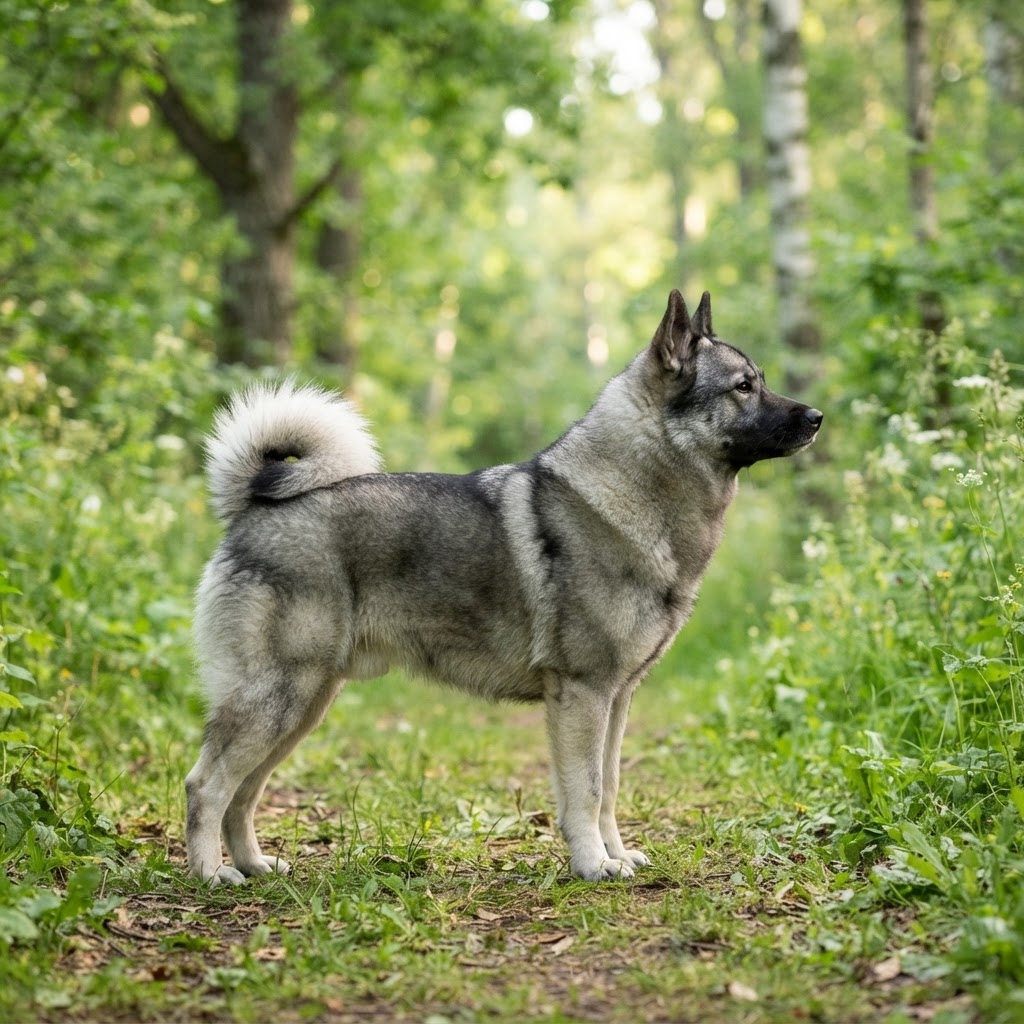
Norwegian Elkhound
Male: approx. 23 kg, Female: approx. 20 kg.
Male: approx. 52 cm, Female: approx. 49 cm at the shoulder.
12-15 years
Norway
About the Norwegian Elkhound
The Norwegian Elkhound is a robust and hardy Spitz-type hound, built for endurance in the rugged Scandinavian climate. As the National Dog of Norway, this breed possesses a unique combination of hound-like tracking ability and the thick-coated, alert appearance of a northern working dog. They are known for their distinctive square profile, tightly curled tail, and a thick silver-grey coat that provides insulation against extreme cold. This is a courageous breed that was historically used to corner moose and bear, holding the animal at bay by barking until the hunter arrived. In a modern domestic setting, the Norwegian Elkhound is a devoted family companion that thrives on inclusion in daily activities. They are incredibly loyal but retain a significant degree of independence and self-assurance. Their keen senses and vocal nature make them exceptional watchdogs, though they require a firm, consistent leader who understands their working heritage. Owners must be prepared for their high energy levels and a natural tendency to be vocal, which is deeply rooted in their hunting history.
Breed Standard
Key characteristics from the breed standard
In the show ring, the Norwegian Elkhound is a picture of power and agility, characterized by a remarkably short, square-coupled body and a proud, alert carriage. The hallmark of the breed is its tightly curled tail, which must be set high and carried over the back, never falling to either side. Their movement is tireless and light-footed, exhibiting a rhythmic, ground-covering stride that reflects their hunting endurance. The coat must be dense and stand off from the body, with a clear, silver-grey color and distinct black tipping that creates a beautiful harness-like marking.
In Australia
The breed was first recorded in Australia in 1952. The first recorded Norwegian Elkhound in Australia was named 'Viking of the Valley' and was imported to New South Wales, according to the Norwegian Elkhound Club of NSW.
Bred For
Tracking and baying large game such as moose (elk) and bear, and acting as a farm guardian.
Temperament
Bold, energetic, loyal, independent, and highly alert.
Health Conditions Reported in the Breed
, (), Renal Dysplasia (a genetic kidney condition), , and Sebaceous Cysts (Keratoacanthoma).
Grooming Needs
High; requires weekly brushing to manage the dense double coat, increasing to daily brushing during seasonal 'blow-outs' when shedding is extreme.
Living Suitability
They require a cool environment due to their thick coats.
Good with Kids
Generally good with children, especially when raised with them; they are sturdy and patient but their high energy may be overwhelming for toddlers.
Good with Other Pets
Usually good with other dogs; however, they possess a high prey drive and may chase smaller animals like cats or rabbits unless socialized from a young age.
Trainability
Highly intelligent but independent and 'thinkers'; they can be stubborn and require creative, reward-based training rather than repetitive drills.
Coat & Colours
Thick, hard, weather-resistant double coat; smooth but coarse topcoat with a soft, woolly undercoat.. Various shades of grey with black tips on the guard hairs and a lighter undercoat on the chest, stomach, legs, and underside of the tail.
Exercise needs vary by age, fitness, health, weather and individual temperament. Consult your veterinarian for an exercise plan appropriate for your dog.
Things to Consider
Every breed has its quirks — here's what to know
The Norwegian Elkhound is a 'barking hound,' meaning they are more likely to be very vocal and use their voice to alert you to everything from a visitor to a passing bird; this is a natural trait that can be managed with training but rarely eliminated. They are predisposed to heavy seasonal shedding, often called 'blowing coat,' which results in large amounts of fur throughout the home twice a year—daily grooming during these times is essential. Independent streaks are common, and they may be more likely to ignore commands if they find a scent more interesting, so a secure yard is non-negotiable. Regarding health, they are predisposed to Progressive Retinal Atrophy (PRA) and Renal Dysplasia (kidney disease); while this doesn't mean every Elkhound will be affected, prospective owners should ensure breeders provide clear health screening results. They are also prone to obesity if their diet is not strictly managed, which can exacerbate joint issues like hip dysplasia. Their thick coats mean they are more likely to be heat-sensitive, requiring careful management during Australian summers, including plenty of shade and limited exercise during the heat of the day.
Feeding Guide for Your Norwegian Elkhound
Healthy Weight
Male: 23 kg, Female: 20 kg
Daily Feeding Amount (general starting estimate)
400g - 690g (based on 2-3% of adult weight range)
A fresh or raw food diet should be tailored to their moderate weight and high activity levels. For an adult Norwegian Elkhound, daily intake should be approximately 2-3% of their ideal body weight. For a typical 23kg male, this equates to roughly 460g to 690g per day, split into two meals. Because they are highly food-motivated and prone to weight gain, portions should be strictly monitored and adjusted based on activity levels and body condition. Majestik Pet Food's lean protein options like Kangaroo are excellent for maintaining a healthy weight.
Feeding quantities are general starting estimates only. Individual needs vary with body condition, weight trends, age, health and activity. Ingredient percentages alone do not guarantee complete and balanced nutrition — consult a veterinarian for individualised dietary guidance.
Ingredient percentages alone do not guarantee complete and balanced nutrition. Seek veterinary or qualified canine nutrition guidance for individualised dietary advice. Raw feeding, specific proteins or fresh foods should not be presented as preventing, treating or managing breed health conditions without veterinary diagnosis and supervision.
Majestik's Recommended Feeding Approach
Breed Diet Notes
A high-protein, moderate-fat diet rich in lean meats is ideal to maintain muscle mass while preventing obesity, to which this breed is highly prone.
The ideal raw diet for a Norwegian Elkhound focuses on lean Australian proteins available from Majestik Pet Food, such as Kangaroo and Grass-fed Beef, to support their high activity while managing calories. Given their susceptibility to renal issues, high-quality, easily digestible proteins are essential. Incorporating omega-3 fatty acids from fish or green-lipped mussel can support joint health and their thick double coat. Small portions of fibrous vegetables like spinach or broccoli can aid digestion and provide satiety without excessive calories.
These are general breed-level notes only. The appropriate food and serving amount depend on the individual dog's age, health, body condition, activity and tolerance.
Majestik Recommendation
Majestik BARF meals follow our practical 70/10/10/10 approach: approximately 70% quality meat and protein ingredients, 10% edible bone, 10% vegetables and 10% offal. This gives customers a convenient fresh-food option without needing to source and portion every ingredient themselves.
Our Beef, Lamb and Roo BARF meals provide convenient fresh-food options, with suitable proteins chosen or rotated according to the individual dog.
Suitable for different needs
- Healthy adult: Majestik adult Beef, Lamb or Roo BARF meal.
- Puppy: Majestik Premium Puppy.
- Senior: Majestik Senior Blend.
- Working or highly active dog: Suitable Majestik adult meal with quantity adjusted to workload and body condition.
- Protein trial: One Majestik protein at a time.
This is a practical starting recommendation for healthy dogs. Individual needs vary with age, health, body condition and activity.
Norwegian Elkhound Feeding Calculator
Personalised raw and cooked feeding recommendations based on your dog's profile
Ideal — Ribs palpable without excess fat. Visible waist. Abdominal tuck present.
Have a question about your Norwegian Elkhound? Dog Health AI
Why Majestik?
Fresh, raw pet food made with integrity in South Australia
Australian Made
Made in Two Wells, South Australia
Freshly Prepared
Real meat, organs, bone & wholefood ingredients
No Fillers
No cheap fillers or artificial preservatives
Family Owned
Locally owned and operated
Local Delivery
Delivery across Adelaide & selected areas
Secure Checkout
Secure payment via Shopify checkout
Subscribe & Save on Norwegian Elkhound Meals
Get your Norwegian Elkhound's fresh and raw meals delivered every two or four weeks. Small subscriptions are combined into a four-week box. Pause, skip or cancel anytime.
Breed Records & Facts
Average Litter Size
5-7 puppies
Norwegian Elkhound Owner Feedback
Real experiences and tips from Norwegian Elkhound owners
No reviews yet
Be the first to share your experience with this breed
Other Medium Breeds
References & Sources
Breed information verified against recognised breed authorities and veterinary evidence.
