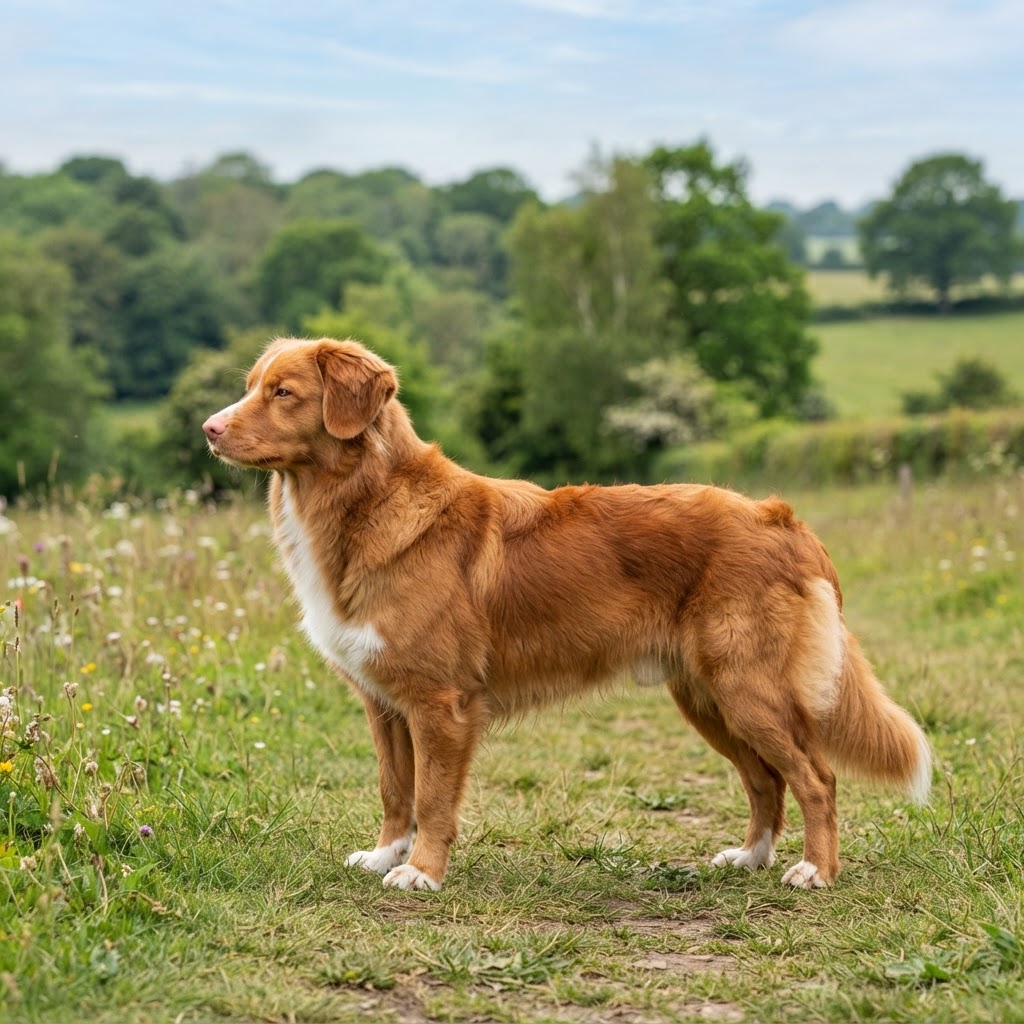
Nova Scotia Duck Tolling Retriever
Males: 20-23 kg, Females: 17-20 kg
Males: 48-51 cm, Females: 45-48 cm at the shoulder
12-14 years
Little River, Nova Scotia, Canada
About the Nova Scotia Duck Tolling Retriever
The Nova Scotia Duck Tolling Retriever, or 'Toller', is the smallest of the retriever breeds, characterised by its fox-like appearance and tireless work ethic. Originally developed in the Little River district of Nova Scotia, this breed possesses a unique hunting style: they frolic along the shoreline to lure curious ducks into range for the hunter, then dive into icy waters to retrieve the fallen game. This history has resulted in a dog with immense stamina, a weather-resistant coat, and a keen intelligence that requires constant engagement. In a home environment, Tollers are devoted companions that bond closely with their families. They are notably more 'compact' than a Golden Retriever but possess a higher energy drive and a distinct vocalisation known as the 'Toller Scream.' They are versatile athletes that excel in obedience, agility, and dock diving, but they are equally happy to settle indoors once their physical and mental quotas have been met for the day.
Breed Standard
Key characteristics from the breed standard
In the show ring, the Toller is a portrait of functional agility, possessing a wedge-shaped head that conveys a keen, fox-like expression. Their movement must be clean and springy, displaying a powerful reach and drive that suggests they could work in the field all day. The hallmark of the breed is the double coat—dense and water-resistant—which should feel firm to the touch without being coarse. What sets the Toller apart is its 'ready-for-action' silhouette; it is the ultimate 'multi-tool' gundog, combining the compact size of a spaniel with the retrieving power and water-utility of a larger retriever.
In Australia
The Nova Scotia Duck Tolling Retrievers first arrived in Australia in the early 1990s as recorded by Tidelands Tollers referencing the Nova Scotia Duck Tolling Retriever Club of Victoria. While the breed originated in Canada, the specific details of the first Australian import are believed to not have been confirmed by authoritative Australian kennel clubs according to Dogs Australia (ANKC).
Bred For
Luring (tolling) and retrieving waterfowl by mimicking the play-like movements of a fox to pique the curiosity of ducks.
Temperament
Intelligent, alert, outgoing, and affectionate; high-drive workers with a determined and playful nature.
Health Conditions Reported in the Breed
, (), Collie Eye Anomaly (CEA), , and Steroid Responsive Meningitis-Arteritis (SRMA).
Exercise Needs
Extensive daily activity required, including swimming, long walks, fetching, and mental challenges like scent work or agility.
Grooming Needs
Weekly brushing to manage shedding and prevent matting; more frequent attention is needed during seasonal coat blows.
Living Suitability
Suited to homes with a yard where they can play; not ideal for small apartments unless the owner is extremely active and dedicated to outdoor exercise.
Good with Kids
Generally very good with children, particularly active older children who can participate in their play and training.
Good with Other Pets
Usually good with other dogs and can live with cats if socialised early, though their prey drive may be triggered by birds.
Trainability
Highly intelligent and quick to learn, but they can be independent thinkers who require varied, positive-reinforcement training to stay focused.
Coat & Colours
Water-repellent double coat; medium length with a soft, dense undercoat and a coarser outer coat.. Various shades of red or orange, often with white markings on the feet, chest, tail tip, or face.
Exercise needs vary by age, fitness, health, weather and individual temperament. Consult your veterinarian for an exercise plan appropriate for your dog.
Things to Consider
Every breed has its quirks — here's what to know
Tollers are predisposed to 'The Toller Scream,' a high-pitched vocalisation used when they are excited or frustrated; this is a breed trait that can be managed with training but rarely eliminated. Because they are highly intelligent and active, they can become destructive or bored if left alone for long periods without mental stimulation. As a double-coated breed, they are prone to heavy seasonal shedding and may occasionally develop hot spots or ear infections if their thick coat is not dried properly after swimming. While generally hardy, they are more likely to experience immune-mediated conditions like SRMA or Addison’s Disease—this doesn't mean every Toller will, but it is important to choose a breeder who performs rigorous genetic testing. Their high prey drive means they may chase birds or small animals, requiring a secure yard and a solid recall. They are often described as 'half a brain, half a heart,' meaning they are sensitive yet stubborn, thriving best with owners who use patient, reward-based training.
Feeding Guide for Your Nova Scotia Duck Tolling Retriever
Healthy Weight
17-23 kg
Daily Feeding Amount (general starting estimate)
400-690 grams
For an active adult Toller, a fresh/raw diet should consist of high-quality proteins like kangaroo or beef. An average 20kg adult requires approximately 400g to 600g of fresh food per day, ideally split into two meals. Adjust portions based on activity level to prevent weight gain.
Feeding quantities are general starting estimates only. Individual needs vary with body condition, weight trends, age, health and activity. Ingredient percentages alone do not guarantee complete and balanced nutrition — consult a veterinarian for individualised dietary guidance.
Ingredient percentages alone do not guarantee complete and balanced nutrition. Seek veterinary or qualified canine nutrition guidance for individualised dietary advice. Raw feeding, specific proteins or fresh foods should not be presented as preventing, treating or managing breed health conditions without veterinary diagnosis and supervision.
Majestik's Recommended Feeding Approach
Breed Diet Notes
A high-protein, nutrient-dense diet rich in Omega-3 fatty acids to support joint health and their water-repellent double coat.
A balanced raw diet for a Toller should feature lean proteins like Majestik’s kangaroo or beef to maintain their athletic frame. Incorporating oily fish like sardines once or twice a week provides essential Omega-3s for joint support and coat luster. Avoid excessive carbohydrate fillers to maintain optimal energy levels and a healthy weight.
These are general breed-level notes only. The appropriate food and serving amount depend on the individual dog's age, health, body condition, activity and tolerance.
Majestik Recommendation
Majestik BARF meals follow our practical 70/10/10/10 approach: approximately 70% quality meat and protein ingredients, 10% edible bone, 10% vegetables and 10% offal. This gives customers a convenient fresh-food option without needing to source and portion every ingredient themselves.
Our Beef, Lamb and Roo BARF meals provide convenient fresh-food options, with suitable proteins chosen or rotated according to the individual dog.
Suitable for different needs
- Healthy adult: Majestik adult Beef, Lamb or Roo BARF meal.
- Puppy: Majestik Premium Puppy.
- Senior: Majestik Senior Blend.
- Working or highly active dog: Suitable Majestik adult meal with quantity adjusted to workload and body condition.
- Protein trial: One Majestik protein at a time.
Recommended Majestik BARF Meals


This is a practical starting recommendation for healthy dogs. Individual needs vary with age, health, body condition and activity.
Nova Scotia Duck Tolling Retriever Feeding Calculator
Personalised raw and cooked feeding recommendations based on your dog's profile
Ideal — Ribs palpable without excess fat. Visible waist. Abdominal tuck present.
Have a question about your Nova Scotia Duck Tolling Retriever? Dog Health AI
Why Majestik?
Fresh, raw pet food made with integrity in South Australia
Australian Made
Made in Two Wells, South Australia
Freshly Prepared
Real meat, organs, bone & wholefood ingredients
No Fillers
No cheap fillers or artificial preservatives
Family Owned
Locally owned and operated
Local Delivery
Delivery across Adelaide & selected areas
Secure Checkout
Secure payment via Shopify checkout
Subscribe & Save on Nova Scotia Duck Tolling Retriever Meals
Get your Nova Scotia Duck Tolling Retriever's fresh and raw meals delivered every two or four weeks. Small subscriptions are combined into a four-week box. Pause, skip or cancel anytime.
Breed Records & Facts
Average Litter Size
6-10 puppies
Nova Scotia Duck Tolling Retriever Owner Feedback
Real experiences and tips from Nova Scotia Duck Tolling Retriever owners
No reviews yet
Be the first to share your experience with this breed
Other Medium Breeds
References & Sources
Breed information verified against recognised breed authorities and veterinary evidence.