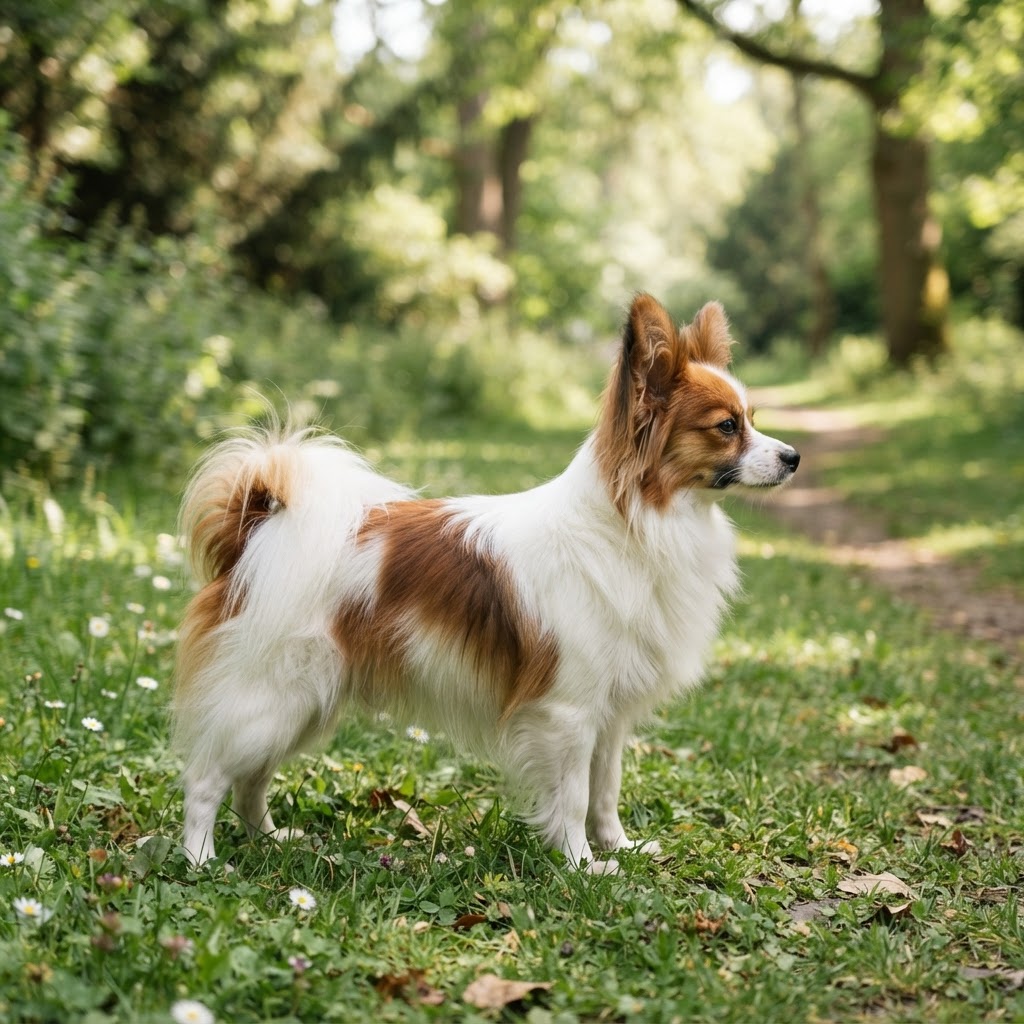
Papillon
Male: 1.5-5 kg, Female: 1.5-5 kg
20-28 cm at the shoulder
12-16 years
France and Belgium
About the Papillon
The Papillon, often referred to as the 'Butterfly Dog' due to its distinctive large, fringed ears, is one of the oldest and most intelligent toy breeds. Originating from the Continental Toy Spaniel, this breed was a favorite in the Royal Courts of Europe, frequently appearing in portraits by Masters such as Titian and Rubens. Unlike many other toy breeds, the Papillon is not merely a lapdog; they are highly capable athletes known for excelling in competitive agility and obedience trials. Physically, they are elegant and fine-boned, possessing a light, dainty gait that belies their robust spirit. Their lack of an undercoat makes them relatively easy to maintain compared to other long-haired breeds, though they are still susceptible to the elements. They are deeply devoted to their families and possess a keen watchdog instinct, always alert to their surroundings. In a domestic setting, they are characterized by their playful nature and an uncanny ability to learn complex tricks and commands quickly.
Breed Standard
Key characteristics from the breed standard
In the show ring, the Papillon must exhibit a dainty yet lively movement that is free and elegant. The defining feature is the 'Butterfly' ear—large, rounded at the tips, and set obliquely, adorned with heavy silk-like fringing. The coat must be long, flowing, and silky, lying flat against the body with a profuse frill on the chest.
In Australia
In 1948, the first breeding pair was imported to South Australia by Mr. and Mrs. C.E. Humfrey, as recorded by the Papillon Club of Victoria.
Bred For
Companion dog and lapdog for European royalty and aristocracy.
Temperament
Intelligent, alert, friendly, and energetic; despite their small size, they are remarkably confident and athletic.
Health Conditions Reported in the Breed
, (), dental overcrowding and , tracheal collapse, and sensitivity to anesthesia.
Grooming Needs
Moderate; their long, silky coat lacks an undercoat and is less prone to matting than other long-haired breeds, but the 'fringing' on the ears and tail requires regular brushing 2-3 times a week.
Living Suitability
Excellent for apartment living due to their size, provided they receive daily mental and physical stimulation; they thrive in small yards but must be kept as indoor pets.
Good with Kids
Good with older, respectful children; their fine bones make them susceptible to injury from rough play with toddlers.
Good with Other Pets
Generally good with other dogs and cats, though they may be bossy with larger dogs and should be supervised due to their small size.
Trainability
Highly trainable; they are ranked among the top ten most intelligent dog breeds and are exceptionally eager to please.
Coat & Colours
Long, fine, silky single coat with no undercoat; characterized by profuse fringing on the ears, chest, and tail.. White with patches of any color except liver; common patches include black, sable, and tri-color.
Exercise needs vary by age, fitness, health, weather and individual temperament. Consult your veterinarian for an exercise plan appropriate for your dog.
Things to Consider
Every breed has its quirks — here's what to know
Papillons are predisposed to certain health and lifestyle quirks that owners should prepare for. They are more likely to experience patellar luxation (slipping kneecaps), so keeping them at a lean weight is essential to protect their joints. Like many toy breeds, they are prone to dental disease and overcrowding; regular teeth cleaning and a fresh food diet can help manage this, though every dog is an individual. They can be susceptible to 'reverse sneezing' and tracheal collapse, meaning a harness is always preferred over a collar for walks. While they are very affectionate, they can be predisposed to separation anxiety if not encouraged to be independent. They are also 'alert' dogs, meaning they may be more likely to vocalize at passersby—this doesn't mean every Papillon is a nuisance barker, but early training is beneficial. Their fine-boned structure means they are more predisposed to fractures from jumping off high furniture, so pet steps are a wise investment. Lastly, they can be sensitive to anesthesia, which is an important consideration for any veterinary procedures.
Feeding Guide for Your Papillon
Healthy Weight
3-5 kg
Daily Feeding Amount (general starting estimate)
80-150 grams
For an adult Papillon, a fresh or raw food diet should be calculated at approximately 2-3% of their ideal body weight daily. For a typical 4kg adult, this equates to roughly 80-120 grams per day, split into two meals to maintain stable blood sugar levels.
Feeding quantities are general starting estimates only. Individual needs vary with body condition, weight trends, age, health and activity. Ingredient percentages alone do not guarantee complete and balanced nutrition — consult a veterinarian for individualised dietary guidance.
Ingredient percentages alone do not guarantee complete and balanced nutrition. Seek veterinary or qualified canine nutrition guidance for individualised dietary advice. Raw feeding, specific proteins or fresh foods should not be presented as preventing, treating or managing breed health conditions without veterinary diagnosis and supervision.
Majestik's Recommended Feeding Approach
Breed Diet Notes
A high-quality, nutrient-dense diet rich in lean proteins and healthy fats to support their high metabolic rate, with a focus on dental health via appropriate textures.
A balanced raw diet for a Papillon should focus on lean proteins like kangaroo (a South Australian favorite available from Majestik) or beef to support their active lifestyle. Appropriately selected raw meaty bones may provide chewing enrichment, but they do not replace veterinary dental care and can present choking, tooth-fracture or gastrointestinal risks. Portions should be precisely measured to prevent obesity, which puts stress on their delicate joints.
These are general breed-level notes only. The appropriate food and serving amount depend on the individual dog's age, health, body condition, activity and tolerance.
Majestik Recommendation
Majestik BARF meals follow our practical 70/10/10/10 approach: approximately 70% quality meat and protein ingredients, 10% edible bone, 10% vegetables and 10% offal. This gives customers a convenient fresh-food option without needing to source and portion every ingredient themselves.
Our Beef, Lamb and Roo BARF meals provide convenient fresh-food options, with suitable proteins chosen or rotated according to the individual dog.
Suitable for different needs
- Healthy adult: Majestik adult Beef, Lamb or Roo BARF meal.
- Puppy: Majestik Premium Puppy.
- Senior: Majestik Senior Blend.
- Working or highly active dog: Suitable Majestik adult meal with quantity adjusted to workload and body condition.
- Protein trial: One Majestik protein at a time.
Recommended Majestik BARF Meals


This is a practical starting recommendation for healthy dogs. Individual needs vary with age, health, body condition and activity.
Papillon Feeding Calculator
Personalised raw and cooked feeding recommendations based on your dog's profile
Ideal — Ribs palpable without excess fat. Visible waist. Abdominal tuck present.
Have a question about your Papillon? Dog Health AI
Why Majestik?
Fresh, raw pet food made with integrity in South Australia
Australian Made
Made in Two Wells, South Australia
Freshly Prepared
Real meat, organs, bone & wholefood ingredients
No Fillers
No cheap fillers or artificial preservatives
Family Owned
Locally owned and operated
Local Delivery
Delivery across Adelaide & selected areas
Secure Checkout
Secure payment via Shopify checkout
Subscribe & Save on Papillon Meals
Get your Papillon's fresh and raw meals delivered every two or four weeks. Small subscriptions are combined into a four-week box. Pause, skip or cancel anytime.
Breed Records & Facts
Oldest Recorded
18 years (Ch. Ringlands Lucky Charm)
Average Litter Size
2-4 puppies
Papillon Owner Feedback
Real experiences and tips from Papillon owners
No reviews yet
Be the first to share your experience with this breed
Other Toy Breeds
References & Sources
Breed information verified against recognised breed authorities and veterinary evidence.