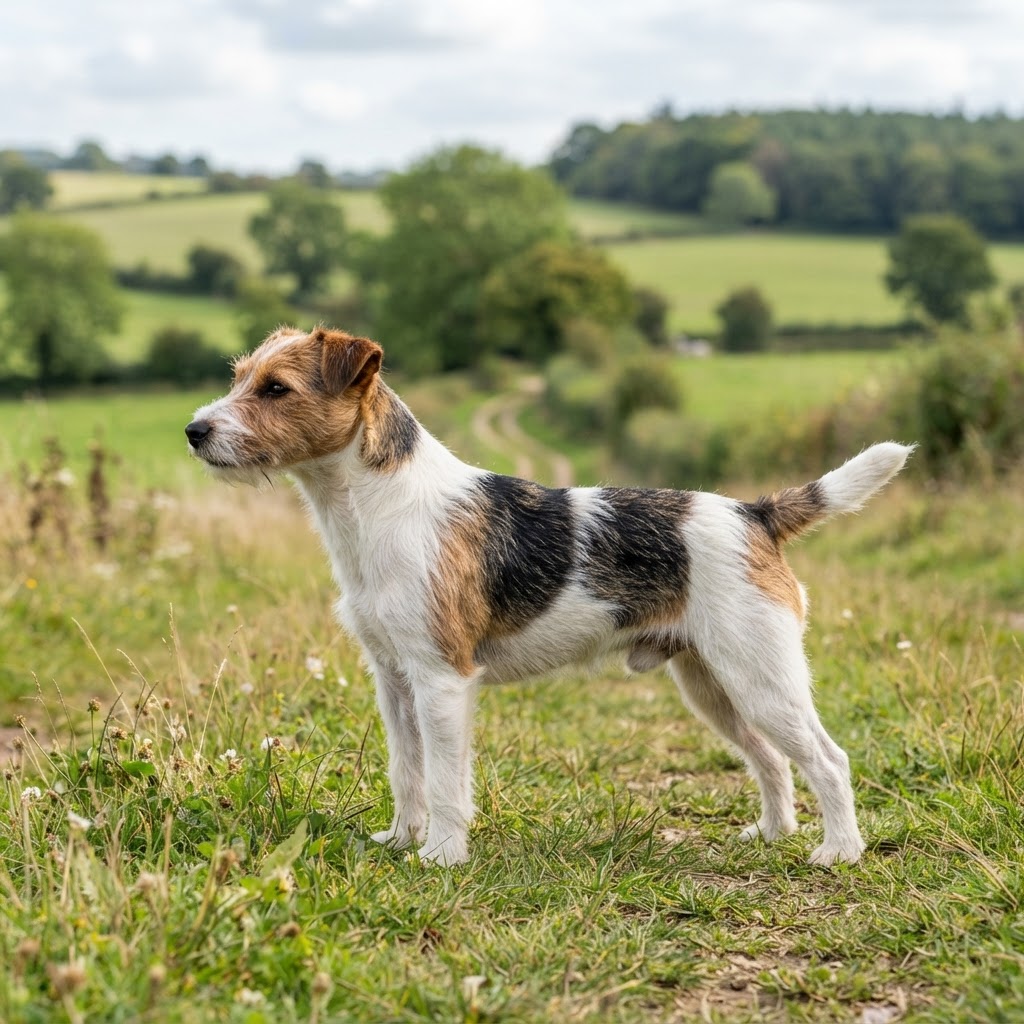
Parson Russell Terrier
Male: 6-8 kg, Female: 5.5-7.5 kg
33-36 cm at the shoulder
12-15 years
England
About the Parson Russell Terrier
The Parson Russell Terrier is the quintessential working terrier, developed in the early 19th century by the Reverend John Russell. Unlike its shorter-legged cousin, the Jack Russell, the Parson was bred with longer legs to ensure it could keep pace with foxhounds during a hunt. It is a dog of balance and agility, characterized by its 'spanable' chest, which allows it to navigate narrow underground burrows. This breed is defined by its tenacity and fearlessness, yet it remains a devoted and spirited companion for active households. In the home, the Parson is an alert and highly intelligent dog that thrives on human interaction and purposeful activity. They are not 'lap dogs' in the traditional sense, as their working heritage gives them a high drive and a need for consistent mental engagement. Their sturdy build and weather-resistant coat make them excellent partners for outdoor adventures, while their keen senses make them exceptional watchdogs. They possess a distinct personality that is both charmingly mischievous and intensely loyal.
Breed Standard
Key characteristics from the breed standard
In the show ring, the Parson Russell Terrier must exemplify a 'workmanlike' appearance, avoiding any tendency toward exaggerated features. Judges look for a chest that can be easily spanned by two hands behind the shoulders, a critical trait for a den-going dog. Their movement should be free, well-coordinated, and effortless, showing good reach and drive. What truly sets the Parson apart is its unique combination of leg length and structural balance; they possess the reach of a larger hound but the compact agility of a terrier. Their expression should be keen and full of 'varminty' character, showcasing a fearless yet controlled presence that is unique to this specific hunting lineage.
In Australia
Reliable Australian historical records for this breed’s introduction were not located.
Bred For
Fox hunting, specifically to follow hounds and bolt foxes from their dens while being long-legged enough to keep pace with horses.
Temperament
Bold, energetic, intelligent, tenacious, and friendly, possessing a confident and workmanlike disposition.
Health Conditions Reported in the Breed
(), Late Onset Ataxia (LOA), Spinocerebellar Ataxia (SCA), , and Congenital Sensorineural in predominantly white individuals.
Grooming Needs
Moderate; requires regular brushing and occasional hand-stripping for rough or broken coats to remove dead hair and maintain texture.
Living Suitability
Not ideally suited to small apartments unless very heavily exercised; thrives in a home with a secure, dig-proof backyard where they can explore.
Good with Kids
Good with older, respectful children who understand how to interact with an energetic terrier.
Good with Other Pets
Can be assertive with other dogs; has a very high prey drive and is generally not suited to homes with small pets like cats, rabbits, or rodents.
Trainability
Highly intelligent but independent and easily bored; requires firm, consistent, and reward-based training to channel their focus.
Coat & Colours
Smooth, broken, or rough; naturally harsh, close, and dense.. White, or white with tan, lemon, or black markings, or any combination of these, preferably restricted to the head and/or root of tail.
Exercise needs vary by age, fitness, health, weather and individual temperament. Consult your veterinarian for an exercise plan appropriate for your dog.
Things to Consider
Every breed has its quirks — here's what to know
Prospective owners should be aware that Parson Russell Terriers are more likely to exhibit a high prey drive—this means they are predisposed to chasing anything that moves, from squirrels to the neighbor's cat. While this makes them excellent hunters, it requires a secure, escape-proof yard and a lead whenever walking in unfenced areas. They are also prone to digging, a natural instinct for a dog bred to go to ground; providing a designated 'digging pit' can help manage this constructively. Like many terriers, they can be vocal and may bark frequently at passersby, though consistent training can help them learn to settle. Regarding health, the breed is predisposed to Primary Lens Luxation (PLL) and Patellar Luxation; while these are not certainties for every dog, regular veterinary eye and joint checks are recommended. Furthermore, Parson Russell Terriers can be more likely to develop skin sensitivities or atopic dermatitis, particularly on standard commercial diets with high filler content. Many owners find their dogs thrive on a fresh, limited-ingredient diet to support skin integrity. Lastly, their high intelligence and independent streak mean they can be stubborn if training isn't kept engaging, but with patience, they are incredibly rewarding and spirited companions.
Feeding Guide for Your Parson Russell Terrier
Healthy Weight
6-8 kg
Daily Feeding Amount (general starting estimate)
140-210 grams
For a Parson Russell Terrier at a healthy weight of 7kg, we recommend feeding approximately 140g to 210g of high-quality fresh or raw food daily, split into two meals. This represents 2-3% of their body weight, though highly active working dogs may require slightly more to maintain condition.
Feeding quantities are general starting estimates only. Individual needs vary with body condition, weight trends, age, health and activity. Ingredient percentages alone do not guarantee complete and balanced nutrition — consult a veterinarian for individualised dietary guidance.
Ingredient percentages alone do not guarantee complete and balanced nutrition. Seek veterinary or qualified canine nutrition guidance for individualised dietary advice. Raw feeding, specific proteins or fresh foods should not be presented as preventing, treating or managing breed health conditions without veterinary diagnosis and supervision.
Majestik's Recommended Feeding Approach
Breed Diet Notes
A high-protein, nutrient-dense diet rich in quality animal fats to support their high metabolic rate and active lifestyle.
A balanced raw diet for a Parson Russell Terrier should focus on lean, high-energy proteins available from Majestik, such as Kangaroo or Beef, to support their high activity levels. Inclusion of omega-3 fatty acids from fish or hemp seed oil is beneficial for skin health, especially for terriers prone to environmental sensitivities. Because of their high metabolism, avoid excessive fillers and focus on calorie-dense, nutrient-rich animal proteins.
These are general breed-level notes only. The appropriate food and serving amount depend on the individual dog's age, health, body condition, activity and tolerance.
Majestik Recommendation
Majestik BARF meals follow our practical 70/10/10/10 approach: approximately 70% quality meat and protein ingredients, 10% edible bone, 10% vegetables and 10% offal. This gives customers a convenient fresh-food option without needing to source and portion every ingredient themselves.
Our Beef, Lamb and Roo BARF meals provide convenient fresh-food options, with suitable proteins chosen or rotated according to the individual dog.
Suitable for different needs
- Healthy adult: Majestik adult Beef, Lamb or Roo BARF meal.
- Puppy: Majestik Premium Puppy.
- Senior: Majestik Senior Blend.
- Working or highly active dog: Suitable Majestik adult meal with quantity adjusted to workload and body condition.
- Protein trial: One Majestik protein at a time.
Recommended Majestik BARF Meals


This is a practical starting recommendation for healthy dogs. Individual needs vary with age, health, body condition and activity.
Parson Russell Terrier Feeding Calculator
Personalised raw and cooked feeding recommendations based on your dog's profile
Ideal — Ribs palpable without excess fat. Visible waist. Abdominal tuck present.
Have a question about your Parson Russell Terrier? Dog Health AI
Why Majestik?
Fresh, raw pet food made with integrity in South Australia
Australian Made
Made in Two Wells, South Australia
Freshly Prepared
Real meat, organs, bone & wholefood ingredients
No Fillers
No cheap fillers or artificial preservatives
Family Owned
Locally owned and operated
Local Delivery
Delivery across Adelaide & selected areas
Secure Checkout
Secure payment via Shopify checkout
Subscribe & Save on Parson Russell Terrier Meals
Get your Parson Russell Terrier's fresh and raw meals delivered every two or four weeks. Small subscriptions are combined into a four-week box. Pause, skip or cancel anytime.
Breed Records & Facts
Average Litter Size
4-6 puppies
Parson Russell Terrier Owner Feedback
Real experiences and tips from Parson Russell Terrier owners
No reviews yet
Be the first to share your experience with this breed
Other Small Breeds
References & Sources
Breed information verified against recognised breed authorities and veterinary evidence.