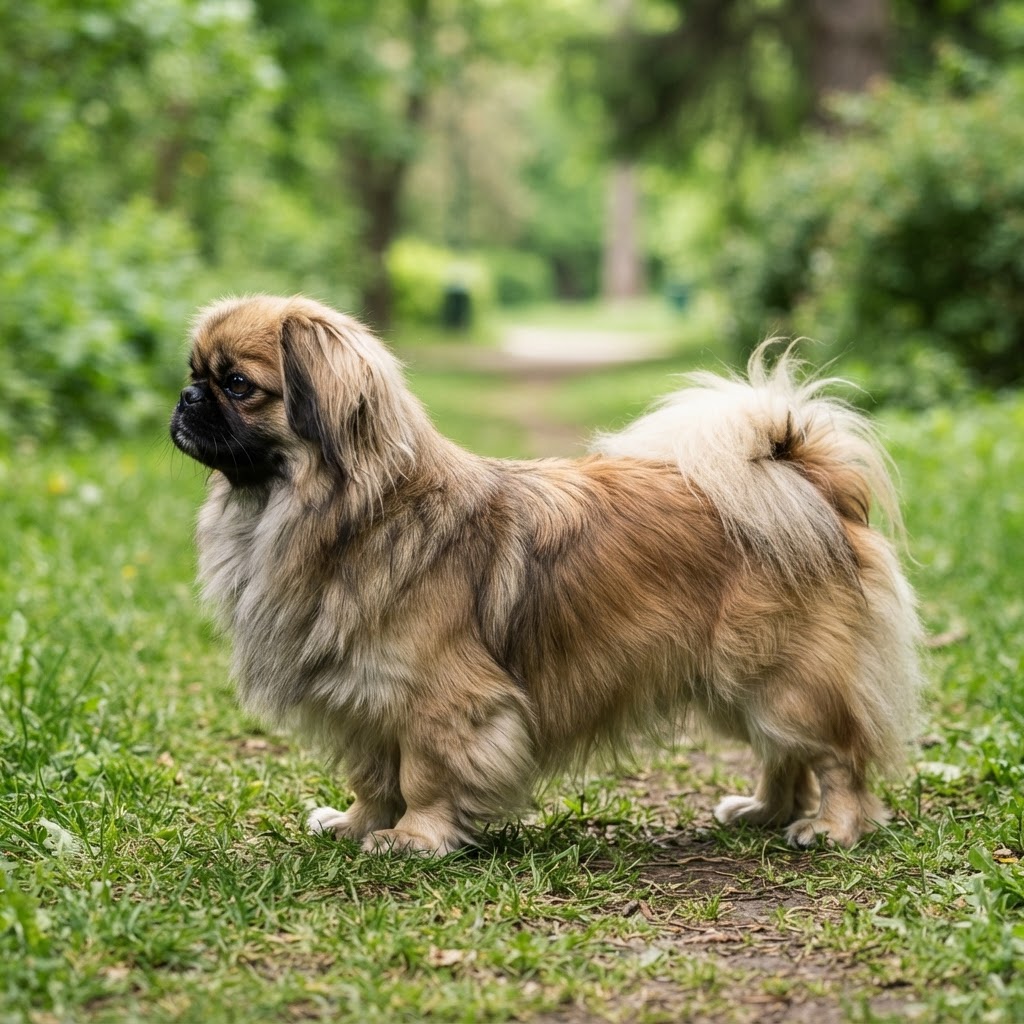
Pekingese
Male: up to 5 kg, Female: up to 5.4 kg
15-23 cm at the shoulder
12-15 years
China
About the Pekingese
The Pekingese is an ancient 'lion dog' that carries itself with the dignity of its Imperial Chinese heritage. Known for their unique rolling gait and pear-shaped body, they possess a flat face and large, expressive eyes that reflect an independent yet devoted spirit. Despite their small stature, they are surprisingly heavy for their size, feeling solid and substantial when lifted. Their magnificent double coat forms a lion-like mane around the neck, emphasizing their regal appearance. In the home, the Pekingese is a calm and self-possessed companion that prefers a quiet environment. While they are deeply loyal to their chosen humans, they often maintain an air of independence and may be wary of strangers. They are well-suited to indoor living and are particularly popular with apartment dwellers and seniors due to their relatively low activity levels and affectionate nature. Owners must be prepared for the maintenance required by their luxurious coat and the specific care needs associated with their facial structure.
Breed Standard
Key characteristics from the breed standard
In the show ring, the Pekingese is a masterpiece of balance and substance, moving with a characteristic 'roll' that is slow and dignified rather than hurried. Their silhouette is defined by a heavy-fronted, pear-shaped frame and a massive, lion-like mane that cascades over the shoulders. A correct head is broad and flat between the ears, featuring a dark, wrinkled muzzle and large, dark lustrous eyes that convey a 'bold' expression.
Bred For
Lapdog and companion for the Chinese Imperial Court.
Temperament
Dignified, independent, affectionate with family, and courageous.
Health Conditions Reported in the Breed
(), (), , , Corneal Ulcers, Dry Eye (KCS), and .
Exercise Needs
Low to moderate; 20-30 minutes of gentle walking daily is sufficient.
Grooming Needs
High; requires daily brushing to prevent matting and regular cleaning of facial skin folds.
Living Suitability
Excellent for apartment living; does not require a large yard but needs a climate-controlled environment due to heat sensitivity.
Good with Kids
Better suited to homes with older, respectful children who understand how to handle a small dog carefully.
Good with Other Pets
Generally good with other household pets if socialised early, though they may be bossy with other dogs.
Trainability
Moderate; they are intelligent but independent and can be stubborn, requiring patient, reward-based training.
Coat & Colours
Long, straight, stand-off outer coat with a thick, soft undercoat.. All colours and markings are permitted except albino and liver.
Exercise needs vary by age, fitness, health, weather and individual temperament. Consult your veterinarian for an exercise plan appropriate for your dog.
Things to Consider
Every breed has its quirks — here's what to know
The Pekingese is more likely to experience Brachycephalic Obstructive Airway Syndrome (BOAS) due to their flat facial structure—this means they can be prone to snoring, wheezing, and are highly sensitive to heat and humidity. Owners should avoid walking them in the heat of the day and keep them in air-conditioned spaces during Australian summers. Their prominent eyes are more susceptible to scratches, dryness, and ulcers, so a quick daily check is wise. They are predisposed to Intervertebral Disc Disease (IVDD), so using ramps instead of allowing them to jump off high furniture can protect their long spines. Daily maintenance is needed to clean the nose wrinkle to prevent yeast infections or skin-fold dermatitis. While their independent streak means they are less likely to suffer from severe separation anxiety, it also means they can be a bit stubborn during training. Their thick double coat is a beautiful feature but does shed heavily, especially during seasonal changes, requiring a commitment to frequent brushing to prevent painful mats. Additionally, their small mouths can lead to overcrowded teeth and a higher risk of dental disease, so regular dental care is a must. These quirks are simply part of their regal charm, and with a little extra care, they remain one of the most devoted and dignified companions available.
Feeding Guide for Your Pekingese
Healthy Weight
3.5-5.4 kg
Daily Feeding Amount (general starting estimate)
100-160 grams
A fresh or raw diet for a Pekingese should focus on lean proteins like kangaroo or beef to avoid unnecessary weight gain. Given their small size, aim for 2-3% of their ideal body weight daily. For a healthy 5 kg adult, this equates to approximately 100-150 grams of fresh food per day, divided into two meals. Ensure the diet includes high-quality organ meats and finely ground bone for calcium.
Feeding quantities are general starting estimates only. Individual needs vary with body condition, weight trends, age, health and activity. Ingredient percentages alone do not guarantee complete and balanced nutrition — consult a veterinarian for individualised dietary guidance.
Ingredient percentages alone do not guarantee complete and balanced nutrition. Seek veterinary or qualified canine nutrition guidance for individualised dietary advice. Raw feeding, specific proteins or fresh foods should not be presented as preventing, treating or managing breed health conditions without veterinary diagnosis and supervision.
Majestik's Recommended Feeding Approach
Breed Diet Notes
High-quality protein-rich diet, ideally fresh or raw, to maintain lean muscle mass and prevent obesity which strains their spine and joints.
A balanced raw diet for a Pekingese should feature high-quality proteins available from Majestik, such as lean Kangaroo or Beef, which help manage weight while providing essential amino acids. Small amounts of pureed leafy greens or berries can provide antioxidants. Because they are prone to dental issues, chewing on appropriate raw recreational bones under supervision can help maintain oral health.
These are general breed-level notes only. The appropriate food and serving amount depend on the individual dog's age, health, body condition, activity and tolerance.
Majestik Recommendation
Majestik BARF meals follow our practical 70/10/10/10 approach: approximately 70% quality meat and protein ingredients, 10% edible bone, 10% vegetables and 10% offal. This gives customers a convenient fresh-food option without needing to source and portion every ingredient themselves.
Our Beef, Lamb and Roo BARF meals provide convenient fresh-food options, with suitable proteins chosen or rotated according to the individual dog.
Suitable for different needs
- Healthy adult: Majestik adult Beef, Lamb or Roo BARF meal.
- Puppy: Majestik Premium Puppy.
- Senior: Majestik Senior Blend.
- Working or highly active dog: Suitable Majestik adult meal with quantity adjusted to workload and body condition.
- Protein trial: One Majestik protein at a time.
This is a practical starting recommendation for healthy dogs. Individual needs vary with age, health, body condition and activity.
Pekingese Feeding Calculator
Personalised raw and cooked feeding recommendations based on your dog's profile
Ideal — Ribs palpable without excess fat. Visible waist. Abdominal tuck present.
Have a question about your Pekingese? Dog Health AI
Why Majestik?
Fresh, raw pet food made with integrity in South Australia
Australian Made
Made in Two Wells, South Australia
Freshly Prepared
Real meat, organs, bone & wholefood ingredients
No Fillers
No cheap fillers or artificial preservatives
Family Owned
Locally owned and operated
Local Delivery
Delivery across Adelaide & selected areas
Secure Checkout
Secure payment via Shopify checkout
Subscribe & Save on Pekingese Meals
Get your Pekingese's fresh and raw meals delivered every two or four weeks. Small subscriptions are combined into a four-week box. Pause, skip or cancel anytime.
Breed Records & Facts
Average Litter Size
2-4 puppies
Pekingese Owner Feedback
Real experiences and tips from Pekingese owners
Other Small Breeds
References & Sources
Breed information verified against recognised breed authorities and veterinary evidence.
