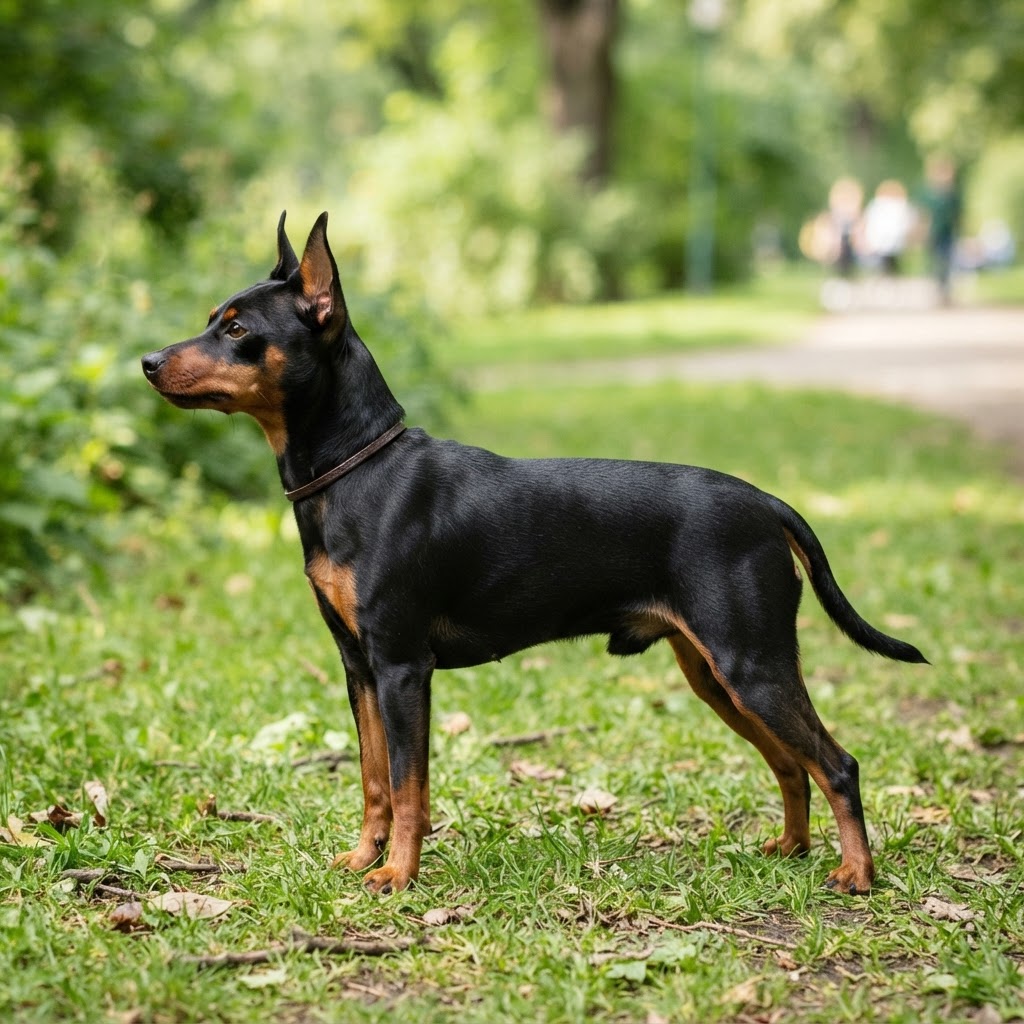
Prague Ratter
1-3 kg (Optimal weight is typically around 2.6 kg)
20-23 cm at the shoulder
12-15 years
Czech Republic
About the Prague Ratter
The Prague Ratter, or Pražský krysařík, is a tiny yet spirited breed from the Czech Republic, historically prized for its agility and keen hunting instincts. Despite being one of the smallest breeds in the world by height standard, they possess a large personality and a noble bearing that reflects their history as inhabitants of royal palaces. They are significantly more active and social than many other toy breeds, often forming deep, singular bonds with their owners. Physically, they are characterized by their pear-shaped head, large alert ears, and a compact, square-proportioned body. While they are exceptionally small, they are not 'lap dogs' in the traditional sense; they enjoy exploring, learning tricks, and participating in dog sports like agility or obedience. Their intelligence and eagerness to please make them highly trainable, though their delicate physical structure requires mindful handling, especially in busy households.
Breed Standard
Key characteristics from the breed standard
In the show ring, the Prague Ratter is distinguished by its unique pear-shaped head and a backline that is firm and straight. Its movement is light, elastic, and parallel, showing a surprising amount of drive for such a small frame. The breed standard calls for a fox-like expression that is both intelligent and watchful.
In Australia
The Prague Ratter was officially recognised by Dogs Australia (ANKC) in July 2018.
Bred For
Rat catching (vermin control) and as a status symbol/companion in royal courts
Temperament
Active, alert, gentle, social, and highly affectionate with its family
Health Conditions Reported in the Breed
, , retained deciduous (baby) teeth, hypoglycemia (especially in puppies), and bone fragility (fractures)
Exercise Needs
Moderate; requires daily walks and mental stimulation, though they are very active indoors
Grooming Needs
Low; regular brushing of the smooth coat and frequent dental checks are essential
Living Suitability
Excellent for apartment living due to their size, but they thrive in any environment where they have close human contact. They do not require a large yard but benefit from safe, enclosed spaces.
Good with Kids
Better suited to homes with older, respectful children due to their small size and risk of injury from accidental rough handling
Good with Other Pets
Generally good with other dogs and cats, though they may be bossy with larger dogs and have a high prey drive toward small rodents
Trainability
High; they are intelligent, quick learners, and very eager to please compared to other toy breeds
Coat & Colours
Short, glossy, and close-lying; there is also a rare long-haired variety. Black and tan, brown and tan, blue and tan, lilac and tan, yellow, red, and merle
Exercise needs vary by age, fitness, health, weather and individual temperament. Consult your veterinarian for an exercise plan appropriate for your dog.
Things to Consider
Every breed has its quirks — here's what to know
Prospective owners should be aware that Prague Ratters are predisposed to patellar luxation (slipping kneecaps), so maintaining a lean weight and avoiding high-impact jumps from furniture is important for joint health. They are also prone to retained deciduous teeth, where baby teeth don't fall out, potentially leading to overcrowding and dental decay if not addressed by a vet. Like many toy breeds, they are more likely to experience dental disease and overcrowding—this doesn't mean every Ratter will, but a fresh food diet and regular brushing are highly beneficial. Their tiny size makes them susceptible to hypoglycemia (low blood sugar) as puppies, requiring frequent small meals. Additionally, their fine coats mean they are more likely to feel the cold; they often require coats or jumpers during Australian winters. While they are brave, they can be fragile, so care must be taken with large dogs or small children to prevent accidental bone fractures. They can also develop separation anxiety if left alone for long periods, as they truly thrive on human companionship, but with consistent training, they are incredibly well-adjusted companions.
Feeding Guide for Your Prague Ratter
Healthy Weight
1-3 kg
Daily Feeding Amount (general starting estimate)
30-90 grams of fresh/raw food per day, depending on the individual's activity level and weight within the 1-3 kg range
For an adult Prague Ratter, feed approximately 2-3% of their ideal body weight daily. For a standard 2.5kg adult, this equates to 50-75g of fresh food per day, ideally split into two meals. Puppies require more frequent, smaller meals to prevent hypoglycemia.
Feeding quantities are general starting estimates only. Individual needs vary with body condition, weight trends, age, health and activity. Ingredient percentages alone do not guarantee complete and balanced nutrition — consult a veterinarian for individualised dietary guidance.
Ingredient percentages alone do not guarantee complete and balanced nutrition. Seek veterinary or qualified canine nutrition guidance for individualised dietary advice. Raw feeding, specific proteins or fresh foods should not be presented as preventing, treating or managing breed health conditions without veterinary diagnosis and supervision.
Majestik's Recommended Feeding Approach
Breed Diet Notes
A nutrient-dense, high-quality diet rich in animal proteins to support a fast metabolism, ideally suited to fresh or raw feeding to maintain dental health and weight
A balanced raw diet for a Prague Ratter should focus on high-density proteins like Kangaroo or Beef, available from Majestik Pet Food. Given their small mouths, finely ground 'complete' mixes are ideal. Include small amounts of pureed green vegetables for antioxidants. Due to their predisposition to dental disease, providing appropriate soft raw bones or dehydrated chews under supervision is vital for plaque control.
These are general breed-level notes only. The appropriate food and serving amount depend on the individual dog's age, health, body condition, activity and tolerance.
Majestik Recommendation
Majestik BARF meals follow our practical 70/10/10/10 approach: approximately 70% quality meat and protein ingredients, 10% edible bone, 10% vegetables and 10% offal. This gives customers a convenient fresh-food option without needing to source and portion every ingredient themselves.
Our Beef, Lamb and Roo BARF meals provide convenient fresh-food options, with suitable proteins chosen or rotated according to the individual dog.
Suitable for different needs
- Healthy adult: Majestik adult Beef, Lamb or Roo BARF meal.
- Puppy: Majestik Premium Puppy.
- Senior: Majestik Senior Blend.
- Working or highly active dog: Suitable Majestik adult meal with quantity adjusted to workload and body condition.
- Protein trial: One Majestik protein at a time.
Recommended Majestik BARF Meals


This is a practical starting recommendation for healthy dogs. Individual needs vary with age, health, body condition and activity.
Prague Ratter Feeding Calculator
Personalised raw and cooked feeding recommendations based on your dog's profile
Ideal — Ribs palpable without excess fat. Visible waist. Abdominal tuck present.
Have a question about your Prague Ratter? Dog Health AI
Why Majestik?
Fresh, raw pet food made with integrity in South Australia
Australian Made
Made in Two Wells, South Australia
Freshly Prepared
Real meat, organs, bone & wholefood ingredients
No Fillers
No cheap fillers or artificial preservatives
Family Owned
Locally owned and operated
Local Delivery
Delivery across Adelaide & selected areas
Secure Checkout
Secure payment via Shopify checkout
Subscribe & Save on Prague Ratter Meals
Get your Prague Ratter's fresh and raw meals delivered every two or four weeks. Small subscriptions are combined into a four-week box. Pause, skip or cancel anytime.
Breed Records & Facts
Average Litter Size
1-3 puppies
Prague Ratter Owner Feedback
Real experiences and tips from Prague Ratter owners
Other Toy Breeds
References & Sources
Breed information verified against recognised breed authorities and veterinary evidence.