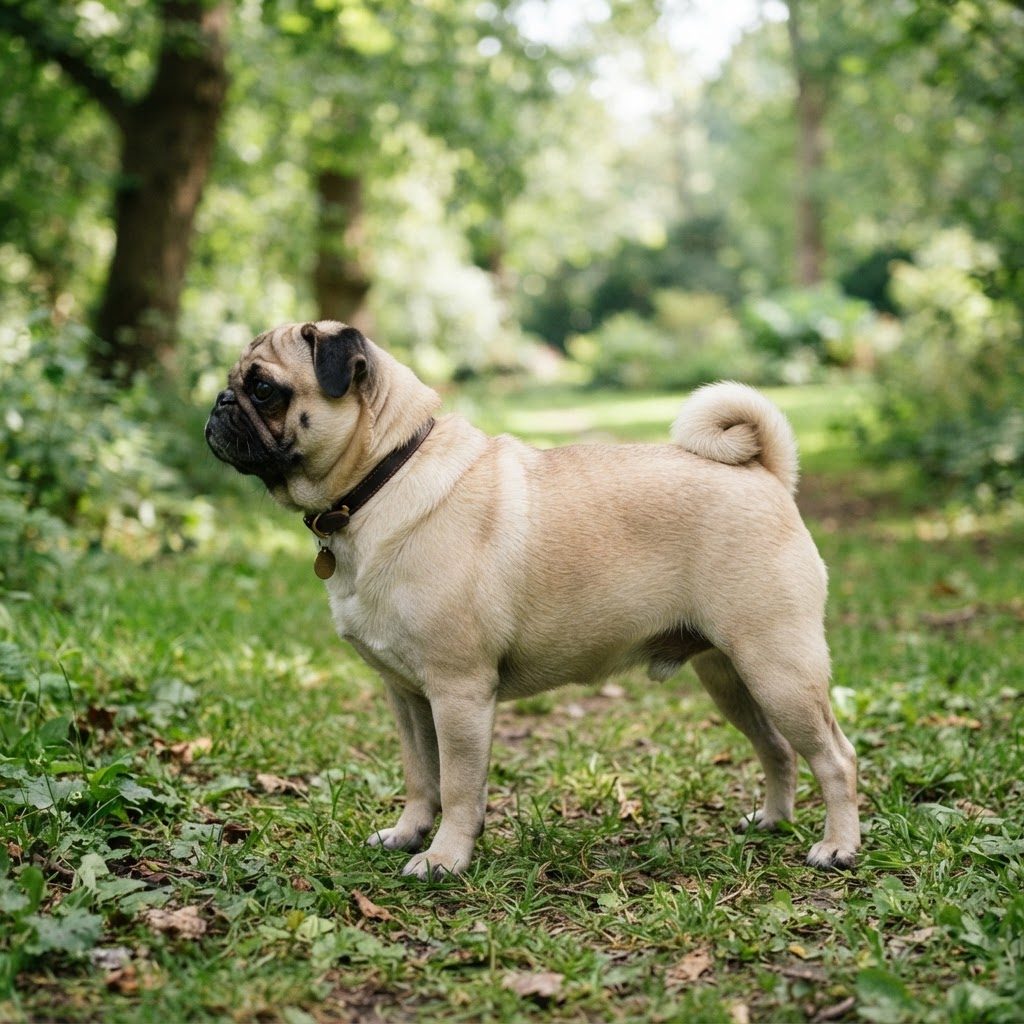
Pug
Male: 6.3-8.1 kg, Female: 6.3-8.1 kg
25-33 cm at the shoulder
12-15 years
China
About the Pug
The Pug is the quintessential 'multum in parvo' (much in little) dog, packing a massive personality into a small, sturdy, square frame. Originally developed in China during the Han Dynasty to serve as pampered companions to royalty, they eventually made their way to Europe via Dutch traders, becoming the official dog of the House of Orange. Their distinct appearance is defined by a large, round head, deep facial wrinkles, and a tightly curled tail that ideally rests over the hip. In the modern home, Pugs are celebrated for their comedic nature and unwavering devotion to their owners. They are not 'sporting' dogs and prefer the comfort of a sofa to a long hike, making them ideal for urban dwellers. While they are famously stubborn at times, their desire for human interaction and food-motivated nature makes them delightful, if sometimes slow, learners who thrive on positive reinforcement and constant companionship.
Breed Standard
Key characteristics from the breed standard
The Pug in the show ring must exhibit a decidedly square and cobby silhouette, possessing a hard, firm muscularity rather than soft fat. The head is the breed's crowning glory: large, round, and massive without being apple-headed, featuring deep, wide-set wrinkles. The movement is characteristic—a 'jaunty' gait with the hindquarters rolling slightly, expressing great self-confidence.
In Australia
Pugs were imported from England and were officially recorded in Australian show rings by the late 19th century, with records showing entries as early as the Victorian Poultry and Dog Society exhibition in 1864. Pugs were first exhibited in Australia at the inaugural Agricultural Society of NSW show in 1870. The Pug Club of Victoria was established in 1948, and the breed may have been used as companion animals during the Victorian era, a period when the breed enjoyed significant royal patronage.
Bred For
Lapsdogs and companions for Chinese Emperors and royalty.
Temperament
Charming, mischievous, affectionate, dignified, and intelligent.
Health Conditions Reported in the Breed
(), Pug Dog Encephalitis (Necrotizing Meningoencephalitis), , , , , Keratoconjunctivitis sicca (Dry Eye), and Corneal Ulcers.
Exercise Needs
Moderate; requires daily walks and indoor play, but exercise must be restricted in heat or humidity due to breathing limitations.
Grooming Needs
High; requires daily cleaning of facial wrinkles/folds, weekly brushing to manage heavy shedding, and regular dental care.
Living Suitability
Excellent for apartment living and small homes. They are indoor dogs that require climate-controlled environments due to heat sensitivity.
Good with Kids
Generally excellent with children of all ages due to their sturdy build and patient, gentle nature.
Good with Other Pets
Usually very social and peaceful with other dogs and cats, though they can be 'velcro' dogs with their humans.
Trainability
Moderately intelligent but can be independent or stubborn; best results come from food-based rewards and short, engaging sessions.
Coat & Colours
Fine, smooth, soft, and short, usually a double coat.. Fawn, Silver, Apricot, or Black. Fawn/Silver/Apricot should have a black mask and trace (line from occiput to tail).
Exercise needs vary by age, fitness, health, weather and individual temperament. Consult your veterinarian for an exercise plan appropriate for your dog.
Things to Consider
Every breed has its quirks — here's what to know
Prospective owners should be aware that Pugs are more likely to experience Brachycephalic Obstructive Airway Syndrome (BOAS). This means they are prone to breathing difficulties, snoring, and severe heat intolerance; they must never be over-exercised in warm weather. Their iconic facial wrinkles are predisposed to skin fold dermatitis and yeast infections, requiring a daily commitment to cleaning with a damp cloth to keep them healthy. Pugs are also prone to eye issues like corneal ulcers due to their prominent 'bulging' eyes, so care must be taken around sharp plants or playful cats. Despite their short hair, they are heavy shedders, often leaving a fine layer of 'Pug glitter' on clothes and furniture. Many Pugs are also prone to dietary sensitivities and flatulence when fed standard commercial kibble containing fillers; they often thrive and experience less gas on a high-quality fresh or raw diet. They have a legendary appetite and are more likely to become obese, which puts further strain on their joints and breathing. Finally, they are true 'velcro dogs' and may be predisposed to separation anxiety if left alone for long periods. These quirks are simply part of the Pug package, and with a proactive grooming and diet routine, they make incredibly rewarding life companions.
Feeding Guide for Your Pug
Healthy Weight
6.3-8.1 kg
Daily Feeding Amount (general starting estimate)
126-243 grams
For an adult Pug, a fresh or raw diet should focus on lean proteins to prevent rapid weight gain. We recommend feeding 2-3% of their ideal body weight daily. For a standard 8kg Pug, this equates to approximately 160g to 240g of food per day, split into two meals. Because Pugs are prone to gulping food, smaller portions or slow feeders are advised. Always monitor body condition score rather than just the scale.
Feeding quantities are general starting estimates only. Individual needs vary with body condition, weight trends, age, health and activity. Ingredient percentages alone do not guarantee complete and balanced nutrition — consult a veterinarian for individualised dietary guidance.
Ingredient percentages alone do not guarantee complete and balanced nutrition. Seek veterinary or qualified canine nutrition guidance for individualised dietary advice. Raw feeding, specific proteins or fresh foods should not be presented as preventing, treating or managing breed health conditions without veterinary diagnosis and supervision.
Majestik's Recommended Feeding Approach
Breed Diet Notes
High-quality, calorie-controlled fresh or raw diet rich in lean proteins and low in fillers to prevent obesity and maintain skin health.
A balanced raw diet for a Pug should consist of 80% lean muscle meat (Kangaroo or White Fish from Majestik are excellent low-fat options), 10% edible bone (ground bone is safer for their jaw structure), and 10% organ meat (liver and kidney). Given their predispositions, adding anti-inflammatory Omega-3 fatty acids from fish oil and low-glycemic vegetables like spinach or steamed broccoli supports skin and weight management. Avoid high-calorie fatty meats like lamb or pork as staples.
These are general breed-level notes only. The appropriate food and serving amount depend on the individual dog's age, health, body condition, activity and tolerance.
Majestik Recommendation
Majestik BARF meals follow our practical 70/10/10/10 approach: approximately 70% quality meat and protein ingredients, 10% edible bone, 10% vegetables and 10% offal. This gives customers a convenient fresh-food option without needing to source and portion every ingredient themselves.
Our Beef, Lamb and Roo BARF meals provide convenient fresh-food options, with suitable proteins chosen or rotated according to the individual dog.
Suitable for different needs
- Healthy adult: Majestik adult Beef, Lamb or Roo BARF meal.
- Puppy: Majestik Premium Puppy.
- Senior: Majestik Senior Blend.
- Working or highly active dog: Suitable Majestik adult meal with quantity adjusted to workload and body condition.
- Protein trial: One Majestik protein at a time.
Recommended Majestik BARF Meals


This is a practical starting recommendation for healthy dogs. Individual needs vary with age, health, body condition and activity.
Pug Feeding Calculator
Personalised raw and cooked feeding recommendations based on your dog's profile
Ideal — Ribs palpable without excess fat. Visible waist. Abdominal tuck present.
Have a question about your Pug? Dog Health AI
Why Majestik?
Fresh, raw pet food made with integrity in South Australia
Australian Made
Made in Two Wells, South Australia
Freshly Prepared
Real meat, organs, bone & wholefood ingredients
No Fillers
No cheap fillers or artificial preservatives
Family Owned
Locally owned and operated
Local Delivery
Delivery across Adelaide & selected areas
Secure Checkout
Secure payment via Shopify checkout
Subscribe & Save on Pug Meals
Get your Pug's fresh and raw meals delivered every two or four weeks. Small subscriptions are combined into a four-week box. Pause, skip or cancel anytime.
Breed Records & Facts
Oldest Recorded
Snookie (19 years, 7 months)
Average Litter Size
4-6 puppies
Pug Owner Feedback
Real experiences and tips from Pug owners
No reviews yet
Be the first to share your experience with this breed
Other Small Breeds
References & Sources
Breed information verified against recognised breed authorities and veterinary evidence.