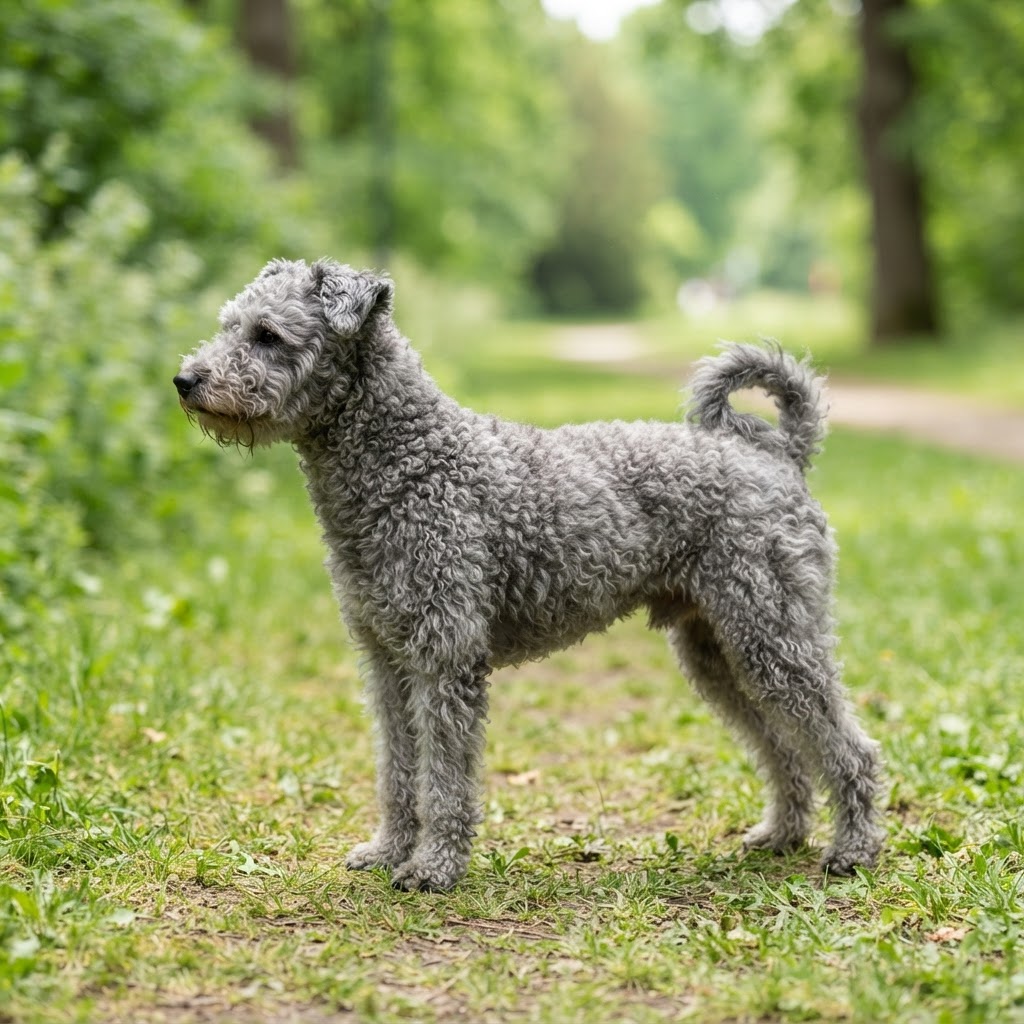
Pumi
Male: 10-15 kg, Female: 8-13 kg
38-47 cm at the shoulder
12-15 years
Hungary
About the Pumi
The Pumi is an ancient Hungarian herding breed characterized by its whimsical appearance, most notably its upright, tufted ears that curl at the tips. Emerging in the 17th and 18th centuries from the cross-breeding of the Puli with German and French prick-eared herding dogs and terriers, the Pumi developed into a fast, agile, and highly intelligent 'thinking' dog. Unlike many herding breeds that use a 'silent stare,' the Pumi is a proactive worker that uses movement and its voice to direct livestock, often showing a fearless attitude even toward much larger animals. In a domestic setting, the Pumi is intensely loyal and forms a deep bond with its family, though they can be reserved with strangers. They are famously expressive and 'clownish,' often using their paws to manipulate objects or communicate. Because of their high intelligence and heritage as a general-purpose farm dog, they require a 'job' to do; without mental engagement, their problem-solving skills may be directed toward mischief. They are not suited to a sedentary lifestyle but excel in almost every canine sport, particularly agility and obedience.
Breed Standard
Key characteristics from the breed standard
In the show ring, the Pumi is a study in jaunty, energetic symmetry. The breed standard calls for a square build and a head characterized by a long muzzle and the iconic 'koala' ears—upright with the top third tilting forward. Their movement is light-footed and spirited, showing great agility. Their coat, a precise blend of harsh and soft hairs that must never appear 'poodle-like' or 'matted,' demonstrates a rugged elegance that reflects their utilitarian history.
In Australia
Reliable Australian historical records for this breed’s introduction were not located.
Bred For
A versatile stock dog used for herding sheep, cattle, and swine, as well as for vermin control on Hungarian farms.
Temperament
Intelligent, lively, bold, alert, and whimsical with a distinctive vocal nature.
Health Conditions Reported in the Breed
, , (), and ().
Grooming Needs
Moderate; the coat requires combing every few weeks to prevent matting and professional clipping or hand-stripping every 2-3 months. The coat should never be brushed out flat.
Living Suitability
While they can adapt to apartment living if their significant exercise needs are met, they are best suited to homes with a yard or acreage where they can patrol and play. They are not 'couch potato' dogs and require active owners.
Good with Kids
Good with children, particularly those who are active and understand how to interact with a high-energy dog. Supervision is recommended with very young children due to the breed's herding instincts.
Good with Other Pets
Generally good with other dogs if socialized early; their terrier ancestry gives them a moderate to high prey drive, so caution and slow introductions are needed with small pets like cats or rabbits.
Trainability
Exceptionally high intelligence and eager to please, though they possess an independent streak. They learn new commands quickly but require variety to stay engaged.
Coat & Colours
A combination of fine hair and coarse hair forming curls or corkscrews all over the body; non-felting.. Grey (in various shades), Black, Fawn (white/yellow/red known as Fakó), and White.
Exercise needs vary by age, fitness, health, weather and individual temperament. Consult your veterinarian for an exercise plan appropriate for your dog.
Things to Consider
Every breed has its quirks — here's what to know
The Pumi is naturally predisposed to being very vocal—this was an essential trait for herding, but in a suburban setting, it means they are more likely to bark at passersby or strange noises. Providing early 'quiet' training is helpful. Because they are highly intelligent herders, they can be prone to 'nipping' at heels if their herding instinct is not redirected into play or work. Their coat, while low-shedding, can easily trap debris and form mats if not combed through to the skin every few weeks; this makes them less likely to leave fur on the furniture but more likely to require regular grooming sessions. Some Pumis can be prone to separation anxiety if left alone for long periods without mental stimulation, as they thrive on being near their 'pack.' Owners should also be aware that as a deep-chested breed, they can be more likely to experience gastric torsion (bloat), so feeding smaller, frequent meals rather than one large meal is a wise precaution. While generally hardy, they are more likely to carry genetic predispositions for Primary Lens Luxation (PLL) and Hip Dysplasia; always ensure parents are health-screened to manage these risks effectively.
Feeding Guide for Your Pumi
Healthy Weight
8-15 kg
Daily Feeding Amount (general starting estimate)
240-450 grams
For an average 12kg adult Pumi, start with approximately 240g to 360g of fresh food daily, adjusted based on their specific activity level and metabolic rate.
Feeding quantities are general starting estimates only. Individual needs vary with body condition, weight trends, age, health and activity. Ingredient percentages alone do not guarantee complete and balanced nutrition — consult a veterinarian for individualised dietary guidance.
Ingredient percentages alone do not guarantee complete and balanced nutrition. Seek veterinary or qualified canine nutrition guidance for individualised dietary advice. Raw feeding, specific proteins or fresh foods should not be presented as preventing, treating or managing breed health conditions without veterinary diagnosis and supervision.
Majestik's Recommended Feeding Approach
Breed Diet Notes
A high-protein, nutrient-dense diet suited to high-energy working breeds, ideally focusing on fresh, whole-food sources to maintain lean muscle mass.
A Pumi’s high-energy lifestyle is perfectly supported by lean, bioavailable proteins like Majestik Kangaroo or Beef. We recommend a rotation of Kangaroo for its low-fat, high-iron content and Lamb for healthy fats that support their unique corkscrew coat. Inclusion of crushed raw bone is essential for dental health, while organ meats like heart and liver provide vital fat-soluble vitamins. Given their heritage as hardy farm dogs, they benefit from a small amount of seasonal leafy greens and antioxidant-rich berries to support long-term immune health.
These are general breed-level notes only. The appropriate food and serving amount depend on the individual dog's age, health, body condition, activity and tolerance.
Majestik Recommendation
Majestik BARF meals follow our practical 70/10/10/10 approach: approximately 70% quality meat and protein ingredients, 10% edible bone, 10% vegetables and 10% offal. This gives customers a convenient fresh-food option without needing to source and portion every ingredient themselves.
Our Beef, Lamb and Roo BARF meals provide convenient fresh-food options, with suitable proteins chosen or rotated according to the individual dog.
Suitable for different needs
- Healthy adult: Majestik adult Beef, Lamb or Roo BARF meal.
- Puppy: Majestik Premium Puppy.
- Senior: Majestik Senior Blend.
- Working or highly active dog: Suitable Majestik adult meal with quantity adjusted to workload and body condition.
- Protein trial: One Majestik protein at a time.
Recommended Majestik BARF Meals


This is a practical starting recommendation for healthy dogs. Individual needs vary with age, health, body condition and activity.
Pumi Feeding Calculator
Personalised raw and cooked feeding recommendations based on your dog's profile
Ideal — Ribs palpable without excess fat. Visible waist. Abdominal tuck present.
Have a question about your Pumi? Dog Health AI
Why Majestik?
Fresh, raw pet food made with integrity in South Australia
Australian Made
Made in Two Wells, South Australia
Freshly Prepared
Real meat, organs, bone & wholefood ingredients
No Fillers
No cheap fillers or artificial preservatives
Family Owned
Locally owned and operated
Local Delivery
Delivery across Adelaide & selected areas
Secure Checkout
Secure payment via Shopify checkout
Subscribe & Save on Pumi Meals
Get your Pumi's fresh and raw meals delivered every two or four weeks. Small subscriptions are combined into a four-week box. Pause, skip or cancel anytime.
Breed Records & Facts
Average Litter Size
4-7 puppies
Pumi Owner Feedback
Real experiences and tips from Pumi owners
No reviews yet
Be the first to share your experience with this breed
Other Medium Breeds
References & Sources
Breed information verified against recognised breed authorities and veterinary evidence.