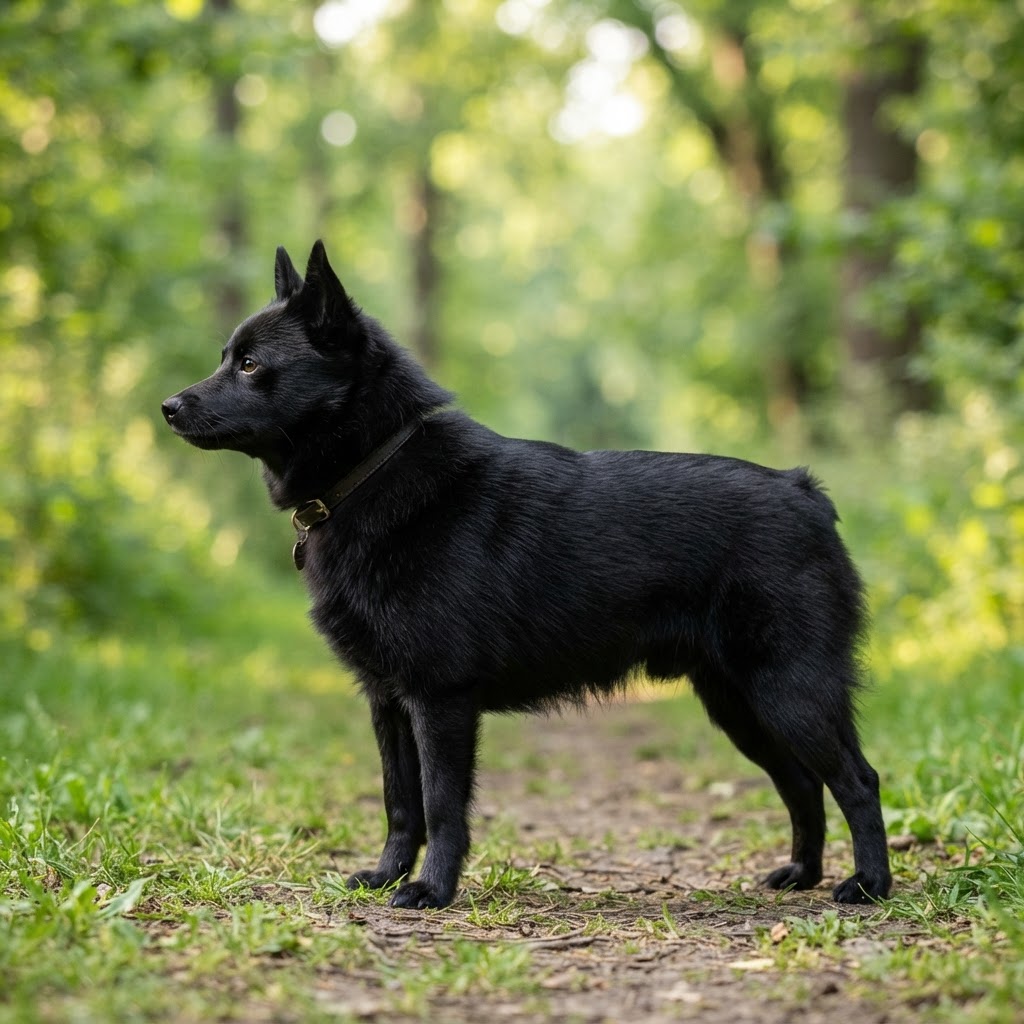
Schipperke
Male: 3-9 kg, Female: 3-9 kg
25-33 cm at the shoulder
13-15 years
Belgium
About the Schipperke
The Schipperke is a small, thickset, cobby dog with a distinctive fox-like expression and a unique double coat that forms a ruff around the neck. Originating from the Flemish regions of Belgium, they were known as the 'little captain' or 'little shepherd,' serving as tireless guardians on canal barges and in households. Despite their small stature, they possess the temperament and energy of a much larger working dog, always remaining alert and protective of their domain. In the home, they are remarkably active and inquisitive, often described as 'perpetual motion' dogs. They are highly intelligent and excel in various canine sports, though their independent nature means they require a firm and consistent handler. Their silhouette is unmistakable, characterised by a square profile and a coat that stands off the body, making them one of the most visually striking breeds in the small dog category.
Breed Standard
Key characteristics from the breed standard
In the ring, the Schipperke is defined by its silhouette: a perfectly square, cobby outline with a distinctive 'topline' that slopes slightly from the wither to the croup. Their movement is brisk and tucked-up, displaying a lively, effortless gait. The coat is the hallmark of the breed—a harsh, weather-resistant double coat that creates a dramatic ruff and 'culottes' on the thighs, giving them a powerful appearance for their size.
In Australia
The first Schipperke arrived in Australia from England in 1905, according to the Schipperke Club of NSW. As noted by Dogs Australia, the breed is recognized for its versatility as a watchdog and as a companion.
Bred For
Guard dogs for barges and shops, vermin hunters (rats and mice), and sheep herding assistants.
Temperament
Curious, confident, independent, alert, and intensely loyal with a mischievous streak.
Health Conditions Reported in the Breed
Mucopolyccharidosis Type IIIB (MPS IIIB), , , , and ().
Grooming Needs
Moderate; requires weekly brushing to manage the thick double coat, increasing to daily during seasonal shedding (blowing coat).
Living Suitability
Well-suited to both apartments and houses with yards, provided their high mental and physical energy needs are met daily. They are excellent indoor companions but require secure fencing due to their curiosity.
Good with Kids
Good with older, respectful children; their high energy and 'herding' instincts may be overwhelming for very young toddlers.
Good with Other Pets
Generally good with other dogs if socialised early; however, their high prey drive means they may chase small pets like rodents or cats unless raised with them.
Trainability
Highly intelligent but independent; they learn quickly but may choose to ignore commands if they find something more interesting. Requires engaging, positive reinforcement training.
Coat & Colours
Abundant, straight, and slightly harsh double coat with a distinctive ruff, jabot, and culottes.. Usually solid black; however, other solid colours are recognised in some international standards (though black is the only colour accepted by Dogs Australia).
Exercise needs vary by age, fitness, health, weather and individual temperament. Consult your veterinarian for an exercise plan appropriate for your dog.
Things to Consider
Every breed has its quirks — here's what to know
Schipperkes are more likely to be vocal; they are natural watchdogs who will alert you to every change in their environment, which requires consistent 'quiet' training. They are predisposed to Mucopolysaccharidosis Type IIIB (MPS IIIB), a rare but serious metabolic disorder, so prospective owners should ensure parents are DNA tested. Their thick double coat means they are light-to-moderate shedders year-round, but they will 'blow' their entire undercoat twice a year, resulting in heavy shedding that requires daily vacuuming and brushing. Like many small breeds, they are prone to dental disease and patellar luxation, so regular dental care and weight management are vital to keep them agile. They possess a high prey drive and a stubborn streak, meaning they may be 'escape artists' if a fence is not secure or if they spot a bird to chase. However, for an active owner, these traits manifest as an endlessly entertaining, loyal, and brave companion who is always ready for an adventure.
Feeding Guide for Your Schipperke
Healthy Weight
3-9 kg
Daily Feeding Amount (general starting estimate)
120-270 grams
Schipperkes thrive on a fresh, raw diet that emphasizes lean proteins like kangaroo or white fish to maintain a lean physique. We recommend feeding approximately 2-3% of their ideal body weight daily. For an average 6kg Schipperke, this equates to roughly 120g to 180g of fresh food per day, split into two meals. Because they are highly food-motivated, treats should be accounted for in their total daily intake.
Feeding quantities are general starting estimates only. Individual needs vary with body condition, weight trends, age, health and activity. Ingredient percentages alone do not guarantee complete and balanced nutrition — consult a veterinarian for individualised dietary guidance.
Ingredient percentages alone do not guarantee complete and balanced nutrition. Seek veterinary or qualified canine nutrition guidance for individualised dietary advice. Raw feeding, specific proteins or fresh foods should not be presented as preventing, treating or managing breed health conditions without veterinary diagnosis and supervision.
Majestik's Recommended Feeding Approach
Breed Diet Notes
A high-protein, nutrient-dense diet with controlled fat levels to prevent obesity, which this breed is highly prone to.
A balanced raw diet for a Schipperke should focus on lean Australian proteins available from Majestik Pet Food, such as Kangaroo or Beef, to manage weight. Adding small amounts of leafy greens and berries provides essential antioxidants. Given their predisposition to hypothyroidism and skin issues, ensuring a diet rich in Omega-3 fatty acids from fish is highly beneficial.
These are general breed-level notes only. The appropriate food and serving amount depend on the individual dog's age, health, body condition, activity and tolerance.
Majestik Recommendation
Majestik BARF meals follow our practical 70/10/10/10 approach: approximately 70% quality meat and protein ingredients, 10% edible bone, 10% vegetables and 10% offal. This gives customers a convenient fresh-food option without needing to source and portion every ingredient themselves.
Our Beef, Lamb and Roo BARF meals provide convenient fresh-food options, with suitable proteins chosen or rotated according to the individual dog.
Suitable for different needs
- Healthy adult: Majestik adult Beef, Lamb or Roo BARF meal.
- Puppy: Majestik Premium Puppy.
- Senior: Majestik Senior Blend.
- Working or highly active dog: Suitable Majestik adult meal with quantity adjusted to workload and body condition.
- Protein trial: One Majestik protein at a time.
Recommended Majestik BARF Meals


This is a practical starting recommendation for healthy dogs. Individual needs vary with age, health, body condition and activity.
Schipperke Feeding Calculator
Personalised raw and cooked feeding recommendations based on your dog's profile
Ideal — Ribs palpable without excess fat. Visible waist. Abdominal tuck present.
Have a question about your Schipperke? Dog Health AI
Why Majestik?
Fresh, raw pet food made with integrity in South Australia
Australian Made
Made in Two Wells, South Australia
Freshly Prepared
Real meat, organs, bone & wholefood ingredients
No Fillers
No cheap fillers or artificial preservatives
Family Owned
Locally owned and operated
Local Delivery
Delivery across Adelaide & selected areas
Secure Checkout
Secure payment via Shopify checkout
Subscribe & Save on Schipperke Meals
Get your Schipperke's fresh and raw meals delivered every two or four weeks. Small subscriptions are combined into a four-week box. Pause, skip or cancel anytime.
Breed Records & Facts
Average Litter Size
3-7 puppies
Schipperke Owner Feedback
Real experiences and tips from Schipperke owners
No reviews yet
Be the first to share your experience with this breed
Other Small Breeds
References & Sources
Breed information verified against recognised breed authorities and veterinary evidence.