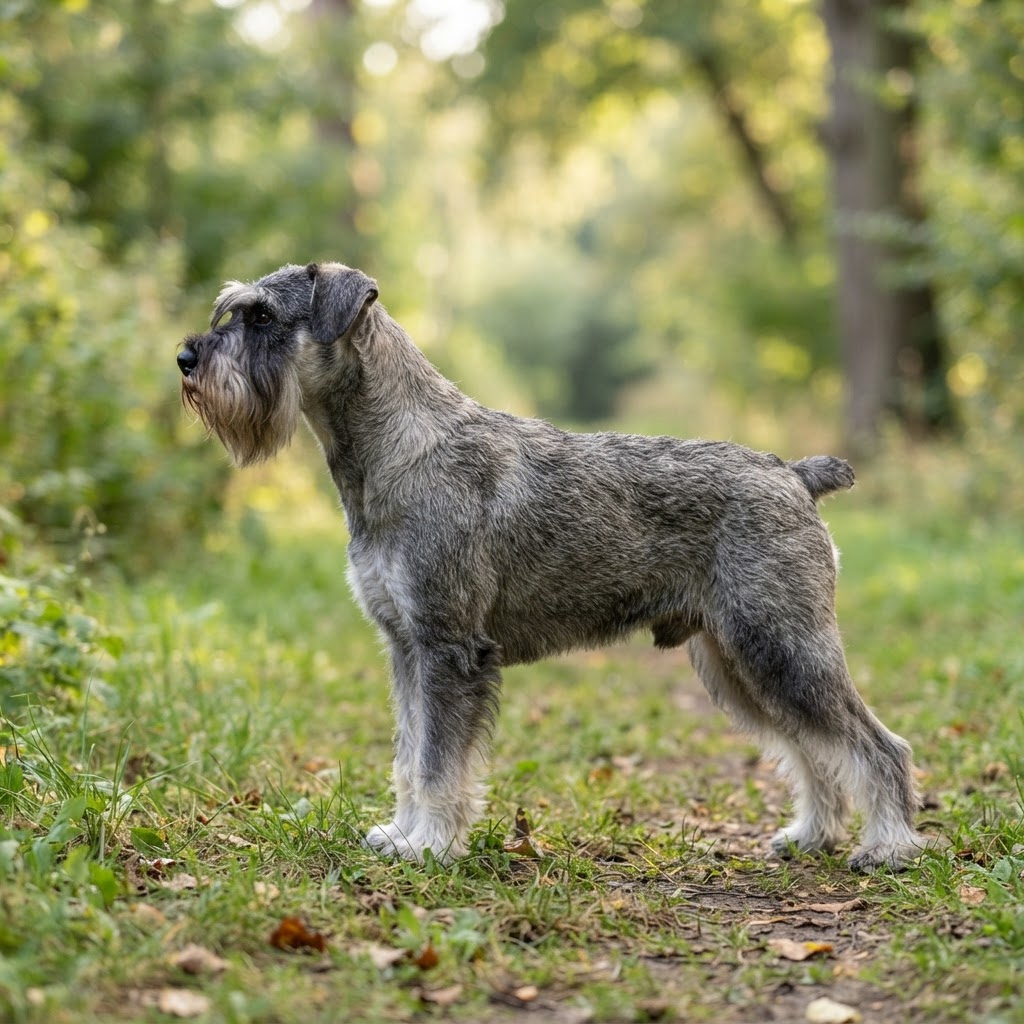
Schnauzer
Male: 18-26 kg, Female: 14-20 kg
45-50 cm at the shoulder
13-16 years
Germany
About the Schnauzer
The Standard Schnauzer is the original prototype of the three Schnauzer breeds, characterized by its robust, squarish build and distinctive 'human-like' facial expressions. Originating in the Bavarian regions of Germany, they were prized as versatile farm dogs capable of shifting from a fierce ratter to a focused livestock guardian or a loyal family companion. Their physical hallmark is the wiry, weather-resistant double coat, accentuated by a prominent beard and bushy eyebrows that protect their eyes and muzzle while working. Unlike many other breeds, the Schnauzer is often described as a 'dog with a human brain' due to its remarkable problem-solving abilities and discerning nature. They are deeply devoted to their families but maintain a natural reserve toward strangers, making them excellent watchdogs. Their high intelligence requires consistent, engaging training to prevent boredom, and they thrive when given a specific job or task to perform alongside their owners.
Breed Standard
Key characteristics from the breed standard
In the show ring, the Standard Schnauzer is a study in architectural balance, presenting a robust, nearly square silhouette that suggests both agility and power. Their movement is distinctively clean and ground-covering, with a firm backline that remains level during the trot. Judges look for the 'harsh' texture of the wiry coat and the characteristic rectangular head shape, which must be enhanced by correct grooming of the furnishings. Unlike more submissive breeds, the Schnauzer stands his ground with a dignified, 'on-guard' posture that is both aristocratic and ruggedly functional, representing a perfect synthesis of utility and elegance.
In Australia
The history of the Schnauzer in Australia includes a significant record from 1934, as documented by Dogs NSW.
Bred For
Ratting, guarding, herding, and general farm work
Temperament
Intelligent, spirited, reliable, and protective
Health Conditions Reported in the Breed
, hyperlipidemia, , follicular dysplasia (Schnauzer bumps), and .
Grooming Needs
High; requires regular professional clipping or hand-stripping, daily beard cleaning, and ear plucking.
Living Suitability
Adaptable to apartments if heavily exercised; thrives best in a house with a secure yard and significant human interaction.
Good with Kids
Generally good with older children; their spirited nature may be too intense for toddlers without supervision.
Good with Other Pets
Often dominant with other dogs; high prey drive means they should be introduced carefully to small animals and cats.
Trainability
Highly intelligent but independent; requires firm, consistent, and creative training methods.
Coat & Colours
Wiry, hard, and dense with a soft undercoat. Pepper and salt, or pure black
Exercise needs vary by age, fitness, health, weather and individual temperament. Consult your veterinarian for an exercise plan appropriate for your dog.
Things to Consider
Every breed has its quirks — here's what to know
Schnauzers are more likely to experience hyperlipidemia (elevated blood fats) and pancreatitis—this doesn't mean every dog will, but it is a significant breed predisposition that requires a lifelong commitment to a low-fat diet. While this sounds daunting, many Schnauzers live long, vibrant lives on carefully managed fresh food. They are also prone to 'Schnauzer Bumps' (comedo syndrome), which are small blackheads along the spine; regular grooming and high-quality skin support in their diet can help manage this. Owners should be prepared for their vocal nature, as they take their role as watchdogs seriously and will alert you to any change in their environment. Their high intelligence can sometimes manifest as a stubborn streak, but this is simply their independent spirit—they respond wonderfully to positive, reward-based training that challenges their minds. Lastly, their beautiful beard and eyebrows require daily cleaning to prevent food buildup and odours, which serves as a lovely daily bonding ritual for many owners.
Feeding Guide for Your Schnauzer
Healthy Weight
14-26 kg
Daily Feeding Amount (general starting estimate)
400-650 grams
Adult Schnauzers should be fed approximately 2-3% of their ideal body weight daily in fresh food, divided into two meals. Due to their predisposition to pancreatitis, lean proteins are mandatory. For a 20 kg adult, this equates to roughly 400-600 grams per day. Focus on ultra-lean proteins like kangaroo or white fish, and avoid high-fat trimmings or fatty treats.
Feeding quantities are general starting estimates only. Individual needs vary with body condition, weight trends, age, health and activity. Ingredient percentages alone do not guarantee complete and balanced nutrition — consult a veterinarian for individualised dietary guidance.
Ingredient percentages alone do not guarantee complete and balanced nutrition. Seek veterinary or qualified canine nutrition guidance for individualised dietary advice. Raw feeding, specific proteins or fresh foods should not be presented as preventing, treating or managing breed health conditions without veterinary diagnosis and supervision.
Majestik's Recommended Feeding Approach
Breed Diet Notes
A high-protein, strictly low-fat diet is essential to prevent hyperlipidemia and pancreatitis.
The ideal raw diet for a Schnauzer focuses on maintaining low circulating blood fats. We recommend Majestik's lean Kangaroo or White Fish as the primary protein sources, as these provide high-quality amino acids without the high fat content of domestic beef or lamb. The ratio should consist of approximately 70% lean muscle meat, 10% crushed bone (for calcium and dental health), 10% organ meats (liver/kidney in moderation), and 10% blended green vegetables like spinach or broccoli to provide essential antioxidants and fiber. Avoid feeding fatty poultry skins or marrow bones with high fat content. Always ensure fresh, filtered water is available to support kidney and digestive function.
These are general breed-level notes only. The appropriate food and serving amount depend on the individual dog's age, health, body condition, activity and tolerance.
Majestik Recommendation
Majestik BARF meals follow our practical 70/10/10/10 approach: approximately 70% quality meat and protein ingredients, 10% edible bone, 10% vegetables and 10% offal. This gives customers a convenient fresh-food option without needing to source and portion every ingredient themselves.
Our Beef, Lamb and Roo BARF meals provide convenient fresh-food options, with suitable proteins chosen or rotated according to the individual dog.
Suitable for different needs
- Healthy adult: Majestik adult Beef, Lamb or Roo BARF meal.
- Puppy: Majestik Premium Puppy.
- Senior: Majestik Senior Blend.
- Working or highly active dog: Suitable Majestik adult meal with quantity adjusted to workload and body condition.
- Protein trial: One Majestik protein at a time.
Recommended Majestik BARF Meals


This is a practical starting recommendation for healthy dogs. Individual needs vary with age, health, body condition and activity.
Schnauzer Feeding Calculator
Personalised raw and cooked feeding recommendations based on your dog's profile
Ideal — Ribs palpable without excess fat. Visible waist. Abdominal tuck present.
Have a question about your Schnauzer? Dog Health AI
Why Majestik?
Fresh, raw pet food made with integrity in South Australia
Australian Made
Made in Two Wells, South Australia
Freshly Prepared
Real meat, organs, bone & wholefood ingredients
No Fillers
No cheap fillers or artificial preservatives
Family Owned
Locally owned and operated
Local Delivery
Delivery across Adelaide & selected areas
Secure Checkout
Secure payment via Shopify checkout
Subscribe & Save on Schnauzer Meals
Get your Schnauzer's fresh and raw meals delivered every two or four weeks. Small subscriptions are combined into a four-week box. Pause, skip or cancel anytime.
Breed Records & Facts
Average Litter Size
4-8 puppies
Schnauzer Owner Feedback
Real experiences and tips from Schnauzer owners
No reviews yet
Be the first to share your experience with this breed
Other Medium Breeds
References & Sources
Breed information verified against recognised breed authorities and veterinary evidence.