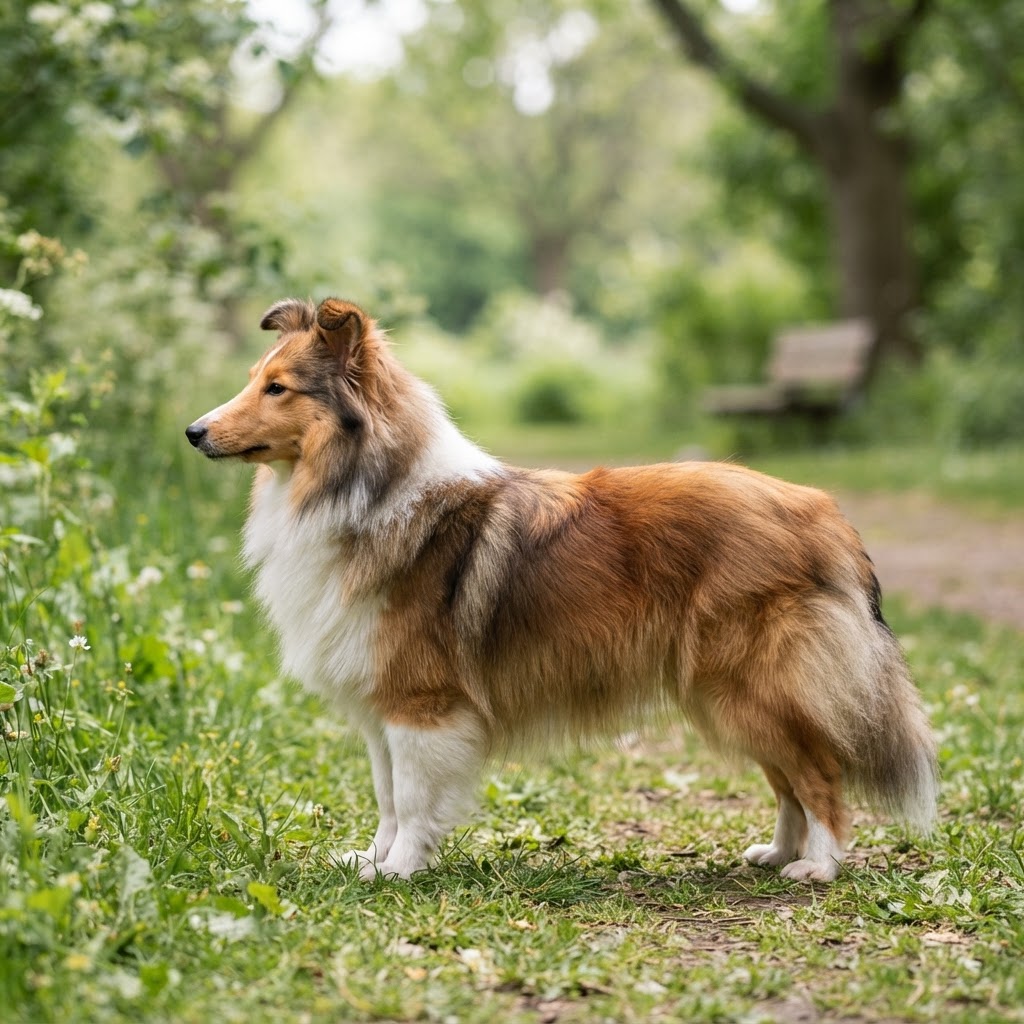
Shetland Sheepdog
Male: 7-12 kg, Female: 6-10 kg
Ideal height at the shoulder: Males 37 cm, Females 35.5 cm (Dogs Australia Standard).
12-15 years
Shetland Islands, Scotland
About the Shetland Sheepdog
The Shetland Sheepdog, or 'Sheltie', is a small, incredibly agile herding dog that resembles a miniature Rough Collie. Originating from the rugged Shetland Islands, these dogs were developed to be hardy and versatile, capable of managing livestock in harsh environments. They are renowned for their 'melting' expression, characterized by their sweet, soulful eyes and semi-erect ears that tip forward at the peaks. Despite their small stature, they possess a big personality and a work ethic that makes them champions in the agility ring. In a home environment, Shelties are devoted companions that often act as 'shadows,' following their owners from room to room. They are highly attuned to human emotion and thrive on inclusion in family activities. While they are exceptionally bright and easy to train, their sensitive nature means they respond best to positive, reward-based methods. Their vocal nature makes them excellent watchdogs, though their penchant for barking requires consistent management from puppyhood.
Breed Standard
Key characteristics from the breed standard
In the show ring, the Sheltie is a picture of symmetrical grace and refined strength. The breed standard emphasizes a long, wedge-shaped head with a flat skull and a slight but definite stop. Their movement is a hallmark of the breed; it should be smooth, effortless, and ground-covering, showing no signs of stiltedness despite their size. The coat is a crowning glory, standing well out from the body with a profuse mane and frill.
In Australia
The Shetland Sheepdog was first introduced to Australia in 1936 with the import of the bitch Helensdale Fraoch, as reported by the Shetland Sheepdog Club of NSW.
Bred For
Herding and protecting sheep, ponies, and poultry on small crofts (farms) in the Shetland Islands.
Temperament
Intelligent, alert, affectionate, and loyal. They are famously sensitive to their owner's moods and can be reserved or aloof with strangers.
Health Conditions Reported in the Breed
Collie Eye Anomaly (CEA), (), , Dermatomyositis (a skin condition), (), and Multidrug Sensitivity (MDR1 gene mutation). They are also notably predisposed to Gallbladder Mucoceles and .
Exercise Needs
Moderate to High. They require daily walks combined with mental stimulation such as herding trials, agility, or obedience training to prevent boredom-related barking.
Grooming Needs
Heavy. Their double coat requires thorough brushing at least twice a week, increasing to daily during seasonal shedding ('blowing') periods to prevent matting and manage loose hair.
Living Suitability
Suited to both apartments and houses with yards, provided their exercise and mental needs are met. However, their vocal nature may be a challenge in close-quarters apartment living without proper training.
Good with Kids
Generally very good with children, particularly older children who respect their sensitive nature. They may attempt to 'herd' small children by nipping at heels.
Good with Other Pets
Excellent with other dogs and usually peaceful with cats, especially when raised together. Their herding instinct may cause them to chase smaller pets.
Trainability
Exceptionally high. Ranked as one of the most intelligent dog breeds, they learn new commands quickly and are eager to please, though they can be sensitive to harsh corrections.
Coat & Colours
Double coat: a long, straight, harsh-textured outer coat and a short, soft, dense undercoat.. Sable (ranging from golden to mahogany), Tricolour (black, white, and tan), Blue Merle, Black and White, and Black and Tan.
Exercise needs vary by age, fitness, health, weather and individual temperament. Consult your veterinarian for an exercise plan appropriate for your dog.
Things to Consider
Every breed has its quirks — here's what to know
Prospective Sheltie owners should be prepared for their 'voice'; they are alert barkers and will vocally announce visitors, birds, or even changes in the wind—consistent training can help keep this to a manageable 'occasional bark.' Shedding is a significant consideration, as their dense double coat will 'blow' twice a year, resulting in substantial fur around the home; regular grooming is a lovely way to bond but is a non-negotiable time commitment. Health-wise, they are more likely to have the MDR1 gene mutation, meaning they can have life-threatening reactions to common veterinary drugs like Ivermectin; always discuss this with your vet. They are also predisposed to gallbladder mucoceles and hypothyroidism, which can often be managed with a controlled, high-quality diet. While their herding instinct might lead to some heel-nipping with fast-moving children or pets, this is simply their heritage showing through and can be redirected into fun games or sports like agility. They are 'velcro dogs' who may experience separation anxiety if left alone for very long periods, but their extreme loyalty makes them one of the most rewarding companions a dedicated owner could ask for.
Feeding Guide for Your Shetland Sheepdog
Healthy Weight
7-11 kg
Daily Feeding Amount (general starting estimate)
180-330 grams
A fresh or raw diet for a Sheltie should focus on lean proteins to prevent weight gain, which can exacerbate joint and gallbladder issues. Owners should feed approximately 2-3% of the dog's ideal adult body weight daily. For a 9kg Sheltie, this equates to roughly 180g to 270g of fresh food per day, split into two meals. Adjust amounts based on activity level and age.
Feeding quantities are general starting estimates only. Individual needs vary with body condition, weight trends, age, health and activity. Ingredient percentages alone do not guarantee complete and balanced nutrition — consult a veterinarian for individualised dietary guidance.
Ingredient percentages alone do not guarantee complete and balanced nutrition. Seek veterinary or qualified canine nutrition guidance for individualised dietary advice. Raw feeding, specific proteins or fresh foods should not be presented as preventing, treating or managing breed health conditions without veterinary diagnosis and supervision.
Majestik's Recommended Feeding Approach
Breed Diet Notes
A high-protein, moderate-fat diet rich in Omega fatty acids to support their dense double coat. They benefit from fresh, whole-food diets that avoid excessive fillers, which helps manage their predisposition to obesity and gallbladder issues.
A balanced raw diet for a Sheltie should include lean Australian proteins like Kangaroo or Beef to maintain a healthy weight. Including seasonal green vegetables and a source of Omega-3, like sardines or fish oil, is vital for maintaining their iconic, heavy coat. Given their predisposition to gallbladder issues, keeping the fat content moderate rather than high is a prudent breed-specific consideration.
These are general breed-level notes only. The appropriate food and serving amount depend on the individual dog's age, health, body condition, activity and tolerance.
Majestik Recommendation
Majestik BARF meals follow our practical 70/10/10/10 approach: approximately 70% quality meat and protein ingredients, 10% edible bone, 10% vegetables and 10% offal. This gives customers a convenient fresh-food option without needing to source and portion every ingredient themselves.
Our Beef, Lamb and Roo BARF meals provide convenient fresh-food options, with suitable proteins chosen or rotated according to the individual dog.
Suitable for different needs
- Healthy adult: Majestik adult Beef, Lamb or Roo BARF meal.
- Puppy: Majestik Premium Puppy.
- Senior: Majestik Senior Blend.
- Working or highly active dog: Suitable Majestik adult meal with quantity adjusted to workload and body condition.
- Protein trial: One Majestik protein at a time.
Recommended Majestik BARF Meals


This is a practical starting recommendation for healthy dogs. Individual needs vary with age, health, body condition and activity.
Shetland Sheepdog Feeding Calculator
Personalised raw and cooked feeding recommendations based on your dog's profile
Ideal — Ribs palpable without excess fat. Visible waist. Abdominal tuck present.
Have a question about your Shetland Sheepdog? Dog Health AI
Why Majestik?
Fresh, raw pet food made with integrity in South Australia
Australian Made
Made in Two Wells, South Australia
Freshly Prepared
Real meat, organs, bone & wholefood ingredients
No Fillers
No cheap fillers or artificial preservatives
Family Owned
Locally owned and operated
Local Delivery
Delivery across Adelaide & selected areas
Secure Checkout
Secure payment via Shopify checkout
Subscribe & Save on Shetland Sheepdog Meals
Get your Shetland Sheepdog's fresh and raw meals delivered every two or four weeks. Small subscriptions are combined into a four-week box. Pause, skip or cancel anytime.
Breed Records & Facts
Average Litter Size
4-6 puppies
Shetland Sheepdog Owner Feedback
Real experiences and tips from Shetland Sheepdog owners
No reviews yet
Be the first to share your experience with this breed
Other Small Breeds
References & Sources
Breed information verified against recognised breed authorities and veterinary evidence.