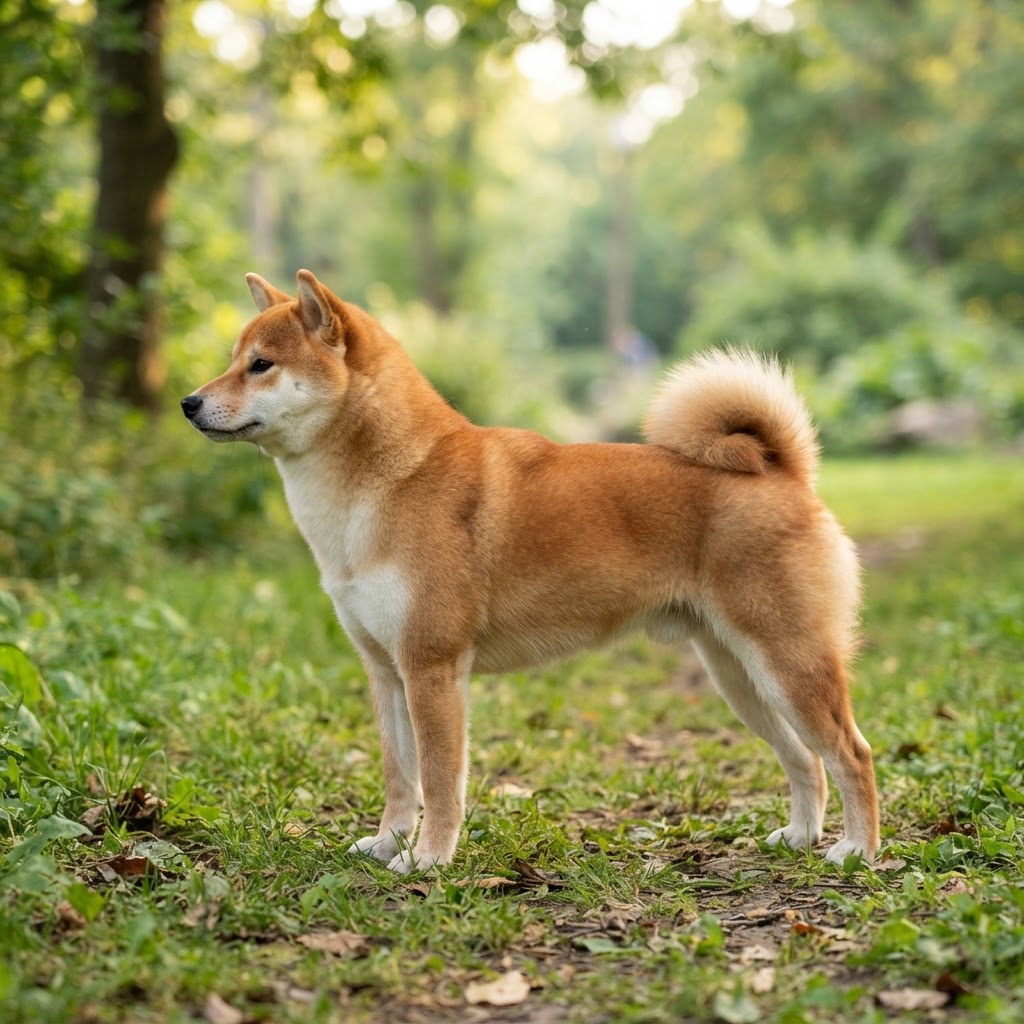
Shiba Inu
Male: 9-11 kg, Female: 7-9 kg
35-43 cm at the shoulder (Females: 35-38 cm; Males: 38-41 cm)
12-15 years
Japan
About the Shiba Inu
The Shiba Inu is the smallest and oldest of Japan's native 'Nihon Ken' breeds, originally prized as a versatile hunter in rugged terrain. With a fox-like expression, upright triangular ears, and a plush curled tail, the Shiba possesses a distinctively regal and alert silhouette. They are famous for their 'cat-like' personality, often displaying a fastidious nature and a strong sense of independence while remaining intensely devoted to their chosen family. In a domestic setting, the Shiba is a vigilant watchman and a spirited companion, though they retain a primitive prey drive and a discerning attitude toward strangers. Their intelligence is high, but they utilize it with a characteristic 'what is in it for me' mindset, requiring owners to use creative and positive reinforcement. Their compact size makes them adaptable, yet their bold spirit demands respect and consistent leadership.
Breed Standard
Key characteristics from the breed standard
In the conformation ring, the Shiba Inu must exude 'Kan-i' (bravery and composure) through a bold, confident stance and a keen, spirited gaze. The movement should be light and brisk, reflecting the agility of a mountain hunter. A defining show attribute is the 'urajiro'—the precise cream or white markings that must appear on the muzzle, cheeks, chest, and tail underside.
In Australia
The Shiba Inu was first introduced to Australia in 1987, when the first specimen was imported from Japan as documented by the Shiba Inu Club of Victoria. Since that time, the breed has been establishing its presence under the ANKC, a process noted by Dogs Victoria.
Bred For
Originally bred for hunting small game and birds in the dense undergrowth of Japan's mountainous regions.
Temperament
Independent, alert, spirited, loyal, and bold.
Health Conditions Reported in the Breed
, , GM1 Gangliosidosis (a rare but serious genetic condition), and various allergies ().
Exercise Needs
Requires roughly 60 minutes of daily activity, including brisk walks and mental stimulation to satisfy their hunting instincts.
Grooming Needs
Moderate; they are exceptionally clean but require regular brushing, especially during their twice-yearly heavy shedding periods.
Living Suitability
Highly suitable for apartment living or houses with small yards, provided they receive daily outdoor exercise; however, yards must be extremely secure.
Good with Kids
Generally good with older, respectful children; may be less tolerant of the erratic handling of toddlers.
Good with Other Pets
Can be territorial or dog-aggressive, especially with same-sex dogs; high prey drive means caution is needed with small pets.
Trainability
Highly intelligent but notoriously independent and stubborn; training requires patience and positive, reward-based methods.
Coat & Colours
Double coat with a stiff, straight outer coat and a soft, dense undercoat.. Red, black and tan, or sesame (red with black-tipped hairs), all featuring 'urajiro' (white/cream markings).
Exercise needs vary by age, fitness, health, weather and individual temperament. Consult your veterinarian for an exercise plan appropriate for your dog.
Things to Consider
Every breed has its quirks — here's what to know
Prospective owners should be aware that Shiba Inus are more likely to experience atopic dermatitis and skin allergies, which may require dietary adjustments or veterinary management; this doesn't mean every Shiba will, but skin health is a common focus. They are also prone to patellar luxation, meaning maintaining a lean weight is crucial to protect their joints. The 'Shiba Scream' is a unique vocalisation they use when upset or excited, which can be startling for the uninitiated. Their heavy seasonal shedding—often called 'blowing coat'—will result in significant fur throughout the home twice a year, necessitating daily vacuuming. Furthermore, they are notorious escape artists and are rarely reliable off-leash due to their high prey drive; however, their cleverness and loyalty make them incredibly rewarding for those who appreciate a dog with a strong, independent mind. Finally, they can be more likely to develop digestive sensitivities on standard commercial kibbles, often thriving significantly better on a fresh, limited-ingredient diet like Majestik.
Feeding Guide for Your Shiba Inu
Healthy Weight
8-11 kg
Daily Feeding Amount (general starting estimate)
160-330 grams
For an adult Shiba Inu, a fresh or raw diet should focus on high-quality proteins. Based on a healthy weight of 8-11 kg, they should consume approximately 160 to 330 grams of fresh food per day, ideally split into two meals. This quantity represents roughly 2-3% of their body weight, though highly active individuals may require the higher end of the range.
Feeding quantities are general starting estimates only. Individual needs vary with body condition, weight trends, age, health and activity. Ingredient percentages alone do not guarantee complete and balanced nutrition — consult a veterinarian for individualised dietary guidance.
Ingredient percentages alone do not guarantee complete and balanced nutrition. Seek veterinary or qualified canine nutrition guidance for individualised dietary advice. Raw feeding, specific proteins or fresh foods should not be presented as preventing, treating or managing breed health conditions without veterinary diagnosis and supervision.
Majestik's Recommended Feeding Approach
Breed Diet Notes
A high-quality diet rich in Omega-3 fatty acids to support skin health, preferably a fresh or raw diet that avoids common fillers and artificial additives.
Recommended proteins from Majestik include Kangaroo (excellent for weight management and skin health), Beef, and Lamb. Supplement suitability and dosage depend on the individual dog’s diet and health. Discuss targeted supplementation with your veterinarian or qualified canine nutrition professional. Incorporating seasonal green vegetables provides necessary fiber and antioxidants to support their metabolic health.
These are general breed-level notes only. The appropriate food and serving amount depend on the individual dog's age, health, body condition, activity and tolerance.
Majestik Recommendation
Majestik BARF meals follow our practical 70/10/10/10 approach: approximately 70% quality meat and protein ingredients, 10% edible bone, 10% vegetables and 10% offal. This gives customers a convenient fresh-food option without needing to source and portion every ingredient themselves.
Our Beef, Lamb and Roo BARF meals provide convenient fresh-food options, with suitable proteins chosen or rotated according to the individual dog.
Suitable for different needs
- Healthy adult: Majestik adult Beef, Lamb or Roo BARF meal.
- Puppy: Majestik Premium Puppy.
- Senior: Majestik Senior Blend.
- Working or highly active dog: Suitable Majestik adult meal with quantity adjusted to workload and body condition.
- Protein trial: One Majestik protein at a time.
Recommended Majestik BARF Meals


This is a practical starting recommendation for healthy dogs. Individual needs vary with age, health, body condition and activity.
Shiba Inu Feeding Calculator
Personalised raw and cooked feeding recommendations based on your dog's profile
Ideal — Ribs palpable without excess fat. Visible waist. Abdominal tuck present.
Have a question about your Shiba Inu? Dog Health AI
Why Majestik?
Fresh, raw pet food made with integrity in South Australia
Australian Made
Made in Two Wells, South Australia
Freshly Prepared
Real meat, organs, bone & wholefood ingredients
No Fillers
No cheap fillers or artificial preservatives
Family Owned
Locally owned and operated
Local Delivery
Delivery across Adelaide & selected areas
Secure Checkout
Secure payment via Shopify checkout
Subscribe & Save on Shiba Inu Meals
Get your Shiba Inu's fresh and raw meals delivered every two or four weeks. Small subscriptions are combined into a four-week box. Pause, skip or cancel anytime.
Breed Records & Facts
Oldest Recorded
Pusuke (26 years and 248 days)
Average Litter Size
3-5 puppies
Shiba Inu Owner Feedback
Real experiences and tips from Shiba Inu owners
No reviews yet
Be the first to share your experience with this breed
Other Small Breeds
References & Sources
Breed information verified against recognised breed authorities and veterinary evidence.