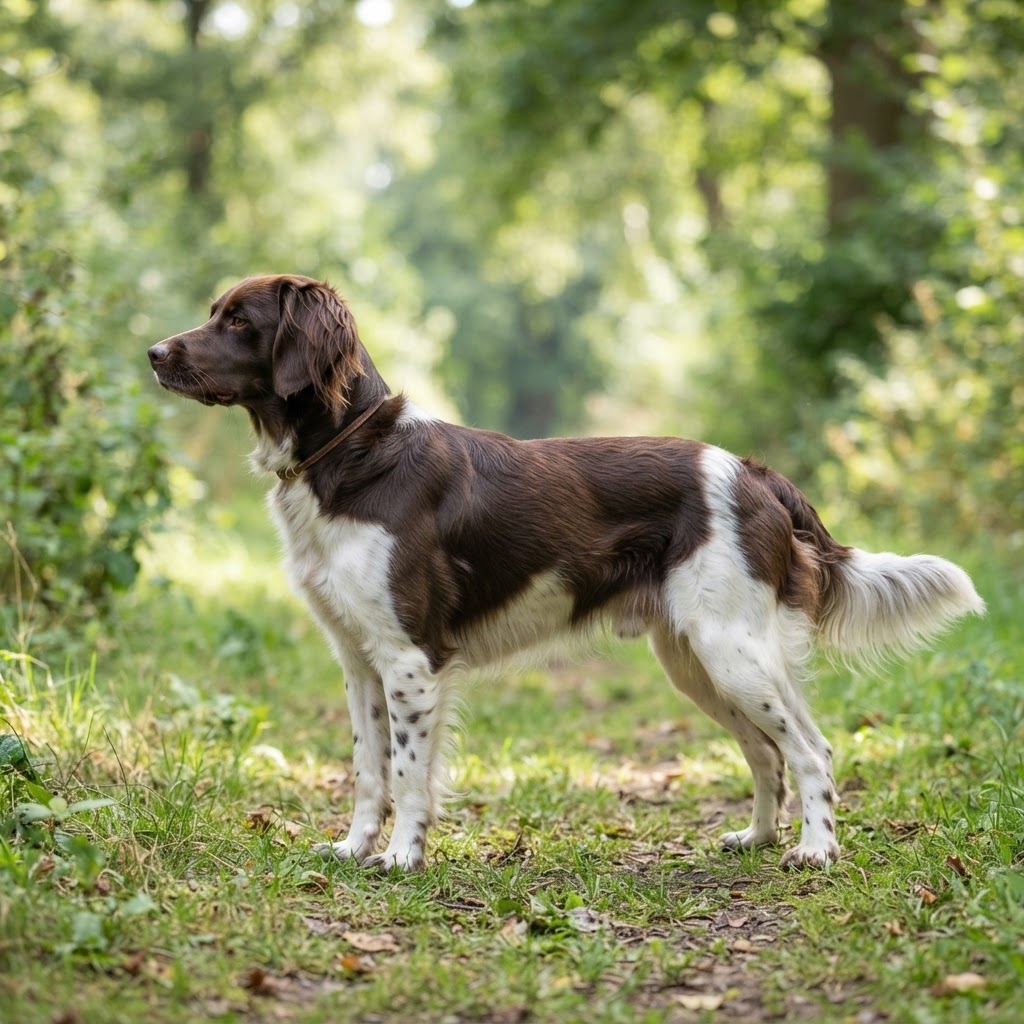
Small Munsterlander
Male: 18-27 kg, Female: 18-27 kg
Males: 52-56 cm; Females: 50-54 cm at the shoulder.
12-13 years
Germany (Münster region)
About the Small Munsterlander
The Small Munsterlander is an elegant and versatile German gundog, distinguished by its noble appearance and harmonious proportions. Originally developed in the Münster region of Germany in the late 19th and early 20th centuries, this breed was refined to be a multi-purpose hunter capable of pointing, retrieving, and tracking game across diverse terrains. Despite its name, it is a medium-sized dog with a robust constitution, possessing a dense, medium-length coat that provides protection in thick brush and cold water. In the home, the Small Munsterlander is known for being an affectionate and loyal companion. They are deeply social animals that thrive on human interaction and integrated family life. Their intelligence and eagerness to please make them highly capable in various canine sports, though they remain, first and foremost, a driven working breed that requires consistent mental and physical outlets to remain happy and balanced.
Breed Standard
Key characteristics from the breed standard
In the show ring, the Small Munsterlander is judged on its noble carriage and balanced, athletic build. The breed standard emphasizes a 'noble head' with a soft expression and medium-sized, high-set ears. Their movement should be fluid, ground-covering, and effortless, showing great reach and drive. The coat must be dense and smooth, neither curly nor silky, with distinctive feathering that enhances its elegant silhouette without being excessive.
Bred For
Versatile hunting, pointing, and retrieving on land and in water.
Temperament
Intelligent, spirited, social, and highly trainable with a strong desire to work.
Health Conditions Reported in the Breed
, ear infections (otitis externa), and occasionally eye conditions such as or .
Grooming Needs
Moderate; requires weekly brushing to prevent matting in the feathering, along with regular ear cleaning and nail trimming.
Living Suitability
Not suited for apartment living; requires a home with a large, secure yard or access to acreage where they can run and explore.
Good with Kids
Excellent with children, particularly when raised together; they are patient and playful family members.
Good with Other Pets
Generally social with other dogs; however, their high prey drive means they should be introduced carefully to smaller household pets.
Trainability
Highly trainable; they are exceptionally intelligent and respond best to positive reinforcement and varied training tasks.
Coat & Colours
Medium length, dense, and smooth with significant feathering on the legs and tail.. Brown and white, or brown roan, often featuring brown patches, a mantle, or ticking.
Exercise needs vary by age, fitness, health, weather and individual temperament. Consult your veterinarian for an exercise plan appropriate for your dog.
Things to Consider
Every breed has its quirks — here's what to know
Small Munsterlanders are high-octane athletes; their significant exercise demands mean they can become restless or destructive if confined without enough activity—a long walk is rarely enough, so plan for off-leash running or fetch. Their long, floppy ears are prone to moisture trapping and infections, so a quick weekly ear check and clean is a must to keep them comfortable. With their strong hunting heritage comes a high prey drive; while they are very trainable, they may be prone to chasing wildlife or local cats, so a solid recall is essential. They are also highly social and can be susceptible to separation anxiety if left alone for extended periods—they truly thrive when they are part of the family action. Like many active breeds, they can be predisposed to hip dysplasia, so keeping them at a lean, healthy weight with a high-quality fresh diet is the best way to support their joints throughout their lives.
Feeding Guide for Your Small Munsterlander
Healthy Weight
18-27 kg
Daily Feeding Amount (general starting estimate)
450-800 grams
For a Small Munsterlander, a fresh or raw diet should focus on high-quality animal proteins and essential fatty acids. Based on an average adult weight of 22kg, we recommend feeding approximately 440g to 660g of fresh food daily, split into two meals. This amount should be adjusted based on the dog's specific activity level, metabolism, and life stage.
Feeding quantities are general starting estimates only. Individual needs vary with body condition, weight trends, age, health and activity. Ingredient percentages alone do not guarantee complete and balanced nutrition — consult a veterinarian for individualised dietary guidance.
Ingredient percentages alone do not guarantee complete and balanced nutrition. Seek veterinary or qualified canine nutrition guidance for individualised dietary advice. Raw feeding, specific proteins or fresh foods should not be presented as preventing, treating or managing breed health conditions without veterinary diagnosis and supervision.
Majestik's Recommended Feeding Approach
Breed Diet Notes
A high-protein, nutrient-dense diet rich in healthy fats to support high activity levels and coat health.
Given their high activity levels, lean proteins available from Majestik Pet Food like Kangaroo and Beef are excellent choices, supplemented with Lamb for essential fats. Including raw meaty bones such as chicken necks or duck wings supports dental health, while small portions of leafy greens or berries provide antioxidants. For those with high-intensity working lifestyles, slightly higher fat content from Majestik’s Lamb or Salmon blends can help maintain energy reserves and coat luster.
These are general breed-level notes only. The appropriate food and serving amount depend on the individual dog's age, health, body condition, activity and tolerance.
Majestik Recommendation
Majestik BARF meals follow our practical 70/10/10/10 approach: approximately 70% quality meat and protein ingredients, 10% edible bone, 10% vegetables and 10% offal. This gives customers a convenient fresh-food option without needing to source and portion every ingredient themselves.
Our Beef, Lamb and Roo BARF meals provide convenient fresh-food options, with suitable proteins chosen or rotated according to the individual dog.
Suitable for different needs
- Healthy adult: Majestik adult Beef, Lamb or Roo BARF meal.
- Puppy: Majestik Premium Puppy.
- Senior: Majestik Senior Blend.
- Working or highly active dog: Suitable Majestik adult meal with quantity adjusted to workload and body condition.
- Protein trial: One Majestik protein at a time.
Recommended Majestik BARF Meals


This is a practical starting recommendation for healthy dogs. Individual needs vary with age, health, body condition and activity.
Small Munsterlander Feeding Calculator
Personalised raw and cooked feeding recommendations based on your dog's profile
Ideal — Ribs palpable without excess fat. Visible waist. Abdominal tuck present.
Have a question about your Small Munsterlander? Dog Health AI
Why Majestik?
Fresh, raw pet food made with integrity in South Australia
Australian Made
Made in Two Wells, South Australia
Freshly Prepared
Real meat, organs, bone & wholefood ingredients
No Fillers
No cheap fillers or artificial preservatives
Family Owned
Locally owned and operated
Local Delivery
Delivery across Adelaide & selected areas
Secure Checkout
Secure payment via Shopify checkout
Subscribe & Save on Small Munsterlander Meals
Get your Small Munsterlander's fresh and raw meals delivered every two or four weeks. Small subscriptions are combined into a four-week box. Pause, skip or cancel anytime.
Breed Records & Facts
Average Litter Size
5-8 puppies
Small Munsterlander Owner Feedback
Real experiences and tips from Small Munsterlander owners
No reviews yet
Be the first to share your experience with this breed
Other Medium Breeds
References & Sources
Breed information verified against recognised breed authorities and veterinary evidence.