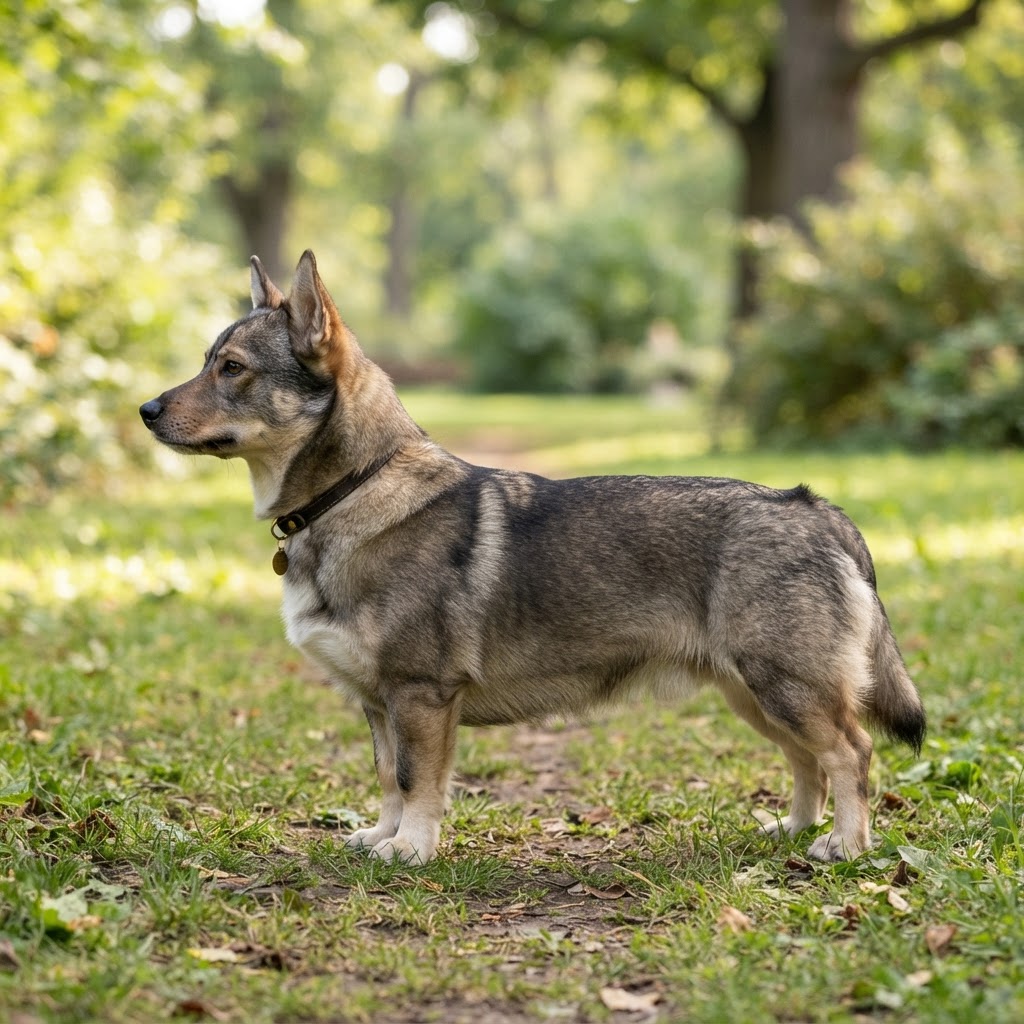
Swedish Vallhund
Male: 11.5-16 kg, Female: 9-14 kg
Male: 33-35 cm, Female: 31-33 cm at the shoulder.
12-15 years
Sweden
About the Swedish Vallhund
The Swedish Vallhund, or Västgötaspets, is a small but powerful herding dog characterized by its low-slung body and spitz-like head. Historically a companion to the Vikings, this breed was near extinction in the 1940s before being revived by Björn von Rosen and Karl-Gustaf Zettersten. They are known for their 'big dog in a small body' personality, possessing the stamina and grit required to drive cattle twice their size while remaining affectionate family members. Their appearance is defined by their wedge-shaped head, prick ears, and a variety of tail lengths ranging from naturally bobbed to long and curled. Despite their short legs, they are incredibly agile and excel in various canine sports, demonstrating a keen intelligence and a desire to work alongside their human companions.
Breed Standard
Key characteristics from the breed standard
In the show ring, the Swedish Vallhund should exhibit a powerful, low-to-the-ground silhouette with a level topline and a sturdy, well-ribbed body. Their movement is a hallmark of the breed: free, active, and efficient with good reach and drive, never appearing stilted despite their short limbs. The coat must show the distinct harness markings and a clear contrast between the undercoat and guard hairs.
In Australia
In 1981, Leonie O'Reilly and Frank O'Reilly of Vanaheim Kennels imported the first Swedish Vallhunds from the United Kingdom to establish the breed in Australia, as documented by the Swedish Vallhund Club of Australia.
Bred For
Drove cattle, served as a versatile farm dog, and acted as an alert watchdog.
Temperament
Intelligent, alert, energetic, and friendly with a courageous and stable disposition.
Health Conditions Reported in the Breed
Swedish Vallhund Retinopathy (a breed-specific hereditary eye disease), , and .
Exercise Needs
At least 45-60 minutes of daily physical activity, including walks and mental stimulation such as scent work or agility training.
Grooming Needs
Weekly brushing is required to manage the dense double coat; however, they require more frequent attention during seasonal shedding periods.
Living Suitability
Adaptable to apartment living if sufficiently exercised, but they thrive best in homes with a yard where they can patrol and play.
Good with Kids
Excellent with children, though their herding instinct may lead them to nip at heels during play, requiring supervision and training.
Good with Other Pets
Generally good with other dogs and can live with cats if socialized early, though they may chase smaller animals due to their farm-dog heritage.
Trainability
Highly intelligent and eager to please, though they can be independent; they respond best to positive reinforcement and varied training tasks.
Coat & Colours
Medium-length double coat with a harsh, tight topcoat and a soft, dense undercoat.. Grey, greyish-brown, greyish-yellow, and reddish-brown, often with characteristic lighter 'harness markings' on the shoulders.
Exercise needs vary by age, fitness, health, weather and individual temperament. Consult your veterinarian for an exercise plan appropriate for your dog.
Things to Consider
Every breed has its quirks — here's what to know
Prospective owners should be aware that Swedish Vallhunds are more likely to be vocal; their heritage as farm watchdogs means they will alert you to every visitor or passing bird. They are predisposed to 'Viking Glitter' (heavy seasonal shedding), which requires diligent vacuuming. As a herding breed, they may exhibit a natural prey drive or the tendency to 'herd' children and other pets by nipping at heels, though this can be managed with consistent training. Most importantly, the breed is predisposed to Swedish Vallhund Retinopathy, an inherited eye condition that can lead to vision loss—this doesn't mean every Vallhund will develop it, but purchasing from breeders who perform DNA testing and clinical eye exams is vital. Their long backs and short legs make them more likely to experience joint strain if allowed to become overweight, so strict portion control with Majestik fresh foods is essential. While they are robust, some Vallhunds can be sensitive to high-carbohydrate commercial fillers, often thriving on a cleaner, limited-ingredient raw diet to avoid skin irritations and digestive upset.
Feeding Guide for Your Swedish Vallhund
Healthy Weight
9-15 kg
Daily Feeding Amount (general starting estimate)
240-360 grams
For an adult Swedish Vallhund, feed a high-quality raw diet at approximately 2-3% of their ideal body weight daily. For an average 12kg dog, this equates to 240g to 360g per day, divided into two meals. Adjust portions based on activity levels to maintain a lean silhouette.
Feeding quantities are general starting estimates only. Individual needs vary with body condition, weight trends, age, health and activity. Ingredient percentages alone do not guarantee complete and balanced nutrition — consult a veterinarian for individualised dietary guidance.
Ingredient percentages alone do not guarantee complete and balanced nutrition. Seek veterinary or qualified canine nutrition guidance for individualised dietary advice. Raw feeding, specific proteins or fresh foods should not be presented as preventing, treating or managing breed health conditions without veterinary diagnosis and supervision.
Majestik's Recommended Feeding Approach
Breed Diet Notes
A high-protein, nutrient-dense diet with controlled fat levels to prevent obesity, which can place undue stress on their long spines.
A balanced mix of lean proteins such as Majestik Kangaroo or Beef to maintain muscle without excess weight. Incorporate leafy greens and seasonal vegetables from Majestik's range to provide essential antioxidants. Given their predisposition to joint issues, inclusion of Omega-3 rich fish or green-lipped mussel is highly recommended.
These are general breed-level notes only. The appropriate food and serving amount depend on the individual dog's age, health, body condition, activity and tolerance.
Majestik Recommendation
Majestik BARF meals follow our practical 70/10/10/10 approach: approximately 70% quality meat and protein ingredients, 10% edible bone, 10% vegetables and 10% offal. This gives customers a convenient fresh-food option without needing to source and portion every ingredient themselves.
Our Beef, Lamb and Roo BARF meals provide convenient fresh-food options, with suitable proteins chosen or rotated according to the individual dog.
Suitable for different needs
- Healthy adult: Majestik adult Beef, Lamb or Roo BARF meal.
- Puppy: Majestik Premium Puppy.
- Senior: Majestik Senior Blend.
- Working or highly active dog: Suitable Majestik adult meal with quantity adjusted to workload and body condition.
- Protein trial: One Majestik protein at a time.
Recommended Majestik BARF Meals


This is a practical starting recommendation for healthy dogs. Individual needs vary with age, health, body condition and activity.
Swedish Vallhund Feeding Calculator
Personalised raw and cooked feeding recommendations based on your dog's profile
Ideal — Ribs palpable without excess fat. Visible waist. Abdominal tuck present.
Have a question about your Swedish Vallhund? Dog Health AI
Why Majestik?
Fresh, raw pet food made with integrity in South Australia
Australian Made
Made in Two Wells, South Australia
Freshly Prepared
Real meat, organs, bone & wholefood ingredients
No Fillers
No cheap fillers or artificial preservatives
Family Owned
Locally owned and operated
Local Delivery
Delivery across Adelaide & selected areas
Secure Checkout
Secure payment via Shopify checkout
Subscribe & Save on Swedish Vallhund Meals
Get your Swedish Vallhund's fresh and raw meals delivered every two or four weeks. Small subscriptions are combined into a four-week box. Pause, skip or cancel anytime.
Breed Records & Facts
Average Litter Size
4-6 puppies
Swedish Vallhund Owner Feedback
Real experiences and tips from Swedish Vallhund owners
No reviews yet
Be the first to share your experience with this breed
Other Small Breeds
References & Sources
Breed information verified against recognised breed authorities and veterinary evidence.