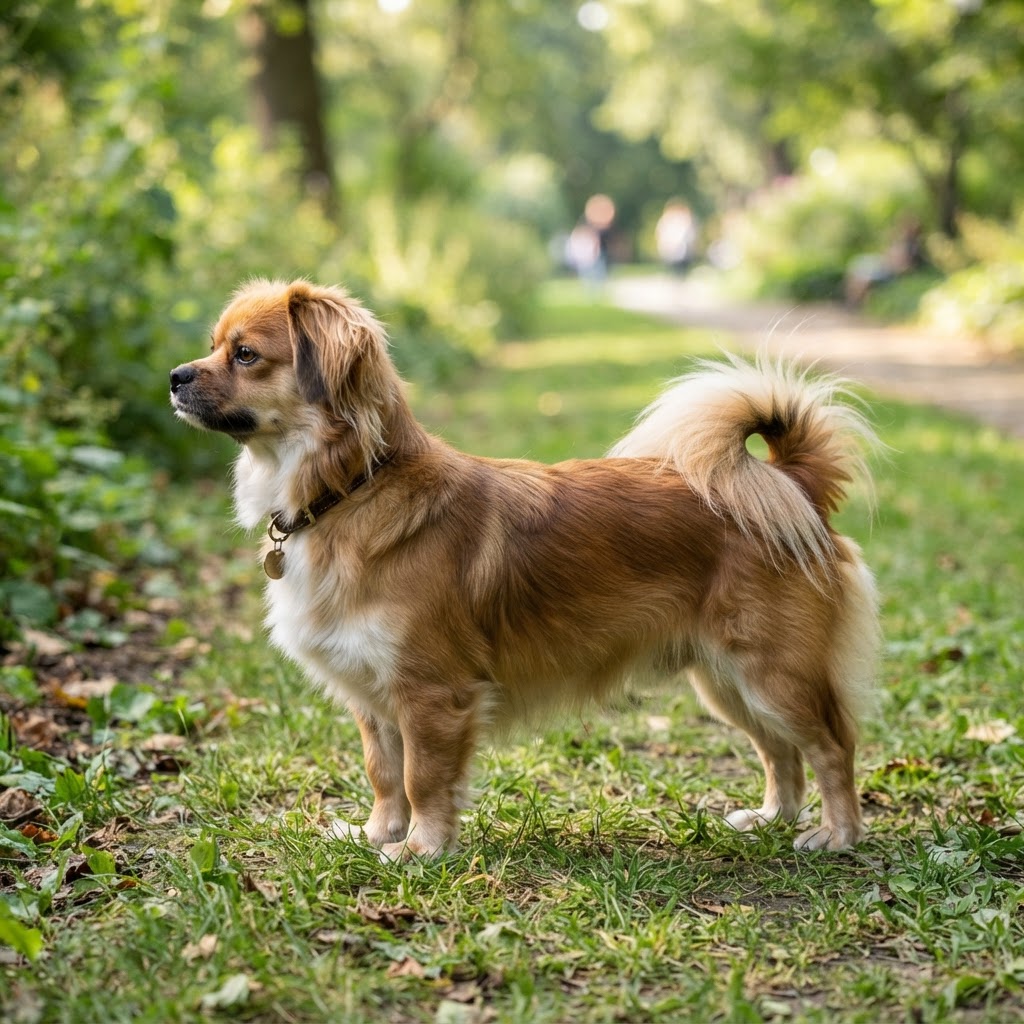
Tibetan Spaniel
4.1-6.8 kg
Approximately 25 cm at the shoulder
12-15 years
Tibet
About the Tibetan Spaniel
The Tibetan Spaniel, or 'Tibbie', is a small, well-balanced dog that carries itself with great dignity and a lion-like appearance. Despite the name, they are not true spaniels; they were bred by Tibetan monks to act as sentinels, perched atop monastery walls to alert the monks of approaching visitors with a keen, watchful eye. This history is reflected in their modern preference for sitting on high furniture to survey their domain. They are remarkably intelligent and can be somewhat cat-like in their independence and agility. In the home, the Tibbie is a devoted companion that forms a deep bond with its family. While they are affectionate with their owners, they maintain a level of discernment and may be wary of strangers until properly introduced. They are active and alert without being hyperactive, making them excellent companions for a variety of households. Their sturdy build and moderate activity requirements ensure they fit comfortably into both urban apartments and rural homes, provided they receive adequate mental stimulation and social interaction.
Breed Standard
Key characteristics from the breed standard
In the show ring, the Tibetan Spaniel is distinguished by its 'hare feet'—small and neat with long tufts of hair between the toes—and its proud carriage. The head is small in proportion to the body, with a slightly domed skull and a blunt muzzle free from wrinkles. The dark brown, oval eyes should be full of expression and set fairly wide apart. The movement is effortless and quick, showing a steady and true gait that belies their small stature.
In Australia
According to Dogs Australia records, the first Tibetan Spaniels were officially imported into Australia in 1974. These first imports were brought from the United Kingdom by Myra Livett.
Bred For
Monastery sentinel and companion dog
Temperament
Assertive, intelligent, aloof with strangers, affectionate and loyal to family.
Health Conditions Reported in the Breed
(), , (), and .
Exercise Needs
Moderate; a daily walk of 30-40 minutes along with indoor play is sufficient.
Grooming Needs
Moderate; requires regular brushing (2-3 times a week) to prevent matting in the double coat, especially around the ears and feathering on the legs.
Living Suitability
Excellent for apartment living due to their size; they thrive in small yards or indoors as long as they have a 'perch' to watch the world from.
Good with Kids
Good with older, respectful children; may be overwhelmed by very young or rambunctious toddlers.
Good with Other Pets
Generally good with other dogs and can live harmoniously with cats, especially if raised with them.
Trainability
Highly intelligent but independent; they respond best to positive reinforcement and may display a 'what's in it for me?' attitude toward repetitive tasks.
Coat & Colours
Silky, double coat; medium length, lying flat on the body with a prominent mane (ruff) around the neck.. All colours and mixtures of colours are allowed, including fawn, sable, gold, cream, white, black, and parti-color.
Exercise needs vary by age, fitness, health, weather and individual temperament. Consult your veterinarian for an exercise plan appropriate for your dog.
Things to Consider
Every breed has its quirks — here's what to know
Tibetan Spaniels are predisposed to Progressive Retinal Atrophy (PRA), an inherited eye condition that can lead to blindness; prospective owners should ensure parents are DNA tested. They are also prone to patellar luxation (slipping kneecaps), so keeping them at a healthy weight is vital to reduce joint stress. As sentinels, they are 'alert barkers'—they will inform you of every delivery driver and bird in the yard, which requires consistent training to manage. Their independent streak means they aren't always 'off-leash' reliable, as a scent or a sight might trigger their curiosity. Small breeds like the Tibbie can be more likely to develop dental overcrowding and gum disease; a raw diet containing soft bones can help, but regular dental checks are a must. Regarding diet, Tibetan Spaniels are more likely to develop digestive sensitivities or skin irritations on standard commercial kibbles containing high grain fillers; many thrive on a single-protein Majestik raw diet tailored to their specific needs. These traits are breed predispositions, not certainties, and with an informed approach, the Tibbie is a joyfully quirky companion.
Feeding Guide for Your Tibetan Spaniel
Healthy Weight
4.1-6.8 kg
Daily Feeding Amount (general starting estimate)
100-205 grams
For an adult Tibetan Spaniel, a fresh food diet should consist of approximately 2-3% of their ideal body weight daily. For a 5kg dog, this equates to roughly 100-150g of food per day, split into two meals. Puppies and highly active adults may require closer to 4%.
Feeding quantities are general starting estimates only. Individual needs vary with body condition, weight trends, age, health and activity. Ingredient percentages alone do not guarantee complete and balanced nutrition — consult a veterinarian for individualised dietary guidance.
Ingredient percentages alone do not guarantee complete and balanced nutrition. Seek veterinary or qualified canine nutrition guidance for individualised dietary advice. Raw feeding, specific proteins or fresh foods should not be presented as preventing, treating or managing breed health conditions without veterinary diagnosis and supervision.
Majestik's Recommended Feeding Approach
Breed Diet Notes
Highly digestible fresh or raw food diets are ideal. Small breeds often benefit from high-quality animal proteins and restricted fillers to maintain a healthy weight and prevent dental issues.
A balanced raw diet for a Tibetan Spaniel should focus on lean Australian proteins available from Majestik, such as Kangaroo or Beef, to manage weight. A small amount of pureed leafy greens or berries can provide beneficial antioxidants. Due to their susceptibility to liver shunts, protein quality should be exceptionally high and easily assimilated.
These are general breed-level notes only. The appropriate food and serving amount depend on the individual dog's age, health, body condition, activity and tolerance.
Majestik Recommendation
Majestik BARF meals follow our practical 70/10/10/10 approach: approximately 70% quality meat and protein ingredients, 10% edible bone, 10% vegetables and 10% offal. This gives customers a convenient fresh-food option without needing to source and portion every ingredient themselves.
Our Beef, Lamb and Roo BARF meals provide convenient fresh-food options, with suitable proteins chosen or rotated according to the individual dog.
Suitable for different needs
- Healthy adult: Majestik adult Beef, Lamb or Roo BARF meal.
- Puppy: Majestik Premium Puppy.
- Senior: Majestik Senior Blend.
- Working or highly active dog: Suitable Majestik adult meal with quantity adjusted to workload and body condition.
- Protein trial: One Majestik protein at a time.
Recommended Majestik BARF Meals


This is a practical starting recommendation for healthy dogs. Individual needs vary with age, health, body condition and activity.
Tibetan Spaniel Feeding Calculator
Personalised raw and cooked feeding recommendations based on your dog's profile
Ideal — Ribs palpable without excess fat. Visible waist. Abdominal tuck present.
Have a question about your Tibetan Spaniel? Dog Health AI
Why Majestik?
Fresh, raw pet food made with integrity in South Australia
Australian Made
Made in Two Wells, South Australia
Freshly Prepared
Real meat, organs, bone & wholefood ingredients
No Fillers
No cheap fillers or artificial preservatives
Family Owned
Locally owned and operated
Local Delivery
Delivery across Adelaide & selected areas
Secure Checkout
Secure payment via Shopify checkout
Subscribe & Save on Tibetan Spaniel Meals
Get your Tibetan Spaniel's fresh and raw meals delivered every two or four weeks. Small subscriptions are combined into a four-week box. Pause, skip or cancel anytime.
Breed Records & Facts
Average Litter Size
3-6 puppies
Tibetan Spaniel Owner Feedback
Real experiences and tips from Tibetan Spaniel owners
No reviews yet
Be the first to share your experience with this breed
Other Small Breeds
References & Sources
Breed information verified against recognised breed authorities and veterinary evidence.