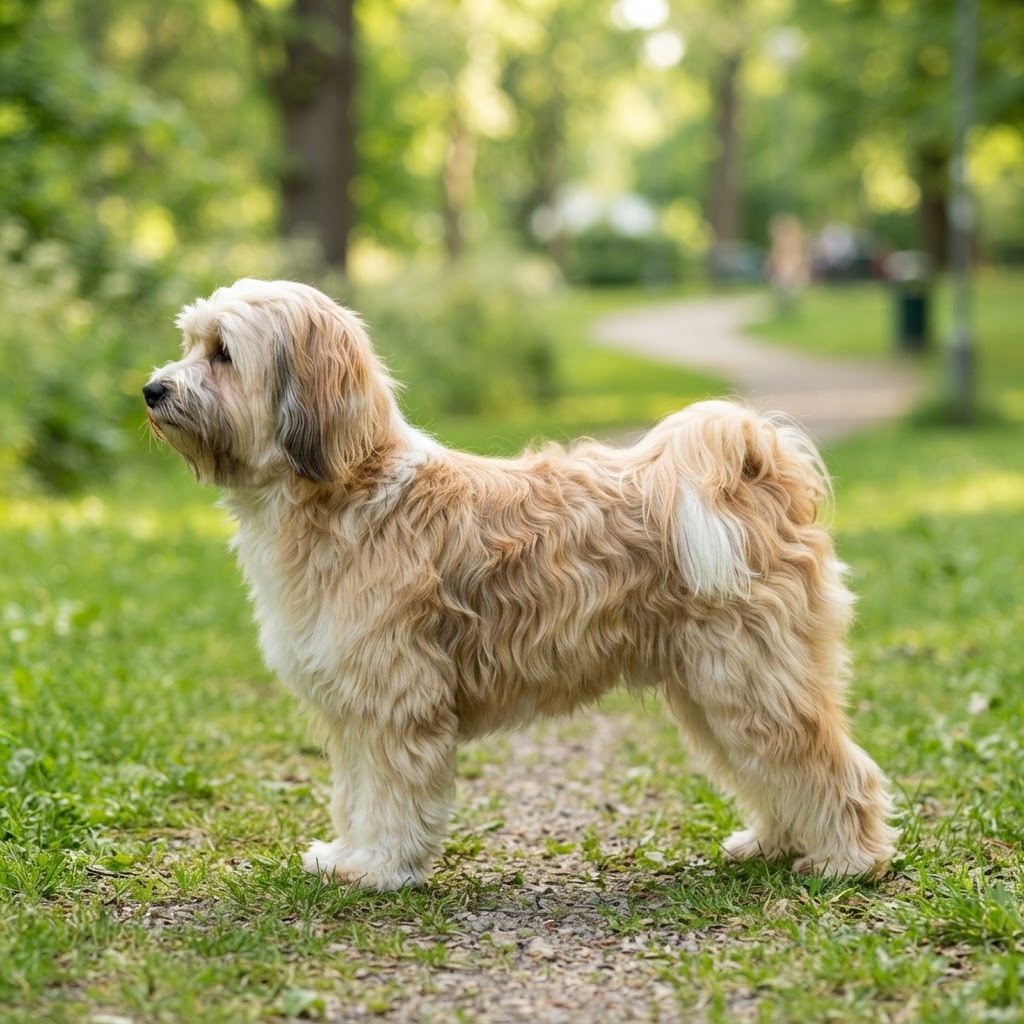
Tibetan Terrier
8-14 kg
36-41 cm at the shoulder
12-15 years
Tibet
About the Tibetan Terrier
The Tibetan Terrier, often called the 'Holy Dog of Tibet,' is not a true terrier but a robust, medium-sized companion with a history spanning over 2,000 years in Himalayan monasteries. Bred to navigate rugged mountain terrain, they possess unique, large, flat 'snowshoe' feet that provide traction on snow and rock. They were traditionally considered bringers of luck and were never sold, only gifted to show respect or gratitude. Physically, they are square-proportioned dogs with a profuse, double-layered coat and a tail that curls gracefully over their back. Their expressive, dark eyes are often shaded by a falling veil of hair, giving them a wise and gentle expression. In a home environment, they are deeply devoted to their families, often acting as a shadow to their favourite person, while remaining alert watchdogs who will notify the household of any unusual activity.
Breed Standard
Key characteristics from the breed standard
In the show ring, the Tibetan Terrier is distinguished by its perfectly square silhouette and a heavy, fine-textured coat that flows with every movement. Their gait is a hallmark of the breed—effortless, powerful, and featuring a great reach and drive that suggests their mountain-climbing heritage. They carry their head with an air of ancient nobility, and the large, flat feet are a critical structural requirement. Their crowning glory is the falling veil of hair over the eyes, which must never obscure their keen, intelligent expression during inspection.
In Australia
The Tibetan Terrier arrived in Australia in 1972 according to the Tibetan Terrier Club of Victoria, with the first litter of the breed officially recorded in 1974.
Bred For
Monastery companion, livestock herder, and guardian of the 'Lost Valley' of Tibet.
Temperament
Intelligent, sensitive, loyal, affectionate, and occasionally reserved with strangers.
Health Conditions Reported in the Breed
, , (), Neuronal Ceroid Lipofuscinosis (NCL), (rcd4-), and Renal Dysplasia.
Exercise Needs
Moderate daily activity of 45-60 minutes, including brisk walks and mental stimulation such as scent work or puzzle games.
Grooming Needs
Very High; requires daily brushing to prevent severe matting of the double coat and professional grooming every 6-8 weeks.
Living Suitability
Well-suited to apartment living or houses with small yards, provided they receive adequate daily exercise and human companionship.
Good with Kids
Generally very good with children, particularly older children who understand how to interact gently with a sensitive breed.
Good with Other Pets
Typically social and harmonious with other dogs and household pets when properly socialised from a young age.
Trainability
Highly intelligent and capable of learning complex tasks, though they possess an independent streak that requires patient, positive reinforcement-based training.
Coat & Colours
Double coat featuring a fine, profuse outer coat (straight or wavy) and a soft, woolly undercoat.. All colors and patterns are permitted, excluding chocolate or liver.
Exercise needs vary by age, fitness, health, weather and individual temperament. Consult your veterinarian for an exercise plan appropriate for your dog.
Things to Consider
Every breed has its quirks — here's what to know
Tibetan Terriers are more likely to experience intensive grooming demands; their hair-like coat mats easily and requires a commitment to daily brushing—this is a great way to bond, provided you stay on top of it. They are predisposed to genetic eye conditions like Primary Lens Luxation (PLL) and Progressive Retinal Atrophy (PRA), so sourcing from health-tested parents is essential. Some may be more likely to develop separation anxiety if left alone for long periods, as they thrive on human presence—many owners find that a second dog or plenty of enrichment toys helps them stay settled. Like many medium breeds, they can be prone to luxating patellas and hip dysplasia, so maintaining a lean weight through a fresh food diet is vital for joint health. They are alert dogs and can be occasional barkers when 'guarding' the home, but this is usually directed at newcomers and settles once they are introduced. Some Tibetan Terriers may have sensitive digestive systems and can experience gas or loose stools on high-carb commercial diets; they frequently thrive on a clean, raw diet like Majestik. Lastly, they can possess a 'what's in it for me?' attitude during training, which simply means you'll need to keep sessions fun and rewarding to keep their bright minds engaged.
Feeding Guide for Your Tibetan Terrier
Healthy Weight
8-14 kg
Daily Feeding Amount (general starting estimate)
160-420 grams per day
For an adult Tibetan Terrier, fresh food intake should be approximately 2-3% of their ideal body weight daily. For a 10kg dog, this equates to 200-300g per day, divided into two meals. Adjust portions based on individual metabolism and activity levels.
Feeding quantities are general starting estimates only. Individual needs vary with body condition, weight trends, age, health and activity. Ingredient percentages alone do not guarantee complete and balanced nutrition — consult a veterinarian for individualised dietary guidance.
Ingredient percentages alone do not guarantee complete and balanced nutrition. Seek veterinary or qualified canine nutrition guidance for individualised dietary advice. Raw feeding, specific proteins or fresh foods should not be presented as preventing, treating or managing breed health conditions without veterinary diagnosis and supervision.
Majestik's Recommended Feeding Approach
Breed Diet Notes
A balanced, nutrient-dense diet rich in high-quality proteins; highly compatible with fresh, raw feeding to support coat health and digestive stability.
A varied raw diet including lean proteins like Majestik Beef, Chicken, and Kangaroo is ideal. Kangaroo is particularly beneficial as a low-fat, novel protein for those with sensitive digestion. Given their predisposition to certain eye and joint conditions, antioxidants from blueberries and anti-inflammatory additions like green-lipped mussel are recommended.
These are general breed-level notes only. The appropriate food and serving amount depend on the individual dog's age, health, body condition, activity and tolerance.
Majestik Recommendation
Majestik BARF meals follow our practical 70/10/10/10 approach: approximately 70% quality meat and protein ingredients, 10% edible bone, 10% vegetables and 10% offal. This gives customers a convenient fresh-food option without needing to source and portion every ingredient themselves.
Our Beef, Lamb and Roo BARF meals provide convenient fresh-food options, with suitable proteins chosen or rotated according to the individual dog.
Suitable for different needs
- Healthy adult: Majestik adult Beef, Lamb or Roo BARF meal.
- Puppy: Majestik Premium Puppy.
- Senior: Majestik Senior Blend.
- Working or highly active dog: Suitable Majestik adult meal with quantity adjusted to workload and body condition.
- Protein trial: One Majestik protein at a time.
This is a practical starting recommendation for healthy dogs. Individual needs vary with age, health, body condition and activity.
Tibetan Terrier Feeding Calculator
Personalised raw and cooked feeding recommendations based on your dog's profile
Ideal — Ribs palpable without excess fat. Visible waist. Abdominal tuck present.
Have a question about your Tibetan Terrier? Dog Health AI
Why Majestik?
Fresh, raw pet food made with integrity in South Australia
Australian Made
Made in Two Wells, South Australia
Freshly Prepared
Real meat, organs, bone & wholefood ingredients
No Fillers
No cheap fillers or artificial preservatives
Family Owned
Locally owned and operated
Local Delivery
Delivery across Adelaide & selected areas
Secure Checkout
Secure payment via Shopify checkout
Subscribe & Save on Tibetan Terrier Meals
Get your Tibetan Terrier's fresh and raw meals delivered every two or four weeks. Small subscriptions are combined into a four-week box. Pause, skip or cancel anytime.
Breed Records & Facts
Average Litter Size
5-8 puppies
Tibetan Terrier Owner Feedback
Real experiences and tips from Tibetan Terrier owners
Other Medium Breeds
References & Sources
Breed information verified against recognised breed authorities and veterinary evidence.
