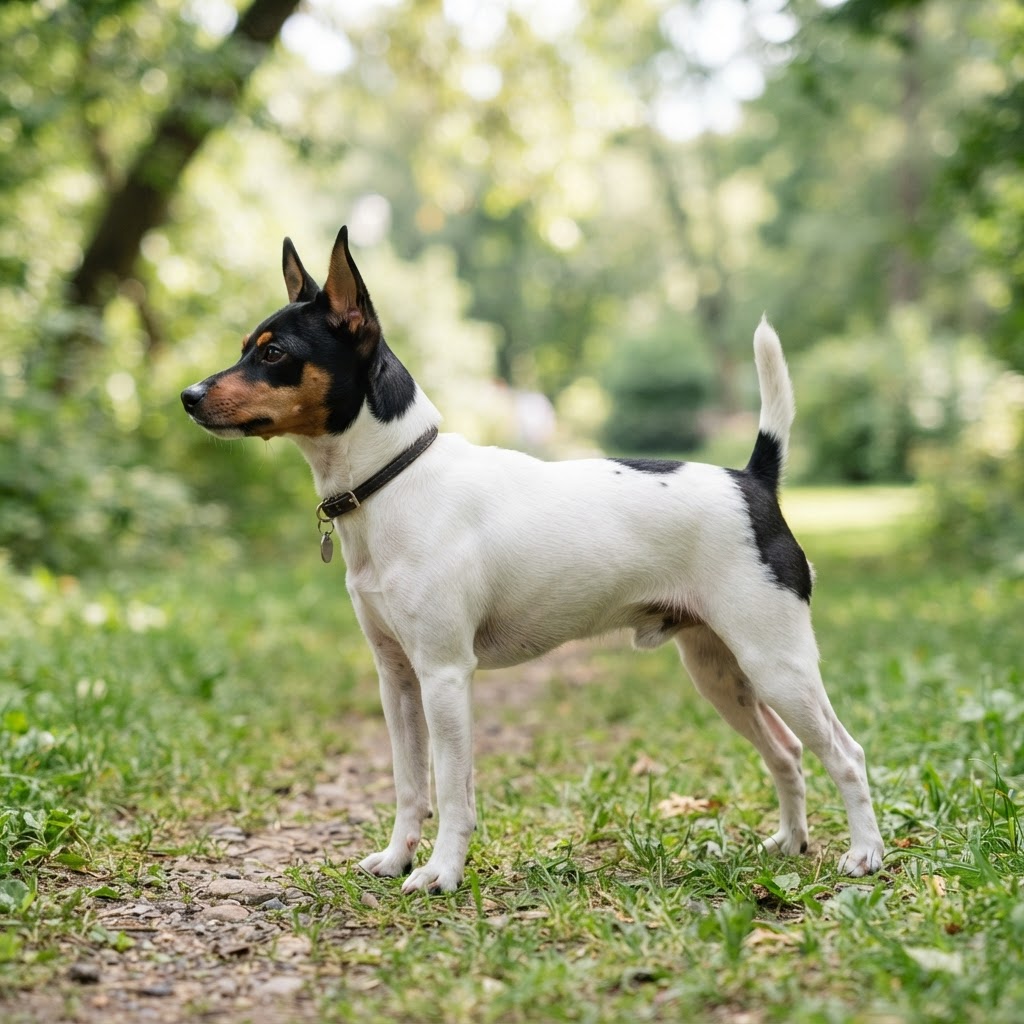
Toy Fox Terrier
1.5-3.5 kg
21.5-29.2 cm at the shoulder
13-15 years
United States of America
About the Toy Fox Terrier
The Toy Fox Terrier is a quintessential 'big dog in a small body,' possessing the tenacious spirit of a terrier and the affectionate nature of a toy companion. Developed in the United States by crossing small Smooth Fox Terriers with breeds such as the Miniature Pinscher, Italian Greyhound, and Chihuahua, this breed is remarkably agile and highly intelligent. They are known for their distinctive large 'V' shaped ears and their elegant, square-proportioned athletic build. As a breed that has performed in circuses, they are quick learners and possess a comical sense of humor that delights their families. In the Australian home, they are celebrated for their adaptability and keen alertness. Despite their diminutive size, they remain sturdy and athletic, often excelling in agility and obedience trials. They are intensely loyal to their owners, frequently following them from room to room. While they are affectionate companions, they retain a strong prey drive and the brave heart of a hunter, making them much more than just a lap dog.
Breed Standard
Key characteristics from the breed standard
The Toy Fox Terrier in the show ring is a study in refined athleticism and balanced proportions. They must present a square silhouette with a coat that feels like fine satin under the hand. Their hallmark feature is the large, erect, pointed ears set high on the head, which, combined with dark, glistening, almond-shaped eyes, create an expression of perpetual, intelligent curiosity. Their movement is effortless and jaunty, showing good reach and drive that belies their size.
In Australia
The Toy Fox Terrier was officially recognized by Dogs Australia (ANKC) and added to the Toy Group list, with this official recognition and addition to the Toy Group effective from 1 July 2013.
Bred For
Originally bred for hunting small vermin like rats and as a performing circus dog and companion.
Temperament
Intelligent, alert, spirited, loyal, and courageous with a classic terrier spark.
Health Conditions Reported in the Breed
, , (Type 1), (), and Congenital with Goiter (CHG).
Exercise Needs
Moderate to High; requires daily walks and mentally stimulating play sessions of approximately 30-45 minutes.
Grooming Needs
Low; weekly brushing with a soft bristle brush and regular nail trimming.
Living Suitability
Excellent for apartment living or small yards; they is best suited to indoor living as they are sensitive to temperature extremes.
Good with Kids
Best suited for homes with older, respectful children due to their small size and risk of injury.
Good with Other Pets
Generally good with other dogs; may have a high prey drive toward small pets like rodents or birds.
Trainability
Highly intelligent and eager to please, though they can possess a typical terrier streak of independence.
Coat & Colours
Short, fine, and glossy; satin-like texture.. Tri-color (White, Black, and Tan), White and Tan, White and Black, and White and Chocolate.
Exercise needs vary by age, fitness, health, weather and individual temperament. Consult your veterinarian for an exercise plan appropriate for your dog.
Things to Consider
Every breed has its quirks — here's what to know
Toy Fox Terriers are more likely to experience patellar luxation (slipping kneecaps), so keeping them at a lean weight is vital to protect their joints. Because of their small mouths, they can be predisposed to dental disease and overcrowding of teeth—this doesn't mean every dog will have issues, but regular dental checks and providing appropriate raw meaty bones for chewing can help. They are also sensitive to the cold due to their single coat and low body fat; a coat or jumper is recommended for South Australian winters. As with many terriers, they may possess a strong prey drive and a tendency to bark at perceived intruders; consistent, positive training from a young age helps channel this alertness constructively. Additionally, some Toy Fox Terriers can be more likely to develop separation anxiety if left alone for long periods, as they truly thrive on human companionship. While they are sturdy, their small size means they can be susceptible to injury if handled roughly, making them a better match for families with older children.
Feeding Guide for Your Toy Fox Terrier
Healthy Weight
1.5-3.5 kg
Daily Feeding Amount (general starting estimate)
40-105 grams
For an adult Toy Fox Terrier, a fresh or raw diet should consist of approximately 2-3% of their ideal body weight daily. For a 3kg dog, this equates to 60-90g per day, divided into two meals. Puppies and highly active individuals may require up to 4-5% of their body weight.
Feeding quantities are general starting estimates only. Individual needs vary with body condition, weight trends, age, health and activity. Ingredient percentages alone do not guarantee complete and balanced nutrition — consult a veterinarian for individualised dietary guidance.
Ingredient percentages alone do not guarantee complete and balanced nutrition. Seek veterinary or qualified canine nutrition guidance for individualised dietary advice. Raw feeding, specific proteins or fresh foods should not be presented as preventing, treating or managing breed health conditions without veterinary diagnosis and supervision.
Majestik's Recommended Feeding Approach
Breed Diet Notes
A high-quality, protein-rich diet suitable for small breeds with high metabolic rates, including fresh and raw options.
A balanced raw diet for a Toy Fox Terrier should focus on high-quality proteins such as Majestik's Kangaroo or Beef, which support lean muscle mass. Given their small mouths, finely ground raw mixes are often preferred to ensure safety and ease of digestion. Including small amounts of pureed green vegetables provides essential phytonutrients. For this breed, managing portions is critical to prevent obesity, which puts undue stress on their small joints.
These are general breed-level notes only. The appropriate food and serving amount depend on the individual dog's age, health, body condition, activity and tolerance.
Majestik Recommendation
Majestik BARF meals follow our practical 70/10/10/10 approach: approximately 70% quality meat and protein ingredients, 10% edible bone, 10% vegetables and 10% offal. This gives customers a convenient fresh-food option without needing to source and portion every ingredient themselves.
Our Beef, Lamb and Roo BARF meals provide convenient fresh-food options, with suitable proteins chosen or rotated according to the individual dog.
Suitable for different needs
- Healthy adult: Majestik adult Beef, Lamb or Roo BARF meal.
- Puppy: Majestik Premium Puppy.
- Senior: Majestik Senior Blend.
- Working or highly active dog: Suitable Majestik adult meal with quantity adjusted to workload and body condition.
- Protein trial: One Majestik protein at a time.
This is a practical starting recommendation for healthy dogs. Individual needs vary with age, health, body condition and activity.
Toy Fox Terrier Feeding Calculator
Personalised raw and cooked feeding recommendations based on your dog's profile
Ideal — Ribs palpable without excess fat. Visible waist. Abdominal tuck present.
Have a question about your Toy Fox Terrier? Dog Health AI
Why Majestik?
Fresh, raw pet food made with integrity in South Australia
Australian Made
Made in Two Wells, South Australia
Freshly Prepared
Real meat, organs, bone & wholefood ingredients
No Fillers
No cheap fillers or artificial preservatives
Family Owned
Locally owned and operated
Local Delivery
Delivery across Adelaide & selected areas
Secure Checkout
Secure payment via Shopify checkout
Subscribe & Save on Toy Fox Terrier Meals
Get your Toy Fox Terrier's fresh and raw meals delivered every two or four weeks. Small subscriptions are combined into a four-week box. Pause, skip or cancel anytime.
Breed Records & Facts
Average Litter Size
2-6 puppies
Toy Fox Terrier Owner Feedback
Real experiences and tips from Toy Fox Terrier owners
No reviews yet
Be the first to share your experience with this breed
Other Toy Breeds
References & Sources
Breed information verified against recognised breed authorities and veterinary evidence.
