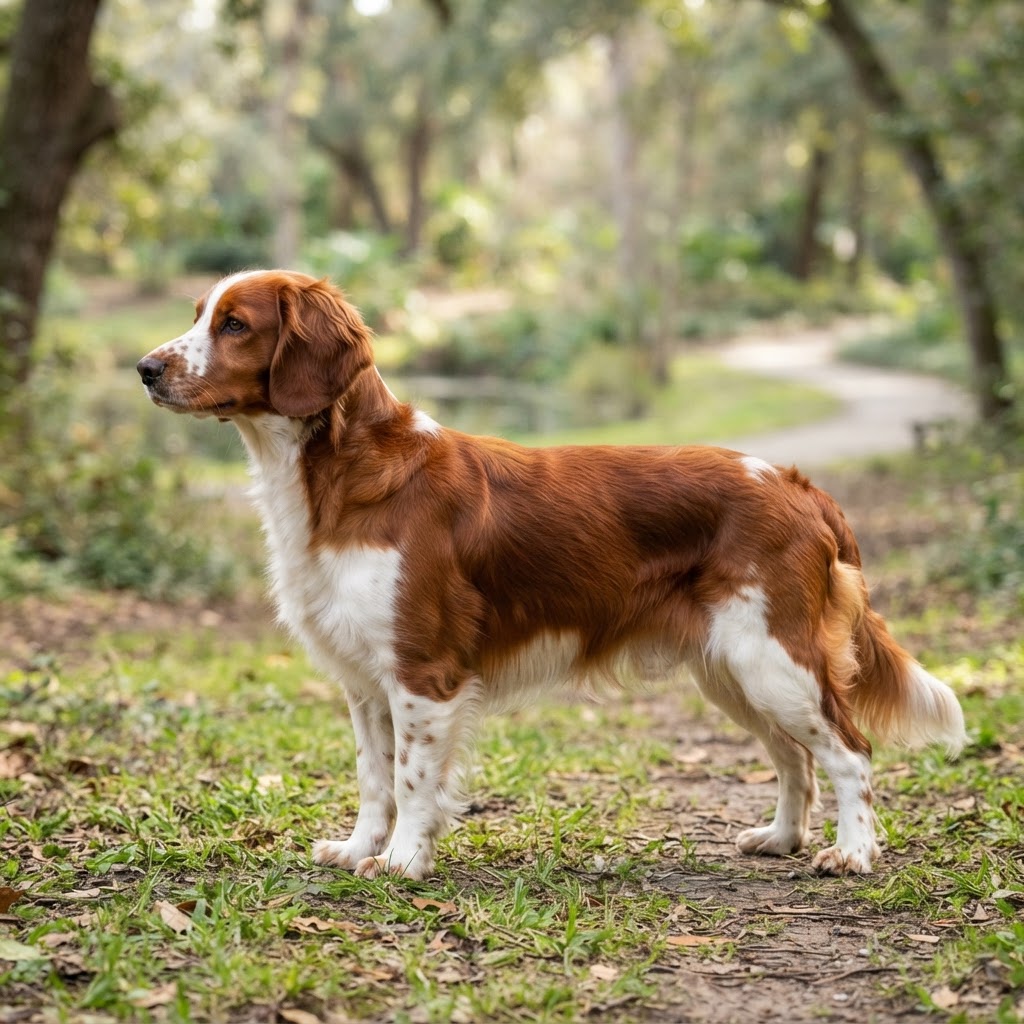
Welsh Springer Spaniel
16-20 kg
Approximately 46-48 cm at the shoulder.
12-15 years
Wales, United Kingdom
About the Welsh Springer Spaniel
The Welsh Springer Spaniel is a distinctive and ancient gundog breed, easily recognised by its vibrant red and white coat and handy, balanced frame. Though slightly smaller than the English Springer, they are built for endurance and agility, capable of working long hours in difficult terrain. They possess a characteristic 'merry' disposition and a wagging tail that rarely stops when they are on the move. In the home, they transition into gentle companions, though they remain alert and protective of their family unit. Historically known as the 'Starter', this breed was prized for its ability to flush game into the path of nets or hawks before the advent of the shotgun. Today, they remain a versatile sporting dog, excelling in agility, obedience, and tracking while being a devoted household member. Their intelligence and sensitive nature require a patient, consistent approach to training, rewarding their natural desire to please.
Breed Standard
Key characteristics from the breed standard
The Welsh Springer Spaniel presents a silhouette of functional elegance, featuring a unique 'rectangular' build where the length of the body is slightly greater than the height at the withers. In the show ring, they are celebrated for their rich, pearly-white coat contrasted with deep, saturated red markings. Their movement should be tireless and ground-covering, driven by powerful hindquarters and a balanced front assembly. Their expression is soft and melting, yet their presence in the ring is marked by an undeniable 'merry' animation and an unwavering focus on their handler.
In Australia
The history of the Welsh Springer Spaniel in Australia is documented by Dogs Australia (ANKC) as having occurred around the 1930s and 1940s.
Bred For
Flushing and retrieving game from thick cover, specifically adapted for the dense terrain of the Welsh countryside.
Temperament
Merry, loyal, active, and affectionate; they are notably more reserved with strangers than some other spaniels but remain devoted to their families.
Health Conditions Reported in the Breed
, , Primary , (), Hereditary , and chronic Otitis Externa (ear infections).
Grooming Needs
Moderate; requires brushing 2-3 times a week to prevent matting in the feathering, along with regular trimming of the paw pads and ear canal maintenance.
Living Suitability
Best suited to houses with medium-to-large yards; not ideal for apartment living due to their high energy and need for outdoor stimulation.
Good with Kids
Excellent with children, often forming very close bonds, though supervision is recommended with very young children due to their bouncy nature.
Good with Other Pets
Generally very social with other dogs and can live harmoniously with cats if raised together, though they may chase birds or small pocket pets.
Trainability
Highly intelligent and eager to please, though they can possess a 'spaniel' streak of independence; they respond best to positive reinforcement.
Coat & Colours
Straight, flat, and silky with moderate feathering; never curly or wavy.. Rich Red and White only.
Exercise needs vary by age, fitness, health, weather and individual temperament. Consult your veterinarian for an exercise plan appropriate for your dog.
Things to Consider
Every breed has its quirks — here's what to know
The Welsh Springer Spaniel is famously a 'Velcro dog' and is more likely to experience separation anxiety if left alone for long periods; they thrive best in households where they are part of the daily action. Their beautiful pendulous ears can trap moisture and debris, making them prone to yeast or bacterial infections, so weekly ear checks and cleaning are essential. Prospective owners should be prepared for the 'mud magnet' effect, as their silky feathering easily picks up burs and dirt during walks, requiring a quick post-walk brush. While generally friendly, they can be more likely to be 'soft' or sensitive, meaning harsh corrections can damage their confidence. They also possess a keen prey drive and a tendency to follow their nose, so a secure yard and a solid recall are vital. Like many spaniels, they can be predisposed to hip dysplasia and certain eye conditions, so choosing a breeder who performs health screening for hips and DNA tests for PRA and Glaucoma is a must for a healthy, long-lived companion.
Feeding Guide for Your Welsh Springer Spaniel
Healthy Weight
16-20 kg
Daily Feeding Amount (general starting estimate)
400-600 grams
Adult Welsh Springers should be fed 2-3% of their ideal body weight daily. For a 16-20kg dog, this equates to roughly 400g to 600g of fresh food per day, ideally split into two meals.
Feeding quantities are general starting estimates only. Individual needs vary with body condition, weight trends, age, health and activity. Ingredient percentages alone do not guarantee complete and balanced nutrition — consult a veterinarian for individualised dietary guidance.
Ingredient percentages alone do not guarantee complete and balanced nutrition. Seek veterinary or qualified canine nutrition guidance for individualised dietary advice. Raw feeding, specific proteins or fresh foods should not be presented as preventing, treating or managing breed health conditions without veterinary diagnosis and supervision.
Majestik's Recommended Feeding Approach
Breed Diet Notes
A high-protein, nutrient-dense diet rich in Omega-3 fatty acids to support coat health and joint function, preferably consisting of fresh, whole-food sources.
A balanced raw diet for a Welsh Springer should focus on lean proteins like Majestik's Kangaroo or Beef to maintain a lean physique. Adding fatty fish like sardines or Majestik's Salmon portions provides the essential oils needed to keep their mahogany-red coat gleaming and support joint health during their active lives.
These are general breed-level notes only. The appropriate food and serving amount depend on the individual dog's age, health, body condition, activity and tolerance.
Majestik Recommendation
Majestik BARF meals follow our practical 70/10/10/10 approach: approximately 70% quality meat and protein ingredients, 10% edible bone, 10% vegetables and 10% offal. This gives customers a convenient fresh-food option without needing to source and portion every ingredient themselves.
Our Beef, Lamb and Roo BARF meals provide convenient fresh-food options, with suitable proteins chosen or rotated according to the individual dog.
Suitable for different needs
- Healthy adult: Majestik adult Beef, Lamb or Roo BARF meal.
- Puppy: Majestik Premium Puppy.
- Senior: Majestik Senior Blend.
- Working or highly active dog: Suitable Majestik adult meal with quantity adjusted to workload and body condition.
- Protein trial: One Majestik protein at a time.
Recommended Majestik BARF Meals


This is a practical starting recommendation for healthy dogs. Individual needs vary with age, health, body condition and activity.
Welsh Springer Spaniel Feeding Calculator
Personalised raw and cooked feeding recommendations based on your dog's profile
Ideal — Ribs palpable without excess fat. Visible waist. Abdominal tuck present.
Have a question about your Welsh Springer Spaniel? Dog Health AI
Why Majestik?
Fresh, raw pet food made with integrity in South Australia
Australian Made
Made in Two Wells, South Australia
Freshly Prepared
Real meat, organs, bone & wholefood ingredients
No Fillers
No cheap fillers or artificial preservatives
Family Owned
Locally owned and operated
Local Delivery
Delivery across Adelaide & selected areas
Secure Checkout
Secure payment via Shopify checkout
Subscribe & Save on Welsh Springer Spaniel Meals
Get your Welsh Springer Spaniel's fresh and raw meals delivered every two or four weeks. Small subscriptions are combined into a four-week box. Pause, skip or cancel anytime.
Breed Records & Facts
Average Litter Size
6-8 puppies
Welsh Springer Spaniel Owner Feedback
Real experiences and tips from Welsh Springer Spaniel owners
No reviews yet
Be the first to share your experience with this breed
Other Medium Breeds
References & Sources
Breed information verified against recognised breed authorities and veterinary evidence.