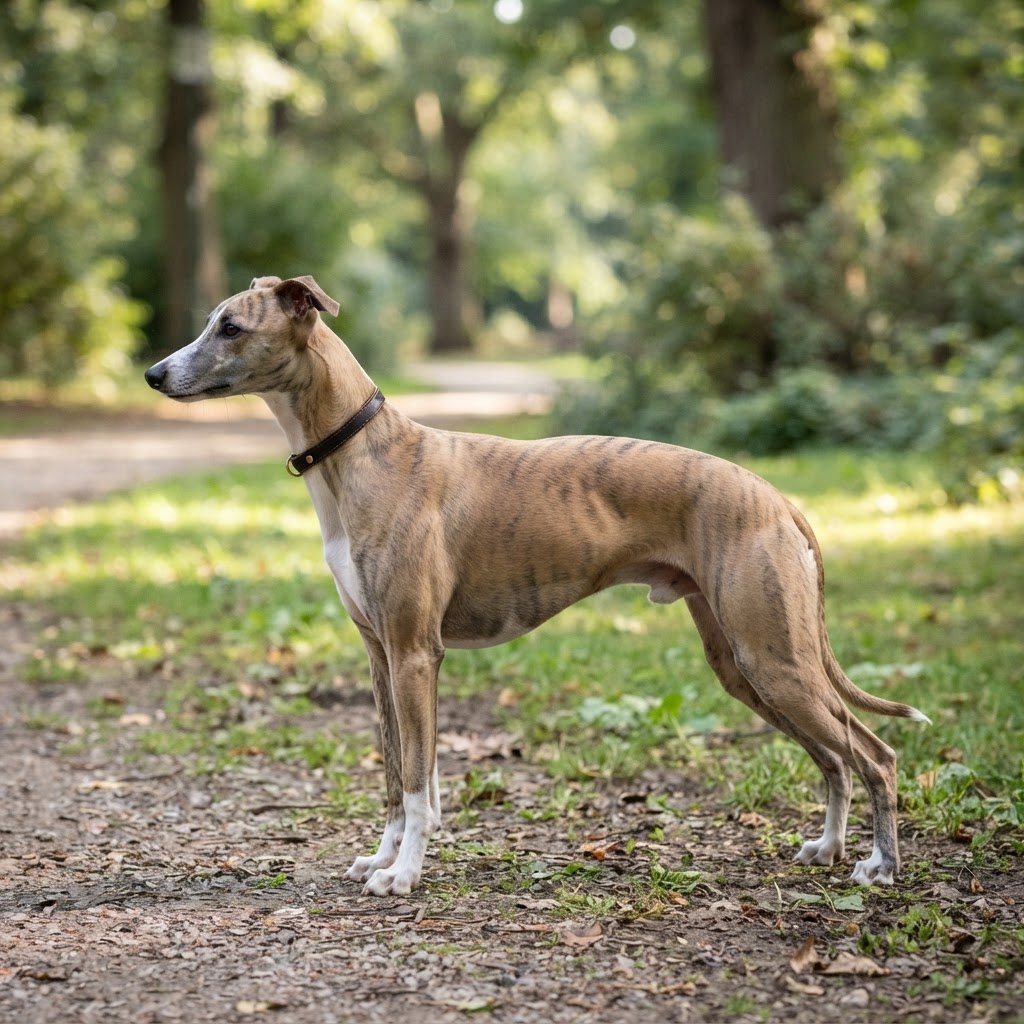
Whippet
Male: 12-16 kg, Female: 9-13 kg
Dogs: 47-51 cm; Bitches: 44-47 cm
12-15 years
Great Britain
About the Whippet
The Whippet is a medium-sized sighthound that represents a masterpiece of canine balance, combining muscular power and strength with elegance and grace of line. Originally developed in Northern England by crossing Greyhounds with smaller terriers and later Italian Greyhounds, they were known as the 'poor man's racehorse' due to their incredible speed and coursing ability. Despite their racing heritage, they are remarkably quiet and calm companions that prefer the comfort of a soft sofa. In the home, Whippets are known for their 'sighthound switch'—a unique ability to go from a high-speed blur of motion to a silent, sleeping companion in a matter of seconds. They are sensitive dogs that form deep bonds with their families and generally prefer a peaceful environment. Their lack of 'doggy odor' and minimal shedding makes them exceptional indoor pets, provided they have a warm place to sleep and a safe place to run.
Breed Standard
Key characteristics from the breed standard
In the show ring, the Whippet must exhibit a long, lean head with a very keen expression and a long, muscular neck that flows into well-laid-back shoulders. The hallmark of the breed is the 'S-curve' silhouette: a deep brisket and a graceful arch over the loin. Their movement is a point of distinction—it should be low, free, and long-reaching, covering the ground with great ease rather than a stilted or hackney-like gait.
In Australia
The Whippet was introduced to Australia in the late 19th century, according to the National Whippet Council (Australia).
Bred For
Rabbit coursing and snap-dog racing
Temperament
Gentle, affectionate, dignified, and quiet indoors, but highly energetic and athletic when outdoors.
Health Conditions Reported in the Breed
Whippets are generally healthy but are predisposed to (heart murmur), (), , and anesthesia sensitivity due to low body fat. They are also prone to skin lacerations due to their thin coats and lack of protective fat.
Exercise Needs
Moderate to high.
Grooming Needs
Minimal. Their short, fine coat requires weekly brushing with a rubber mitt to remove loose hairs and occasional bathing.
Living Suitability
Highly suited to apartment living or smaller yards, provided they receive daily walks and occasional sprints. They is best suited to indoor living as they are very sensitive to temperature extremes.
Good with Kids
Good with gentle children; their thin skin means they may be easily hurt by rough play.
Good with Other Pets
Excellent with other dogs; however, their high prey drive means they may chase cats or small outdoor animals unless raised with them.
Trainability
Highly intelligent but independent; they respond best to positive reinforcement and may ignore commands if they spot something to chase.
Coat & Colours
Fine, short, and close-lying. Any color or mixture of colors, including brindle, fawn, black, blue, and white.
Exercise needs vary by age, fitness, health, weather and individual temperament. Consult your veterinarian for an exercise plan appropriate for your dog.
Things to Consider
Every breed has its quirks — here's what to know
Whippets have very thin skin and lack a subcutaneous fat layer, which makes them more likely to suffer from skin tears and lacerations during play or while navigating scrub—this doesn't mean every Whippet will get injured, but owners should keep a first-aid kit handy. Their low body fat also makes them highly sensitive to anesthesia, requiring specialized veterinary protocols. They are predisposed to cold sensitivity and will often need coats or jumpers during Australian winters to maintain body temperature. Prospective owners should be aware of their high prey drive; a Whippet is more likely to bolt after a rabbit or cat, meaning they should generally be kept on a lead in unenclosed areas. They are also prone to mitral valve disease and heart murmurs—regular veterinary cardiac checks are recommended to catch any changes early. Additionally, like many sighthounds, they can be sensitive to standard commercial diets, sometimes experiencing digestive upset or flatulence on high-grain kibbles; many thrive on the highly digestible nature of a fresh raw diet from Majestik Pet Food.
Feeding Guide for Your Whippet
Healthy Weight
9-16 kg
Daily Feeding Amount (general starting estimate)
260-480 grams
Whippets should be fed a high-quality fresh or raw diet to support their lean muscle and cardiac health. As a general guide, an adult Whippet should consume 2-3% of their ideal body weight daily. For an average 13 kg dog, this equates to roughly 260g to 390g of food per day, split into two meals. Because they lack significant body fat, ensure their diet includes high-quality animal fats for skin health and energy.
Feeding quantities are general starting estimates only. Individual needs vary with body condition, weight trends, age, health and activity. Ingredient percentages alone do not guarantee complete and balanced nutrition — consult a veterinarian for individualised dietary guidance.
Ingredient percentages alone do not guarantee complete and balanced nutrition. Seek veterinary or qualified canine nutrition guidance for individualised dietary advice. Raw feeding, specific proteins or fresh foods should not be presented as preventing, treating or managing breed health conditions without veterinary diagnosis and supervision.
Majestik's Recommended Feeding Approach
Breed Diet Notes
A high-protein, nutrient-dense diet is ideal to maintain lean muscle mass. They thrive on fresh, high-quality proteins with moderate fat content, specifically avoiding fillers that can lead to digestive upset.
A balanced raw diet for a Whippet should focus on lean proteins available from Majestik Pet Food such as Kangaroo, Beef, or Chicken. Adding a small amount of pureed leafy greens can provide essential phytonutrients. Given their predisposition to heart issues, ensuring adequate Taurine from heart meat (Beef heart) is highly recommended.
These are general breed-level notes only. The appropriate food and serving amount depend on the individual dog's age, health, body condition, activity and tolerance.
Majestik Recommendation
Majestik BARF meals follow our practical 70/10/10/10 approach: approximately 70% quality meat and protein ingredients, 10% edible bone, 10% vegetables and 10% offal. This gives customers a convenient fresh-food option without needing to source and portion every ingredient themselves.
Our Beef, Lamb and Roo BARF meals provide convenient fresh-food options, with suitable proteins chosen or rotated according to the individual dog.
Suitable for different needs
- Healthy adult: Majestik adult Beef, Lamb or Roo BARF meal.
- Puppy: Majestik Premium Puppy.
- Senior: Majestik Senior Blend.
- Working or highly active dog: Suitable Majestik adult meal with quantity adjusted to workload and body condition.
- Protein trial: One Majestik protein at a time.
This is a practical starting recommendation for healthy dogs. Individual needs vary with age, health, body condition and activity.
Whippet Feeding Calculator
Personalised raw and cooked feeding recommendations based on your dog's profile
Ideal — Ribs palpable without excess fat. Visible waist. Abdominal tuck present.
Have a question about your Whippet? Dog Health AI
Why Majestik?
Fresh, raw pet food made with integrity in South Australia
Australian Made
Made in Two Wells, South Australia
Freshly Prepared
Real meat, organs, bone & wholefood ingredients
No Fillers
No cheap fillers or artificial preservatives
Family Owned
Locally owned and operated
Local Delivery
Delivery across Adelaide & selected areas
Secure Checkout
Secure payment via Shopify checkout
Subscribe & Save on Whippet Meals
Get your Whippet's fresh and raw meals delivered every two or four weeks. Small subscriptions are combined into a four-week box. Pause, skip or cancel anytime.
Breed Records & Facts
Oldest Recorded
19 years (Toby)
Average Litter Size
5-7 puppies
Whippet Owner Feedback
Real experiences and tips from Whippet owners
Other Medium Breeds
References & Sources
Breed information verified against recognised breed authorities and veterinary evidence.
