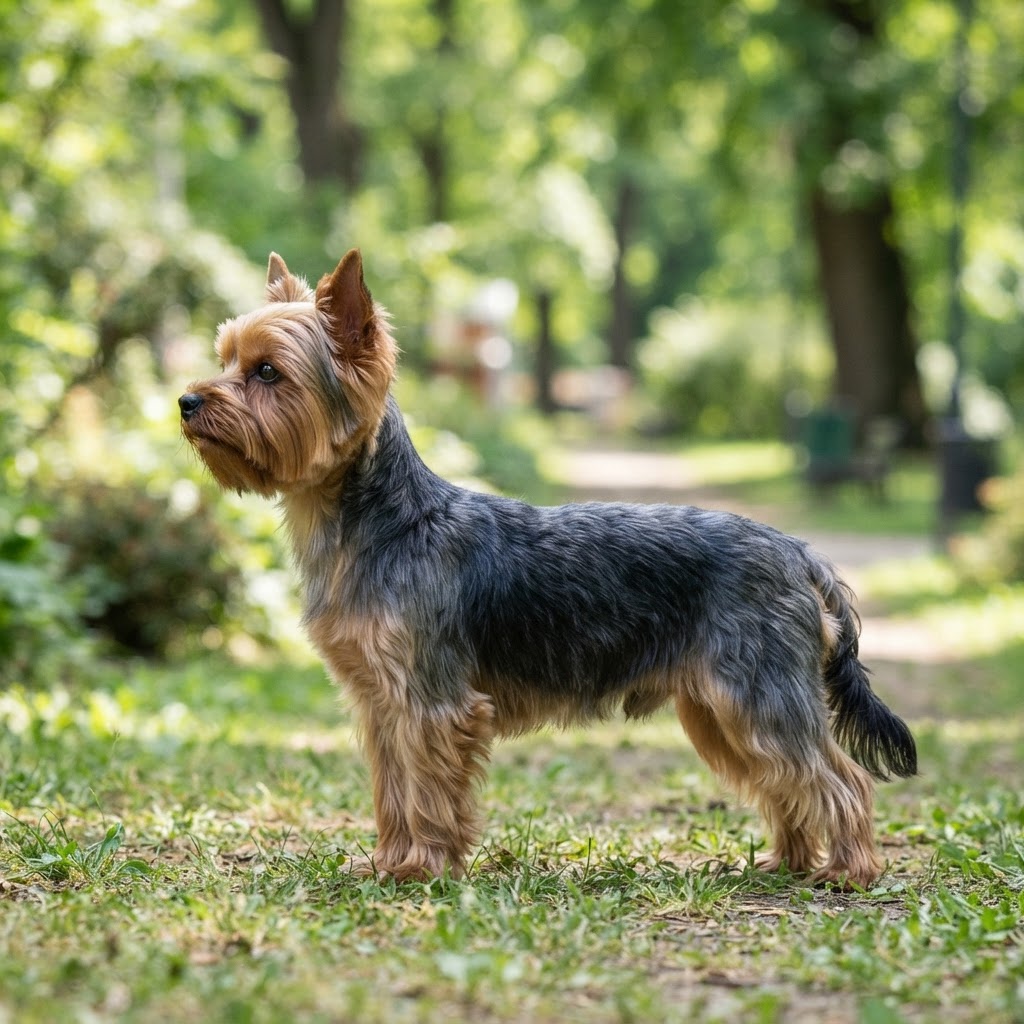
Yorkshire Terrier
Up to 3.2 kg
18-23 cm at the shoulder
13-16 years
United Kingdom (Yorkshire and Lancashire)
About the Yorkshire Terrier
The Yorkshire Terrier, affectionately known as the Yorkie, is a masterpiece of the canine world, blending the elegance of a toy breed with the grit of a working terrier. Originating in the industrial north of England, these small dogs were once the hardworking companions of weavers and miners, prized for their ability to keep workspaces clear of pests. Over time, their stunning appearance and charismatic 'big dog' personality propelled them into the laps of Victorian royalty, where they became the quintessential glamorous companion. Despite their dainty size, they remain remarkably sturdy and full of character. Today, the Yorkie is celebrated as a devoted family member that thrives on human interaction. Their coat is their most distinctive feature—a shimmering, floor-length silk gown of steel blue and gold that requires dedicated care. They are highly adaptable and intelligent, making them excellent companions for city dwellers and suburban families alike. While they may be small, they are vigilant watchdogs with a keen sense of hearing, always ready to alert their owners to visitors with a spirited bark.
Breed Standard
Key characteristics from the breed standard
In the show ring, the Yorkshire Terrier is a vision of poise and precision. The standard demands a perfectly straight back and a high-head carriage that exudes self-importance. The coat is the crowning glory: it must be perfectly straight, silky, and parted down the middle from the nose to the tip of the tail, with a specific 'metallic' steel blue lustre that is never mixed with fawn or bronze hair. Their movement is smooth and flowing, suggesting a compact, well-proportioned body beneath the silk. What sets the Yorkie apart is its 'Terrier Spark'—the breed possesses an indomitable spirit and a sparkling, dark-eyed expression that commands the attention of every judge, making them the ultimate 'big personality' in a tiny, exquisite package.
In Australia
Yorkshire Terriers were established in Australia by the late 19th century, with documented appearances in exhibitions as early as the 1870s according to Walter Beilby in The Dog in Australasia, 1897. Records of the breed appearing in regional agricultural shows date back to at least 1872 as stated by the Yorkshire Terrier Club of NSW.
Bred For
Originally developed to hunt rats and other vermin in clothing mills, coal mines, and households in Northern England.
Temperament
Alert, intelligent, spirited, and confident. While classified in the Toy group, they retain a true terrier temperament—brave, determined, and occasionally feisty, combined with a deeply affectionate nature toward their owners.
Health Conditions Reported in the Breed
, , (), tracheal collapse, hypoglycemia (especially in puppies), and ().
Exercise Needs
Moderate. They require daily walks and mental stimulation through play, but their physical needs can often be met within a small home or yard. Approximately 30 minutes of active exercise daily is recommended.
Grooming Needs
High. Their hair is similar to human hair and grows continuously. Without daily brushing, it will mat. They require professional grooming every 4-6 weeks and regular ear cleaning and nail trimming.
Living Suitability
Highly suited to apartment living and small homes. They do not require a large yard but benefit from a safe, enclosed outdoor area for sensory enrichment.
Good with Kids
Best suited to homes with older, respectful children. Their small size makes them fragile and susceptible to accidental injury from toddlers or rough play.
Good with Other Pets
Generally good with other household pets if socialized early. However, they may be 'bossy' with larger dogs due to their confident terrier nature and may chase smaller animals like hamsters due to their prey drive.
Trainability
Highly intelligent and quick to learn, but can be independent or stubborn. They respond best to positive reinforcement and consistency. Housebreaking can sometimes take longer than with larger breeds.
Coat & Colours
Long, silky, and perfectly straight hair. It is fine in texture and lacks an undercoat, making them low-shedding but high-maintenance.. Dark steel blue (not silvery blue) extending from the occiput to the root of the tail, with bright, deep tan on the face, chest, and legs.
Exercise needs vary by age, fitness, health, weather and individual temperament. Consult your veterinarian for an exercise plan appropriate for your dog.
Things to Consider
Every breed has its quirks — here's what to know
Yorkshire Terriers are predisposed to certain health and lifestyle quirks that owners should be prepared for. They are more likely to experience dental disease due to their small mouths and crowded teeth; this often necessitates regular veterinary dental cleanings and a fresh diet that avoids sugary fillers. Their delicate necks mean they are more prone to tracheal collapse, so using a harness instead of a collar for walks is highly recommended to protect their airway. Many Yorkies are susceptible to patellar luxation (slipping kneecaps), which can be managed by maintaining a lean weight and avoiding high-impact jumping from furniture. As true terriers, they can be quite vocal, often barking at passersby or strange noises; consistent training from a young age helps manage this alert nature. Their beautiful coats are prone to severe matting if not brushed daily, which can cause skin irritation. Finally, like many small breeds, they can be more likely to develop digestive sensitivities or pancreatitis if fed high-fat treats, but they often thrive on a controlled, low-fat fresh food diet tailored to their specific needs. With the right care, these spirited little dogs are incredibly rewarding companions.
Feeding Guide for Your Yorkshire Terrier
Healthy Weight
2.0-3.2 kg
Daily Feeding Amount (general starting estimate)
50-96 grams
Yorkshire Terriers should be fed a fresh or raw diet approximately 2.5% of their ideal body weight daily. Because of their tiny stomachs and high metabolic rate, it is often best to split their daily allowance into two or three small meals to prevent hypoglycemia and maintain consistent energy levels. For a typical 3kg adult, this equates to roughly 75 grams per day of high-quality fresh food, such as Majestik's lean beef or kangaroo formulas.
Feeding quantities are general starting estimates only. Individual needs vary with body condition, weight trends, age, health and activity. Ingredient percentages alone do not guarantee complete and balanced nutrition — consult a veterinarian for individualised dietary guidance.
Ingredient percentages alone do not guarantee complete and balanced nutrition. Seek veterinary or qualified canine nutrition guidance for individualised dietary advice. Raw feeding, specific proteins or fresh foods should not be presented as preventing, treating or managing breed health conditions without veterinary diagnosis and supervision.
Majestik's Recommended Feeding Approach
Breed Diet Notes
A high-quality, protein-rich diet is essential. They benefit significantly from fresh, lean proteins and healthy fats to maintain their unique coat texture. Due to their small mouths, they are prone to dental issues, making fresh diets that avoid sticky carbohydrates preferable.
A balanced raw diet for a Yorkie should focus on high-quality proteins such as Majestik’s Kangaroo or Beef. Kangaroo is an excellent lean choice for maintaining a healthy weight. Adding small amounts of pureed green vegetables provides essential phytonutrients. Due to their predisposition to pancreatitis, avoiding excessively fatty scraps is crucial.
These are general breed-level notes only. The appropriate food and serving amount depend on the individual dog's age, health, body condition, activity and tolerance.
Majestik Recommendation
Majestik BARF meals follow our practical 70/10/10/10 approach: approximately 70% quality meat and protein ingredients, 10% edible bone, 10% vegetables and 10% offal. This gives customers a convenient fresh-food option without needing to source and portion every ingredient themselves.
Our Beef, Lamb and Roo BARF meals provide convenient fresh-food options, with suitable proteins chosen or rotated according to the individual dog.
Suitable for different needs
- Healthy adult: Majestik adult Beef, Lamb or Roo BARF meal.
- Puppy: Majestik Premium Puppy.
- Senior: Majestik Senior Blend.
- Working or highly active dog: Suitable Majestik adult meal with quantity adjusted to workload and body condition.
- Protein trial: One Majestik protein at a time.
Recommended Majestik BARF Meals


This is a practical starting recommendation for healthy dogs. Individual needs vary with age, health, body condition and activity.
Yorkshire Terrier Feeding Calculator
Personalised raw and cooked feeding recommendations based on your dog's profile
Ideal — Ribs palpable without excess fat. Visible waist. Abdominal tuck present.
Have a question about your Yorkshire Terrier? Dog Health AI
Why Majestik?
Fresh, raw pet food made with integrity in South Australia
Australian Made
Made in Two Wells, South Australia
Freshly Prepared
Real meat, organs, bone & wholefood ingredients
No Fillers
No cheap fillers or artificial preservatives
Family Owned
Locally owned and operated
Local Delivery
Delivery across Adelaide & selected areas
Secure Checkout
Secure payment via Shopify checkout
Subscribe & Save on Yorkshire Terrier Meals
Get your Yorkshire Terrier's fresh and raw meals delivered every two or four weeks. Small subscriptions are combined into a four-week box. Pause, skip or cancel anytime.
Breed Records & Facts
Oldest Recorded
Bonny, a Yorkshire Terrier from the UK, reportedly lived to be 28 years old, though 15-16 is more common.
Average Litter Size
2-4 puppies
Yorkshire Terrier Owner Feedback
Real experiences and tips from Yorkshire Terrier owners
No reviews yet
Be the first to share your experience with this breed
Other Toy Breeds
References & Sources
Breed information verified against recognised breed authorities and veterinary evidence.