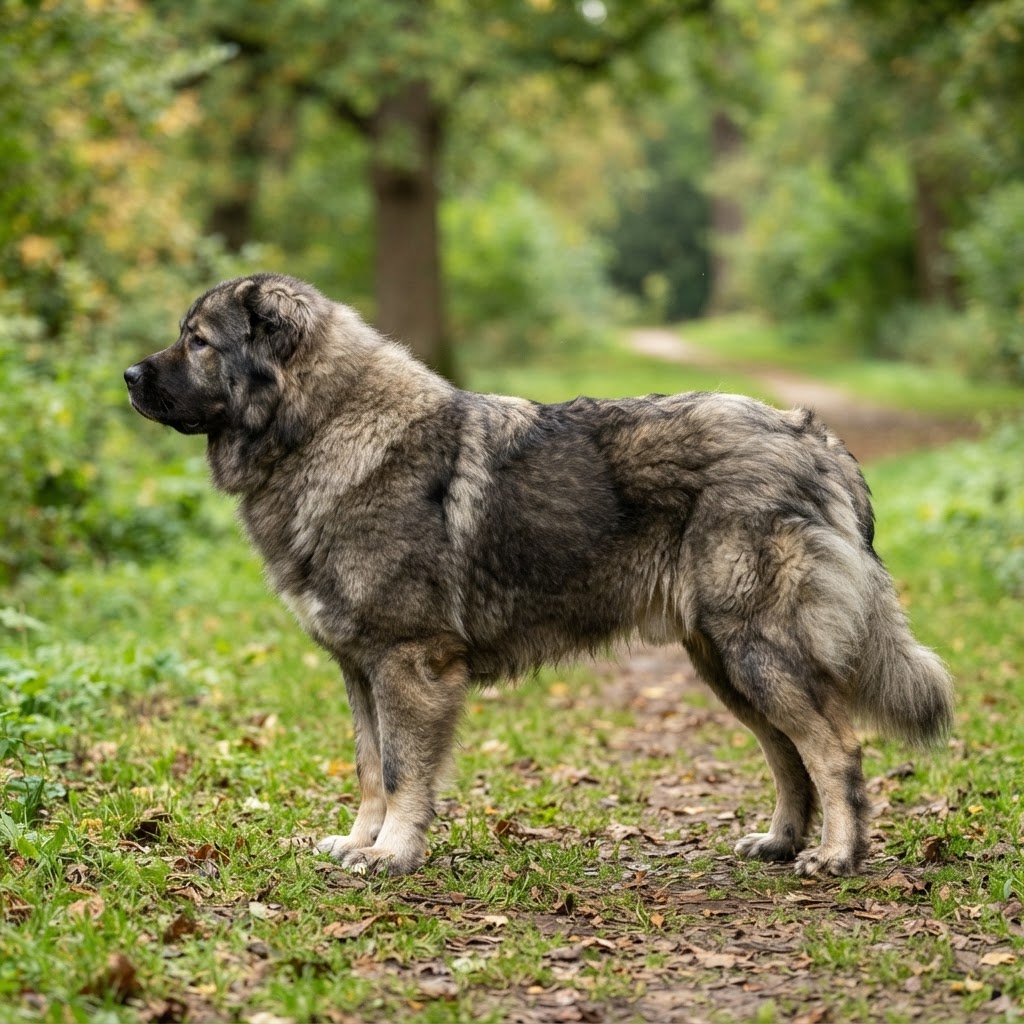
Caucasian Shepherd Dog
Male: 50-90 kg (minimum 50 kg), Female: 45-75 kg (minimum 45 kg)
Male: 72-75 cm (minimum 72 cm), Female: 67-70 cm (minimum 67 cm)
10-12 years
Caucasus region (Georgia, Armenia, Azerbaijan, Dagestan)
About the Caucasian Shepherd Dog
The Caucasian Shepherd Dog, also known as the Caucasian Ovcharka, is a formidable guardian breed originating from the rugged Caucasus Mountains. For centuries, these dogs served as the frontline defense for livestock against large predators and trespassers. Their physical presence is imposing, characterized by a bear-like head, powerful musculature, and a dense, weather-resistant coat that allowed them to survive in extreme alpine climates. They are one of the oldest and most physically capable Molosser breeds in existence. In a domestic setting, the Caucasian Shepherd is a stoic and fiercely loyal companion. They are not typical 'social' dogs; they are hardwired to be territorial and protective. Their intelligence is high but tempered by an independent streak, as they were bred to make autonomous decisions in the field. This breed requires a confident, experienced owner who understands the nuances of livestock guardian temperaments and can provide the space and structure they need to thrive.
Breed Standard
Key characteristics from the breed standard
The Caucasian Shepherd Dog possesses a primitive, awe-inspiring majesty that few other breeds can emulate. In the show ring, they exhibit a massive, wedge-shaped head and a muscular, harmonious build that suggests immense power without sluggishness. Their movement is a particular highlight; a heavy-boned dog that covers ground with a steady, rhythmic trot that feels almost earth-shaking yet remains surprisingly agile.
Bred For
Livestock guardian dog (LGD) used to protect flocks from predators like wolves and bears, and for guarding property.
Temperament
Assertive, strong-willed, brave, and deeply devoted to their family while being naturally suspicious of strangers.
Health Conditions Reported in the Breed
, , (), , and occasionally or heart issues.
Exercise Needs
Moderate daily activity; they prefer long, steady walks and patrolling their territory rather than high-intensity sprinting. Mental stimulation through environmental guarding roles is beneficial.
Grooming Needs
High; their thick double coat requires thorough brushing at least twice a week, increasing to daily during heavy shedding seasons to prevent matting.
Living Suitability
Not suited for apartments or small suburban yards. They require significant outdoor space, ideally acreage or a very large, securely fenced yard to satisfy their patrolling instincts.
Good with Kids
Generally protective and gentle with their own family's children, but due to their size and protective nature, they should always be supervised. They may misinterpret rough play with outside children as a threat.
Good with Other Pets
Can be dominant with other dogs and may have a high prey drive toward small animals. They typically get along best with other pets if raised with them from a young age.
Trainability
Intelligent but independent; they are not 'eager to please' in the traditional sense and require consistent, firm, and patient training from an experienced handler.
Coat & Colours
Thick, coarse double coat with a well-developed undercoat; available in long-haired, short-haired, and intermediate varieties.. Various shades of grey, fawn, reddish, white, brindle, piebald, and spotted.
Exercise needs vary by age, fitness, health, weather and individual temperament. Consult your veterinarian for an exercise plan appropriate for your dog.
Things to Consider
Every breed has its quirks — here's what to know
The Caucasian Shepherd Dog is a devoted guardian, which naturally brings an inherent suspicion of strangers; while this makes them peerless protectors, it requires owners to prioritize early and lifelong socialization to ensure they remain manageable in public. They are more likely to experience hip and elbow dysplasia, which can impact mobility—this is a predisposition rather than a certainty, but maintaining a lean weight is vital. Their deep chests mean they can be susceptible to Gastric Dilatation-Volvulus (bloat), so owners should avoid vigorous exercise immediately after meals and consider multiple smaller feedings. As a double-coated breed, they are prone to heavy seasonal shedding, requiring significant grooming time to manage the 'blow' of their undercoat. Furthermore, their independent nature can lead to a streak of stubbornness; they are highly intelligent but may choose to ignore commands if they don't see the point, making them better suited for experienced handlers. Some individuals may develop sensitivities to common commercial fillers and proteins, occasionally manifesting as digestive upset or gas; many such dogs thrive on a high-quality fresh or raw diet like those offered by Majestik Pet Food. Due to their size, they can also produce a moderate amount of slobber, especially after drinking. These traits are part of the breed's storied history as a mountain protector, and in the right environment, they are exceptionally loyal and impressive companions.
Feeding Guide for Your Caucasian Shepherd Dog
Healthy Weight
45-85 kg
Daily Feeding Amount (general starting estimate)
900-2550 grams
For an adult Caucasian Shepherd, daily intake should be approximately 2-3% of their ideal body weight in fresh food. Some owners use smaller divided meals and avoid strenuous activity immediately around feeding. These steps cannot guarantee prevention of gastric dilatation-volvulus. Seek urgent veterinary care if bloat is suspected. Puppies require specialized large-breed growth monitoring to ensure they do not grow too quickly, which can stress developing joints.
Feeding quantities are general starting estimates only. Individual needs vary with body condition, weight trends, age, health and activity. Ingredient percentages alone do not guarantee complete and balanced nutrition — consult a veterinarian for individualised dietary guidance.
Ingredient percentages alone do not guarantee complete and balanced nutrition. Seek veterinary or qualified canine nutrition guidance for individualised dietary advice. Raw feeding, specific proteins or fresh foods should not be presented as preventing, treating or managing breed health conditions without veterinary diagnosis and supervision.
Majestik's Recommended Feeding Approach
Breed Diet Notes
A high-quality, protein-rich diet formulated for giant breeds is essential. They thrive on fresh, raw diets that support joint health through natural glucosamine and chondroitin sources and avoid inflammatory fillers.
An ideal diet for this giant breed focuses on high-quality proteins available from Majestik, such as beef and lamb, which provide the necessary calories for their large frame. Including kangaroo as a lean protein can help manage weight if they become too heavy. Additions of green-lipped mussel or fish oil are excellent for supporting their predisposed joints, alongside small amounts of leafy greens for fiber.
These are general breed-level notes only. The appropriate food and serving amount depend on the individual dog's age, health, body condition, activity and tolerance.
Majestik Recommendation
Majestik BARF meals follow our practical 70/10/10/10 approach: approximately 70% quality meat and protein ingredients, 10% edible bone, 10% vegetables and 10% offal. This gives customers a convenient fresh-food option without needing to source and portion every ingredient themselves.
Our Beef, Lamb and Roo BARF meals provide convenient fresh-food options, with suitable proteins chosen or rotated according to the individual dog.
Suitable for different needs
- Healthy adult: Majestik adult Beef, Lamb or Roo BARF meal.
- Puppy: Majestik Premium Puppy.
- Senior: Majestik Senior Blend.
- Working or highly active dog: Suitable Majestik adult meal with quantity adjusted to workload and body condition.
- Protein trial: One Majestik protein at a time.
Recommended Majestik BARF Meals


This is a practical starting recommendation for healthy dogs. Individual needs vary with age, health, body condition and activity.
Caucasian Shepherd Dog Feeding Calculator
Personalised raw and cooked feeding recommendations based on your dog's profile
Ideal — Ribs palpable without excess fat. Visible waist. Abdominal tuck present.
Have a question about your Caucasian Shepherd Dog? Dog Health AI
Why Majestik?
Fresh, raw pet food made with integrity in South Australia
Australian Made
Made in Two Wells, South Australia
Freshly Prepared
Real meat, organs, bone & wholefood ingredients
No Fillers
No cheap fillers or artificial preservatives
Family Owned
Locally owned and operated
Local Delivery
Delivery across Adelaide & selected areas
Secure Checkout
Secure payment via Shopify checkout
Subscribe & Save on Caucasian Shepherd Dog Meals
Get your Caucasian Shepherd Dog's fresh and raw meals delivered every two or four weeks. Small subscriptions are combined into a four-week box. Pause, skip or cancel anytime.
Breed Records & Facts
Average Litter Size
5-10 puppies
Caucasian Shepherd Dog Owner Feedback
Real experiences and tips from Caucasian Shepherd Dog owners
No reviews yet
Be the first to share your experience with this breed
Other Giant Breeds
References & Sources
Breed information verified against recognised breed authorities and veterinary evidence.