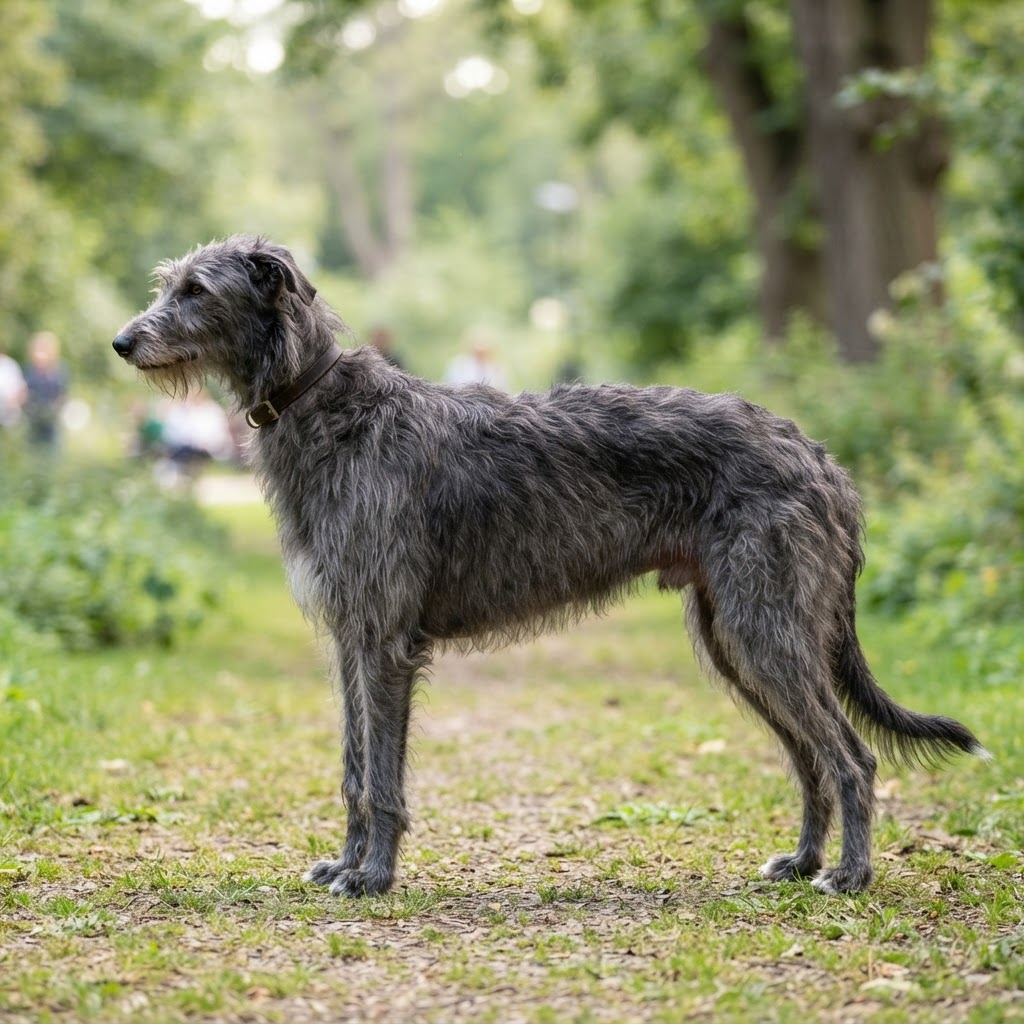
Deerhound
Male: approximately 45.5 kg, Female: approximately 36.5 kg
Male: minimum 76 cm, Female: minimum 71 cm at the shoulder
8-11 years
Scotland
About the Deerhound
The Scottish Deerhound is an ancient and aristocratic sighthound, often referred to as the 'Royal Dog of Scotland.' They possess a striking, rugged appearance characterized by a wiry, weather-resistant coat and a tall, lean silhouette. Despite their historical prowess as formidable hunters of red deer, they are remarkably gentle and quiet indoors, often described as 'couch potatoes' once their exercise needs have been met. They are deeply devoted to their families but maintain a certain level of dignified independence. In the home, they are unobtrusive and rarely bark, making them excellent companions for those with sufficient space. Their grace and size require an owner who understands the needs of giant breeds, particularly regarding joint health and bloat prevention. They thrive in environments where they can stretch their legs in secure areas but are equally content to spend hours lounging by their owner's feet. Their temperament is soft and sensitive, requiring a gentle hand in training and socialisation.
Breed Standard
Key characteristics from the breed standard
In the show ring, the Scottish Deerhound is a masterpiece of functional elegance, exhibiting a 'shaggy majesty' that is entirely unique. Their movement is the breed's hallmark—an easy, active, and true-stepping gait that covers ground with rhythmic, low-striding grace, reflecting their history of traversing the rugged Scottish Highlands. They possess a commanding silhouette with a long, well-arched neck and a graceful sweep of the loin.
In Australia
Evidence suggests the Deerhound arrived in Australia during the mid-19th century, where they were initially utilized by early settlers for hunting dingoes and hunting kangaroos.
Bred For
Hunting Red Deer by stalking and coursing.
Temperament
Dignified, gentle, docile, and friendly; they are known for their quiet and loyal nature.
Health Conditions Reported in the Breed
(/), (), Osteorcoma, Factor VII Deficiency, , and sensitivity to certain anaesthetics.
Exercise Needs
Moderate to High; they require a safe, fenced area for daily free-running (coursing) to satisfy their natural instincts, complemented by long daily walks.
Grooming Needs
Low to Moderate; they require weekly brushing of their wiry coat to remove dead hair and occasional stripping to maintain coat texture.
Living Suitability
Not suited for apartments; they require a large, securely fenced yard or acreage due to their size and need for short bursts of high-speed running.
Good with Kids
Excellent with children, being very gentle and patient, though their size means they may accidentally knock over toddlers.
Good with Other Pets
Generally good with other large dogs; however, they have a very high prey drive and may not be suitable for homes with cats or small pets.
Trainability
Intelligent but independent; they can be stubborn and may lack the 'eager to please' trait of working breeds, requiring patient, reward-based training.
Coat & Colours
Shaggy, thick, and wiry; weather-resistant and harsh to the touch.. Dark blue-grey, dark and light greys, brindles, and yellows, sandy red or red fawn with black points.
Exercise needs vary by age, fitness, health, weather and individual temperament. Consult your veterinarian for an exercise plan appropriate for your dog.
Things to Consider
Every breed has its quirks — here's what to know
Prospective owners should be aware that Scottish Deerhounds are more likely to experience Gastric Dilatation-Volvulus (bloat), a life-threatening condition where the stomach twists; this requires immediate veterinary intervention and careful meal management. They are also predisposed to Dilated Cardiomyopathy (DCM), meaning regular heart checks are advisable as they age. A known genetic trait in the breed is Factor VII deficiency, which can affect blood clotting—this doesn't mean every Deerhound will have it, but DNA testing is essential for peace of mind. Their incredibly high prey drive means they can never be trusted off-lead in unenclosed areas, as they will chase anything that moves. While they are quiet, they are giant dogs that take up significant space on furniture and in cars. They are also known for being 'counter surfers' due to their height. Many Deerhounds can be sensitive to rich, fatty commercial foods, often thriving much better on a lean, fresh-food diet that supports their sensitive digestive systems and maintains their lean muscle mass.
Feeding Guide for Your Deerhound
Healthy Weight
36-46 kg
Daily Feeding Amount (general starting estimate)
900-1150 grams
For a Scottish Deerhound, a fresh or raw diet should focus on high-quality muscle meat like Majestik's lean Kangaroo or Beef. Some owners use smaller divided meals and avoid strenuous activity immediately around feeding. These steps cannot guarantee prevention of gastric dilatation-volvulus. Seek urgent veterinary care if bloat is suspected. Ensure the diet includes approximately 10% secreting organs and 10% edible bone for calcium, supplemented with fresh leafy greens.
Feeding quantities are general starting estimates only. Individual needs vary with body condition, weight trends, age, health and activity. Ingredient percentages alone do not guarantee complete and balanced nutrition — consult a veterinarian for individualised dietary guidance.
Ingredient percentages alone do not guarantee complete and balanced nutrition. Seek veterinary or qualified canine nutrition guidance for individualised dietary advice. Raw feeding, specific proteins or fresh foods should not be presented as preventing, treating or managing breed health conditions without veterinary diagnosis and supervision.
Majestik's Recommended Feeding Approach
Breed Diet Notes
A high-quality diet rich in lean proteins with controlled fat levels to maintain an athletic frame and support heart health; specifically formulated for giant breeds to prevent rapid growth in puppyhood.
The ideal raw diet for a Deerhound should prioritize lean proteins to prevent unnecessary strain on their heart and joints. Majestik Kangaroo is an exceptional choice due to its low-fat content, which is ideal for this breed's athletic metabolism. Include Majestik Beef for iron and essential amino acids. The ratio should be approximately 70% muscle meat, 10% bone (such as soft beef ribs), 10% organs (liver and kidney), and 10% blended vegetables like spinach and carrots to provide antioxidants. Some owners use smaller divided meals and avoid strenuous activity immediately around feeding. These steps cannot guarantee prevention of gastric dilatation-volvulus. Seek urgent veterinary care if bloat is suspected.
These are general breed-level notes only. The appropriate food and serving amount depend on the individual dog's age, health, body condition, activity and tolerance.
Majestik Recommendation
Majestik BARF meals follow our practical 70/10/10/10 approach: approximately 70% quality meat and protein ingredients, 10% edible bone, 10% vegetables and 10% offal. This gives customers a convenient fresh-food option without needing to source and portion every ingredient themselves.
Our Beef, Lamb and Roo BARF meals provide convenient fresh-food options, with suitable proteins chosen or rotated according to the individual dog.
Suitable for different needs
- Healthy adult: Majestik adult Beef, Lamb or Roo BARF meal.
- Puppy: Majestik Premium Puppy.
- Senior: Majestik Senior Blend.
- Working or highly active dog: Suitable Majestik adult meal with quantity adjusted to workload and body condition.
- Protein trial: One Majestik protein at a time.
Recommended Majestik BARF Meals


This is a practical starting recommendation for healthy dogs. Individual needs vary with age, health, body condition and activity.
Deerhound Feeding Calculator
Personalised raw and cooked feeding recommendations based on your dog's profile
Ideal — Ribs palpable without excess fat. Visible waist. Abdominal tuck present.
Have a question about your Deerhound? Dog Health AI
Why Majestik?
Fresh, raw pet food made with integrity in South Australia
Australian Made
Made in Two Wells, South Australia
Freshly Prepared
Real meat, organs, bone & wholefood ingredients
No Fillers
No cheap fillers or artificial preservatives
Family Owned
Locally owned and operated
Local Delivery
Delivery across Adelaide & selected areas
Secure Checkout
Secure payment via Shopify checkout
Subscribe & Save on Deerhound Meals
Get your Deerhound's fresh and raw meals delivered every two or four weeks. Small subscriptions are combined into a four-week box. Pause, skip or cancel anytime.
Breed Records & Facts
Average Litter Size
6-8 puppies
Deerhound Owner Feedback
Real experiences and tips from Deerhound owners
No reviews yet
Be the first to share your experience with this breed
Other Giant Breeds
References & Sources
Breed information verified against recognised breed authorities and veterinary evidence.