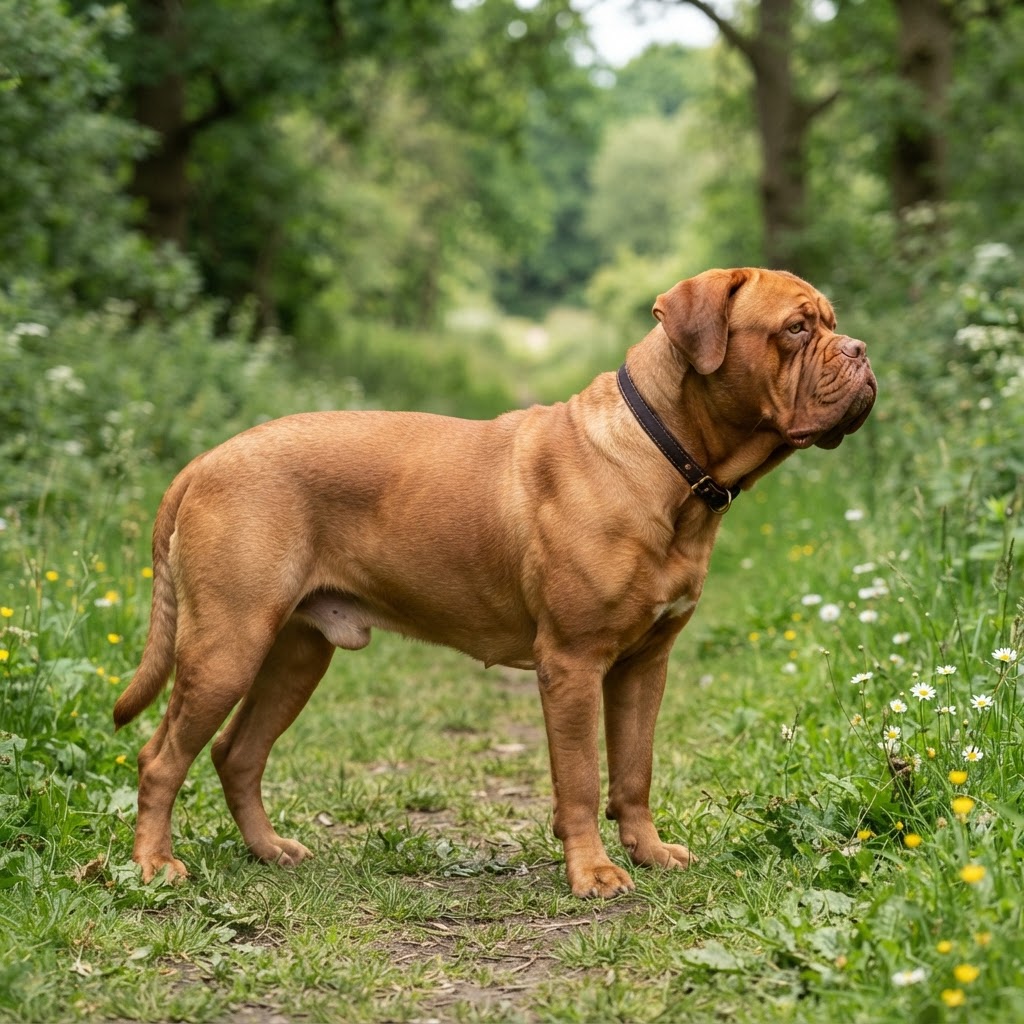
Dogue de Bordeaux
Male: 50-65 kg; Female: 45-55 kg
Male: 60-68 cm; Female: 58-66 cm at the shoulder
5-8 years
France
About the Dogue de Bordeaux
The Dogue de Bordeaux, often referred to as the French Mastiff, is one of the most ancient French breeds, characterized by a massive, furrowed head and a powerful, athletic build. Despite their formidable appearance, they are known for their 'gentle giant' persona, forming deep, inseparable bonds with their families. They possess a thick, muscular neck and a broad chest, conveying a sense of immense strength and grounded stability. In a home environment, the Dogue is remarkably quiet and laid-back, often content to spend hours relaxing near their owners. They are naturally vigilant and protective without being unnecessarily aggressive, serving as a deterrent through presence alone. Their expressive faces, marked by deep wrinkles and soulful eyes, reflect a breed that is as sensitive as it is strong, requiring a patient and consistent approach to companionship.
Breed Standard
Key characteristics from the breed standard
In the show ring, the Dogue de Bordeaux is a spectacle of power and 'brachicephalic' beauty, marked by a head that is arguably the largest in the canine world relative to body size. Judges look for the distinctive 'trapezoid' head shape, deep facial wrinkles, and a well-defined stop. Their movement should be free and supple, despite their mass, covering the ground with an effortless, rolling gait. What truly distinguishes this breed is its 'sour-puss' expression—a unique combination of ruggedness and nobility that commands the attention of the entire ring.
In Australia
The first Dogue de Bordeaux is believed to have arrived in Australia in 1992, with further foundation specimens that may have arrived in 1993. These first specimens were imported from the United States to establish the breed within the Australian National Kennel Council framework, leading to formal recognition in 1994, according to the Dogue de Bordeaux Club of Australia.
Bred For
Guardianship, big game hunting (boar), carting, and historical arena work.
Temperament
Devoted, courageous, and calm; an affectionate guardian with a balanced, vigilant temperament.
Health Conditions Reported in the Breed
(), Hip and , (), , and , and brachycephalic-related respiratory issues.
Exercise Needs
Moderate daily activity; approximately 45-60 minutes of low-impact walking and mental stimulation, avoiding strenuous exercise during peak heat.
Grooming Needs
Minimal coat maintenance but high-intensity wrinkle care; daily cleaning of facial folds and weekly brushing.
Living Suitability
Suited to homes with medium-to-large yards; while they are calm indoors, their physical size and potential for slobber make them less ideal for cramped apartment living.
Good with Kids
Excellent with children, often showing great patience; however, their sheer size requires supervision around toddlers to avoid accidental knocks.
Good with Other Pets
Generally good with other household pets if socialised early, though can show dominance toward dogs of the same sex.
Trainability
Moderately trainable; intelligent but possesses an independent streak that requires firm, positive reinforcement and early socialisation.
Coat & Colours
Fine, short, and soft to the touch.. Self-colored in all shades of fawn, from mahogany to Isabella. A black, brown, or no mask is acceptable.
Exercise needs vary by age, fitness, health, weather and individual temperament. Consult your veterinarian for an exercise plan appropriate for your dog.
Things to Consider
Every breed has its quirks — here's what to know
Prospective owners should be prepared for significant slobber and drool, particularly after eating or drinking; keeping a 'drool rag' handy is a staple of the Dogue lifestyle. They are more likely to experience Gastric Dilatation-Volvulus (Bloat) due to their deep chests, so owners must implement slow-feeding strategies and rest periods after meals. Skin fold management is a daily commitment to prevent yeast infections or dermatitis in their deep facial wrinkles. While they are wonderfully affectionate, their short lifespan is a heart-breaking reality of the breed. They are also more likely to develop heat intolerance due to their facial structure, requiring air-conditioning or cool spaces during Australian summers. Additionally, some Dogues may develop sensitivities to standard commercial grains or fillers, often thriving much better on a fresh, species-appropriate diet. These traits are part of their unique charm, and with the right care, they are incredibly rewarding companions.
Feeding Guide for Your Dogue de Bordeaux
Healthy Weight
45-65 kg
Daily Feeding Amount (general starting estimate)
1100-1650 grams
For a Dogue de Bordeaux, a fresh or raw diet should focus on high-quality muscle meat and moderate bone content. As a giant breed, they require approximately 2-3% of their ideal body weight daily. Some owners use smaller divided meals and avoid strenuous activity immediately around feeding. These steps cannot guarantee prevention of gastric dilatation-volvulus. Seek urgent veterinary care if bloat is suspected.
Feeding quantities are general starting estimates only. Individual needs vary with body condition, weight trends, age, health and activity. Ingredient percentages alone do not guarantee complete and balanced nutrition — consult a veterinarian for individualised dietary guidance.
Ingredient percentages alone do not guarantee complete and balanced nutrition. Seek veterinary or qualified canine nutrition guidance for individualised dietary advice. Raw feeding, specific proteins or fresh foods should not be presented as preventing, treating or managing breed health conditions without veterinary diagnosis and supervision.
Majestik's Recommended Feeding Approach
Breed Diet Notes
A high-quality, biologically appropriate raw or fresh diet rich in animal proteins and fats, specifically formulated for giant breeds to manage growth rates and support joint health.
A balanced raw diet for a Dogue de Bordeaux should include diverse proteins such as Majestik's Beef, Lamb, and Kangaroo to support muscle mass without excessive weight gain. Include 10% organ meats (liver/kidney) for essential vitamins and 10% edible bone for calcium. Given their joint sensitivities, supplemental glucosamine and omega-3 fatty acids from fish or Majestik's specialised mixes are highly recommended to support their heavy frame.
These are general breed-level notes only. The appropriate food and serving amount depend on the individual dog's age, health, body condition, activity and tolerance.
Majestik Recommendation
Majestik BARF meals follow our practical 70/10/10/10 approach: approximately 70% quality meat and protein ingredients, 10% edible bone, 10% vegetables and 10% offal. This gives customers a convenient fresh-food option without needing to source and portion every ingredient themselves.
Our Beef, Lamb and Roo BARF meals provide convenient fresh-food options, with suitable proteins chosen or rotated according to the individual dog.
Suitable for different needs
- Healthy adult: Majestik adult Beef, Lamb or Roo BARF meal.
- Puppy: Majestik Premium Puppy.
- Senior: Majestik Senior Blend.
- Working or highly active dog: Suitable Majestik adult meal with quantity adjusted to workload and body condition.
- Protein trial: One Majestik protein at a time.
This is a practical starting recommendation for healthy dogs. Individual needs vary with age, health, body condition and activity.
Dogue de Bordeaux Feeding Calculator
Personalised raw and cooked feeding recommendations based on your dog's profile
Ideal — Ribs palpable without excess fat. Visible waist. Abdominal tuck present.
Have a question about your Dogue de Bordeaux? Dog Health AI
Why Majestik?
Fresh, raw pet food made with integrity in South Australia
Australian Made
Made in Two Wells, South Australia
Freshly Prepared
Real meat, organs, bone & wholefood ingredients
No Fillers
No cheap fillers or artificial preservatives
Family Owned
Locally owned and operated
Local Delivery
Delivery across Adelaide & selected areas
Secure Checkout
Secure payment via Shopify checkout
Subscribe & Save on Dogue de Bordeaux Meals
Get your Dogue de Bordeaux's fresh and raw meals delivered every two or four weeks. Small subscriptions are combined into a four-week box. Pause, skip or cancel anytime.
Breed Records & Facts
Average Litter Size
6-8 puppies
Dogue de Bordeaux Owner Feedback
Real experiences and tips from Dogue de Bordeaux owners
No reviews yet
Be the first to share your experience with this breed
Other Giant Breeds
References & Sources
Breed information verified against recognised breed authorities and veterinary evidence.
