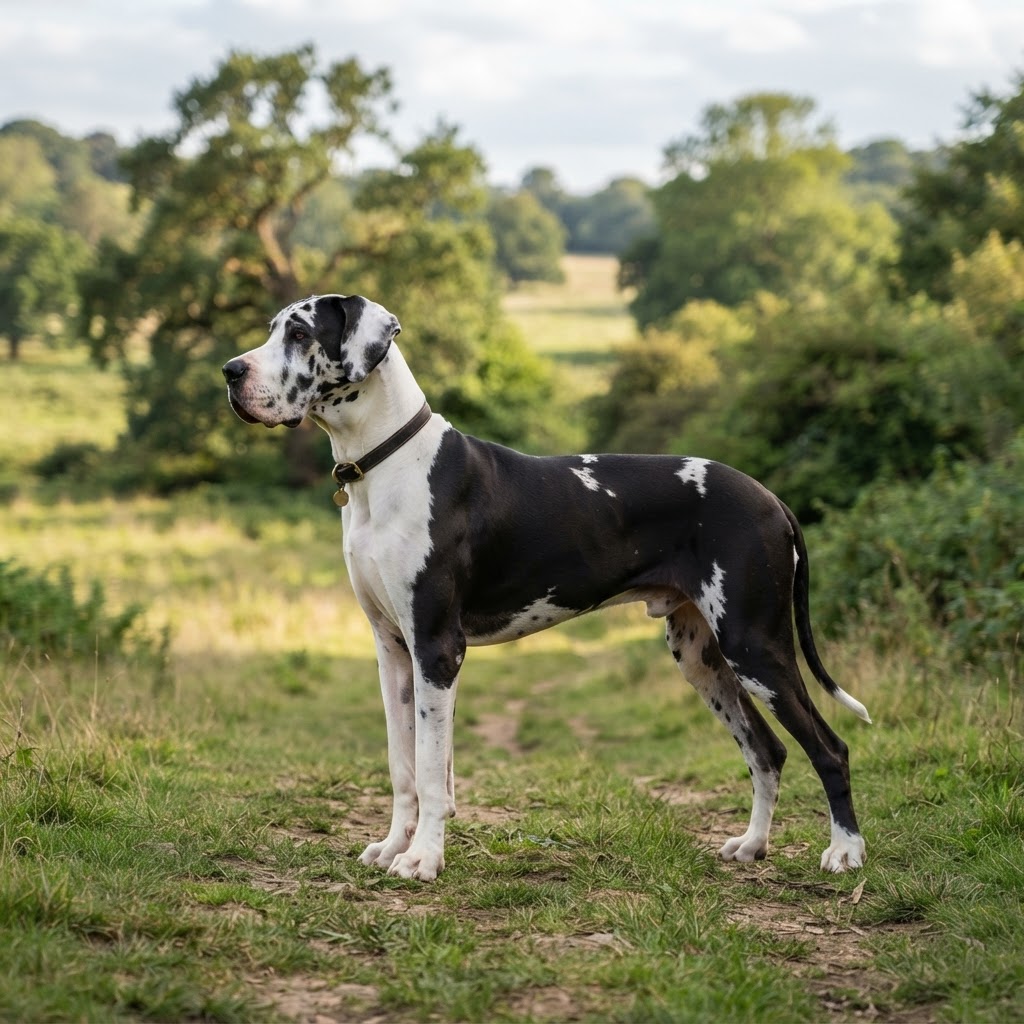
Great Dane
Male: 54-80 kg, Female: 45-59 kg
Male: 76-81 cm at the shoulder, Female: 71-76 cm at the shoulder
7-10 years
Germany
About the Great Dane
The Great Dane, often called the 'Apollo of Dogs,' is a giant breed that combines dignity, strength, and elegance with a remarkably kind nature. Despite their massive stature, they are one of the most affectionate breeds, frequently seeking physical contact with their owners and often attempting to sit in laps like a much smaller dog. Their imposing presence makes them excellent natural deterrents, yet their true character is one of gentleness and patience, making them beloved family companions. Historically developed in Germany to hunt ferocious wild boars, the breed's modern temperament has been carefully refined into a reliable and friendly household member. They are well-balanced and powerful dogs with a rectangular silhouette and a noble carriage. Owning a Great Dane is a significant commitment due to their size, specific health needs, and relatively short lifespan, but for those who can accommodate their space and dietary requirements, they offer a level of devotion and soulful companionship that is truly unique in the canine world.
Breed Standard
Key characteristics from the breed standard
In the show ring, the Great Dane should exude a 'statuesque' quality, moving with a long, easy stride that covers ground effortlessly. Judges look for a long, rectangular head with a parallel planes, a deep muzzle, and a pronounced stop. The neck should be long, muscular, and well-arched, leading into a strong back and deep brisket.
In Australia
While the Great Dane was documented in Australia as early as 1897 by Walter Beilby and shown around 1900, authoritative records of the breed's initial introduction and early history remain sparse, according to The Great Dane Club of NSW.
Bred For
Originally bred for hunting wild boar and as a guardian of estates.
Temperament
Gentle, affectionate, confident, and dependable. Known for being a 'gentle giant', they are patient and rarely aggressive, yet courageous guardians when necessary.
Health Conditions Reported in the Breed
(), Hip and , (), (), and Osteorcoma.
Exercise Needs
Moderate daily exercise. Exercise should be avoided immediately before and after meals to reduce bloat risk. Puppies should not be over-exercised to protect growing joints.
Grooming Needs
Minimal grooming is required due to the short coat. Weekly brushing with a rubber mitt or firm bristle brush will manage shedding. Regular nail trimming is vital due to their weight.
Living Suitability
While they are surprisingly calm indoors and can live in smaller spaces if their exercise needs are met, they are best suited to homes with enough room to move without knocking over furniture. A medium-to-large yard is ideal, but they is best suited to indoor living as they are highly social and sensitive to temperature extremes.
Good with Kids
Generally excellent with children of all ages; they are patient and gentle. However, their sheer size means they can accidentally knock over toddlers, so supervision is always recommended.
Good with Other Pets
Typically good with other dogs and can live peacefully with cats if socialised early. Their prey drive is generally low, but their size requires managed introductions.
Trainability
Highly intelligent and eager to please, though they can occasionally be stubborn or slow to physically respond. They respond best to positive reinforcement and early, consistent obedience training to ensure they are manageable as they grow.
Coat & Colours
Short, dense, sleek, and smooth.. Fawn, Brindle, Blue, Black, Harlequin, and Mantle.
Exercise needs vary by age, fitness, health, weather and individual temperament. Consult your veterinarian for an exercise plan appropriate for your dog.
Things to Consider
Every breed has its quirks — here's what to know
Great Danes are more likely to experience Gastric Dilatation-Volvulus (Bloat), a life-threatening emergency where the stomach twists. Practically, this means owners must feed multiple small meals, avoid exercise around feeding times, and consider a prophylactic gastropexy surgery. They are also prone to joint issues like hip dysplasia and heart conditions like DCM, which may require regular veterinary screening and a carefully managed diet to prevent obesity. Many Great Danes are notorious 'slobberers,' especially after drinking, so keeping a 'drool rag' handy is a part of Dane ownership. Their size also means they can take up an entire sofa and may lean their full weight against your legs as a sign of affection. As with all giant breeds, they have a shorter lifespan than smaller dogs, which is a significant emotional consideration for families. While they are sensitive souls, their immense love and presence more than compensate for these specific care requirements.
Feeding Guide for Your Great Dane
Healthy Weight
45-80 kg
Daily Feeding Amount (general starting estimate)
1,200-2,400 grams
For an adult Great Dane, feed approximately 2-3% of their ideal body weight in fresh food daily. This should be split into at least two, preferably three, smaller meals to mitigate the risk of bloat. For a 60 kg dog, this equates to 1,200g to 1,800g of fresh food per day. Monitor body condition closely; you should be able to feel but not clearly see the ribs.
Feeding quantities are general starting estimates only. Individual needs vary with body condition, weight trends, age, health and activity. Ingredient percentages alone do not guarantee complete and balanced nutrition — consult a veterinarian for individualised dietary guidance.
Ingredient percentages alone do not guarantee complete and balanced nutrition. Seek veterinary or qualified canine nutrition guidance for individualised dietary advice. Raw feeding, specific proteins or fresh foods should not be presented as preventing, treating or managing breed health conditions without veterinary diagnosis and supervision.
Majestik's Recommended Feeding Approach
Breed Diet Notes
A high-quality, nutrient-dense diet is essential. They require careful management of calcium and phosphorus levels, especially during puppyhood, and benefit from fresh, highly digestible proteins to maintain lean muscle without putting excess strain on joints.
A Great Dane's raw diet should focus on high-quality muscle meat like Majestik’s Beef or Kangaroo to provide lean protein for muscle maintenance. Inclusion of low-glycemic vegetables like spinach or broccoli provides necessary antioxidants. Given their predisposition to joint issues, inclusion of Omega-3 fatty acids from fish or green-lipped mussel is beneficial. Avoid feeding large amounts of high-fat proteins like lamb exclusively; a rotational diet is best.
These are general breed-level notes only. The appropriate food and serving amount depend on the individual dog's age, health, body condition, activity and tolerance.
Majestik Recommendation
Majestik BARF meals follow our practical 70/10/10/10 approach: approximately 70% quality meat and protein ingredients, 10% edible bone, 10% vegetables and 10% offal. This gives customers a convenient fresh-food option without needing to source and portion every ingredient themselves.
Our Beef, Lamb and Roo BARF meals provide convenient fresh-food options, with suitable proteins chosen or rotated according to the individual dog.
Suitable for different needs
- Healthy adult: Majestik adult Beef, Lamb or Roo BARF meal.
- Puppy: Majestik Premium Puppy.
- Senior: Majestik Senior Blend.
- Working or highly active dog: Suitable Majestik adult meal with quantity adjusted to workload and body condition.
- Protein trial: One Majestik protein at a time.
This is a practical starting recommendation for healthy dogs. Individual needs vary with age, health, body condition and activity.
Great Dane Feeding Calculator
Personalised raw and cooked feeding recommendations based on your dog's profile
Ideal — Ribs palpable without excess fat. Visible waist. Abdominal tuck present.
Have a question about your Great Dane? Dog Health AI
Why Majestik?
Fresh, raw pet food made with integrity in South Australia
Australian Made
Made in Two Wells, South Australia
Freshly Prepared
Real meat, organs, bone & wholefood ingredients
No Fillers
No cheap fillers or artificial preservatives
Family Owned
Locally owned and operated
Local Delivery
Delivery across Adelaide & selected areas
Secure Checkout
Secure payment via Shopify checkout
Subscribe & Save on Great Dane Meals
Get your Great Dane's fresh and raw meals delivered every two or four weeks. Small subscriptions are combined into a four-week box. Pause, skip or cancel anytime.
Breed Records & Facts
Average Litter Size
8-10 puppies
Great Dane Owner Feedback
Real experiences and tips from Great Dane owners
Other Giant Breeds
References & Sources
Breed information verified against recognised breed authorities and veterinary evidence.
