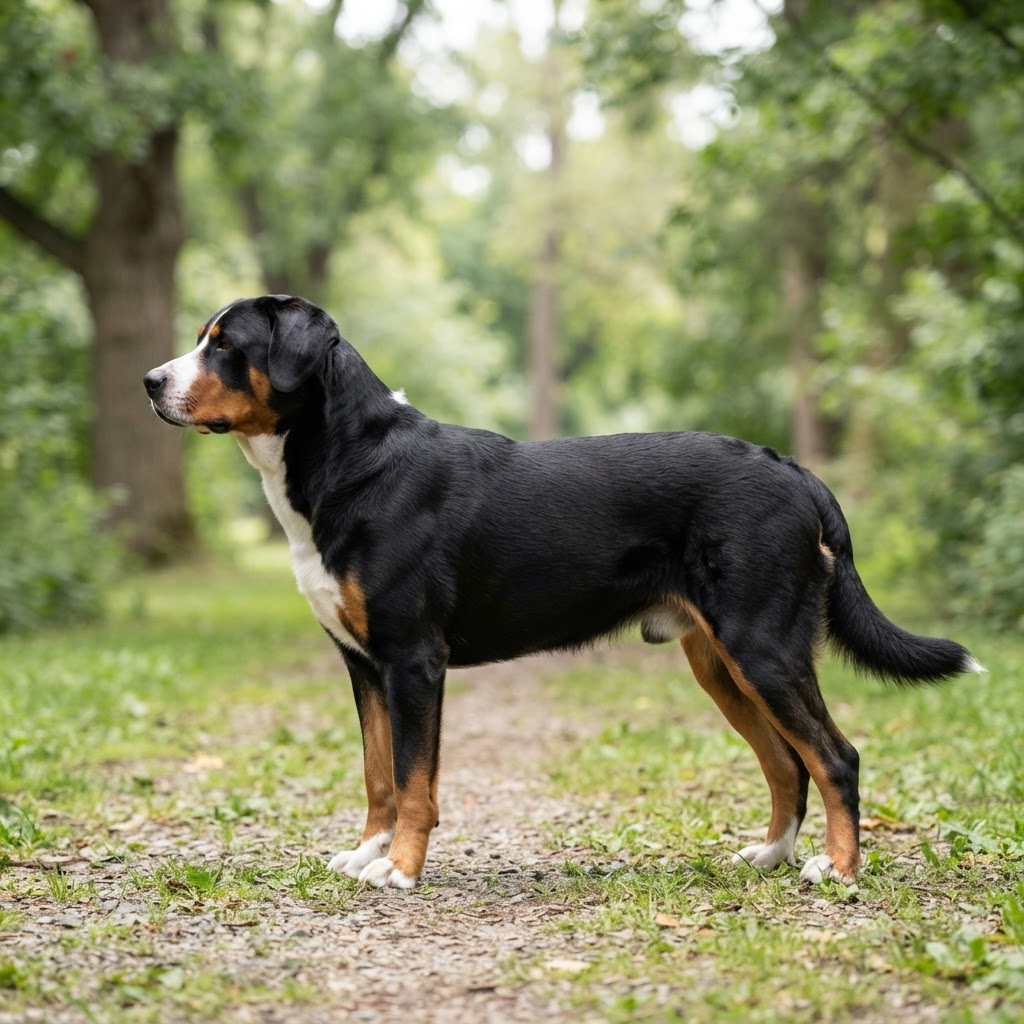
Great Swiss Mountain Dog
Male: 48-70 kg, Female: 38-54 kg
60-72 cm at the shoulder (Males: 65-72 cm, Females: 60-68 cm)
8-11 years
Switzerland
About the Great Swiss Mountain Dog
The Great Swiss Mountain Dog (GSMD) is the largest and oldest of the four Swiss Sennenhund breeds, originally developed as a 'poor man's horse' for farmers in the Swiss Alps. These majestic dogs are characterised by their powerful, muscular build and striking tri-colour coat. Unlike many giant breeds, they were bred for endurance and versatility, excelling at pulling heavy carts to market and herding cattle across varied terrain. They possess a calm, dependable nature, making them excellent family companions for those with the space to accommodate their size. In the home, the 'Swissie' is known for being an affectionate, steadfast protector. They are deeply bonded to their families and tend to be socially confident with strangers when properly socialised. While they are lower in energy compared to herding breeds, they require consistent mental stimulation and physical activity to prevent boredom and maintain a healthy weight. Their slow maturation process means they often retain puppy-like exuberance well into their third year, requiring a patient and consistent approach to training.
Breed Standard
Key characteristics from the breed standard
The Great Swiss Mountain Dog in the show ring is a study in functional power and steadfast symmetry. The breed standard calls for a dog that is 'sturdy' and 'heavy-boned' without being cumbersome. Their movement should be ground-covering and efficient, showing the drive and reach necessary for a day of draft work. The tri-colour mantle must be clearly defined, with a jet-black base, rich rust markings, and clean white blazes. They move with a fluid, rhythmic power that is unique among the giant working breeds, demonstrating a physical capability that is perfectly balanced by their alert and watchful expression.
Bred For
Draft work (pulling carts), cattle driving, and livestock guarding
Temperament
Alert, faithful, vigilant, bold, and socially confident
Health Conditions Reported in the Breed
(), Splenic (a condition where the spleen twists on its axis, more common in this breed), Hip and , () of the shoulder, (), and Greater Swiss Mountain Dog Incontinence (specifically in females).
Exercise Needs
Moderate daily exercise including long walks (30-45 minutes), mental engagement through scent work or obedience, and opportunities for drafting or pulling activities if physically mature.
Grooming Needs
Regular brushing once or twice a week to remove loose undercoat; daily brushing is required during heavy seasonal shedding periods. Monthly nail trims and ear cleaning are essential.
Living Suitability
Best suited to a large home with a medium-to-large yard. They are generally too large for apartment living and thrive when they have space to patrol. Access to cool, climate-controlled areas is essential during Australian summers.
Good with Kids
Excellent with children; they are known for being patient and 'gentle giants,' though their size may lead to accidental bumps with toddlers.
Good with Other Pets
Generally good with other dogs and pets if socialised early, though some may exhibit a prey drive toward smaller animals due to their farm-dog heritage.
Trainability
Highly intelligent and eager to please, but can possess an independent or stubborn streak. They respond best to positive reinforcement and consistent, firm leadership. Housebreaking can sometimes take longer than average.
Coat & Colours
Short, dense double coat with a thick undercoat.. Distinctive tri-colour: black base with symmetrical rust (tan) and white markings.
Exercise needs vary by age, fitness, health, weather and individual temperament. Consult your veterinarian for an exercise plan appropriate for your dog.
Things to Consider
Every breed has its quirks — here's what to know
The Great Swiss Mountain Dog is a large, deep-chested breed, which makes them more likely to experience Gastric Dilatation-Volvulus (Bloat) and Splenic Torsion—this means owners must be vigilant about feeding routines and exercise timing. They are also prone to certain joint conditions like hip and elbow dysplasia, so maintaining a lean weight is vital for their longevity. This breed is known for its 'Swissie Shed,' particularly during seasonal changes, where they can shed heavily; regular grooming is a must to manage the hair. As jowled dogs, some may be prone to slobber, especially after eating or drinking, though they are generally cleaner than many other mastiff-type breeds. Prospective owners should be aware that Swissies are slow to mature both physically and mentally, often staying in a 'puppy phase' for up to three years, which requires consistent patience during training. They can be quite 'mouthy' as youngsters and may try to pull on the lead due to their draft-dog instincts—a bit of training goes a long way in turning that power into a polite walking companion. Additionally, some females may develop breed-specific urinary incontinence, which is typically manageable with veterinary guidance. They are also sensitive to heat; during hot Australian days, they must have access to shade and cool water to prevent heatstroke. Many Swissies are more likely to develop digestive sensitivities on standard commercial kibbles; they often thrive on a fresh, highly digestible raw diet which can help reduce gas and promote better stool quality. This doesn't mean every dog will have these issues, but being prepared ensures a happy, healthy life together.
Feeding Guide for Your Great Swiss Mountain Dog
Healthy Weight
38-70 kg (Male: 48-70 kg, Female: 38-54 kg)
Daily Feeding Amount (general starting estimate)
950-2100 grams of fresh food per day, depending on the individual dog's weight and activity level (based on 2-3% of body weight).
A fresh or raw diet should consist of 2-3% of the dog's ideal adult body weight daily. For a Great Swiss Mountain Dog, this translates to a substantial volume of food. Some owners use smaller divided meals and avoid strenuous activity immediately around feeding. These steps cannot guarantee prevention of gastric dilatation-volvulus. Seek urgent veterinary care if bloat is suspected. Provide high-quality proteins like beef and kangaroo, balanced with edible bone, organ meat, and fibrous vegetables. For an average 55kg adult, we recommend approximately 1100g to 1650g of fresh food per day, adjusted for activity levels.
Feeding quantities are general starting estimates only. Individual needs vary with body condition, weight trends, age, health and activity. Ingredient percentages alone do not guarantee complete and balanced nutrition — consult a veterinarian for individualised dietary guidance.
Ingredient percentages alone do not guarantee complete and balanced nutrition. Seek veterinary or qualified canine nutrition guidance for individualised dietary advice. Raw feeding, specific proteins or fresh foods should not be presented as preventing, treating or managing breed health conditions without veterinary diagnosis and supervision.
Majestik's Recommended Feeding Approach
Breed Diet Notes
A high-quality, large-breed specific diet focusing on lean proteins and controlled calorie intake to prevent obesity and support joint health. Fresh and raw diets are often preferred for digestibility.
Some owners use smaller divided meals and avoid strenuous activity immediately around feeding. These steps cannot guarantee prevention of gastric dilatation-volvulus. Seek urgent veterinary care if bloat is suspected. High-quality protein sources available from Majestik, such as lean Beef, Lamb, and Kangaroo, should form the base. Adding green-lipped mussel or glucosamine supplements is highly recommended to support their heavy-duty joints. Include low-glycemic vegetables like spinach, zucchini, and pumpkin for fibre. Avoid high-carb fillers which can lead to weight gain and digestive upset. Ensure meals are fed in a slowed-down manner and never immediately before or after vigorous exercise.
These are general breed-level notes only. The appropriate food and serving amount depend on the individual dog's age, health, body condition, activity and tolerance.
Majestik Recommendation
Majestik BARF meals follow our practical 70/10/10/10 approach: approximately 70% quality meat and protein ingredients, 10% edible bone, 10% vegetables and 10% offal. This gives customers a convenient fresh-food option without needing to source and portion every ingredient themselves.
Our Beef, Lamb and Roo BARF meals provide convenient fresh-food options, with suitable proteins chosen or rotated according to the individual dog.
Suitable for different needs
- Healthy adult: Majestik adult Beef, Lamb or Roo BARF meal.
- Puppy: Majestik Premium Puppy.
- Senior: Majestik Senior Blend.
- Working or highly active dog: Suitable Majestik adult meal with quantity adjusted to workload and body condition.
- Protein trial: One Majestik protein at a time.
This is a practical starting recommendation for healthy dogs. Individual needs vary with age, health, body condition and activity.
Great Swiss Mountain Dog Feeding Calculator
Personalised raw and cooked feeding recommendations based on your dog's profile
Ideal — Ribs palpable without excess fat. Visible waist. Abdominal tuck present.
Have a question about your Great Swiss Mountain Dog? Dog Health AI
Why Majestik?
Fresh, raw pet food made with integrity in South Australia
Australian Made
Made in Two Wells, South Australia
Freshly Prepared
Real meat, organs, bone & wholefood ingredients
No Fillers
No cheap fillers or artificial preservatives
Family Owned
Locally owned and operated
Local Delivery
Delivery across Adelaide & selected areas
Secure Checkout
Secure payment via Shopify checkout
Subscribe & Save on Great Swiss Mountain Dog Meals
Get your Great Swiss Mountain Dog's fresh and raw meals delivered every two or four weeks. Small subscriptions are combined into a four-week box. Pause, skip or cancel anytime.
Breed Records & Facts
Average Litter Size
8-10 puppies
Great Swiss Mountain Dog Owner Feedback
Real experiences and tips from Great Swiss Mountain Dog owners
Other Giant Breeds
References & Sources
Breed information verified against recognised breed authorities and veterinary evidence.
