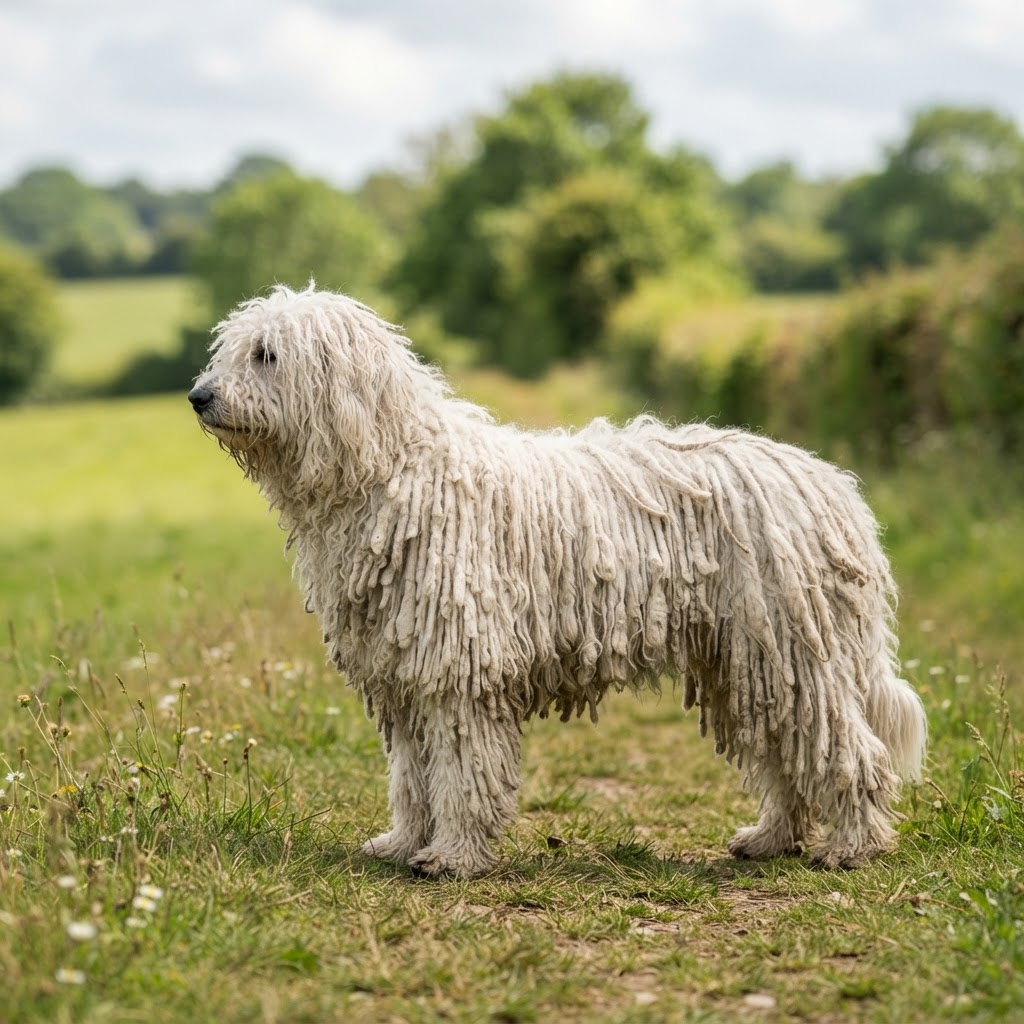
Komondor
Male: 50-60 kg, Female: 40-50 kg
Male: minimum 70 cm, Female: minimum 65 cm at the shoulder
10-12 years
Hungary
About the Komondor
The Komondor is a striking and powerful livestock guardian breed, instantly recognizable by its heavy, white corded coat that resembles dreadlocks. Originating from Hungary, where it was brought by the Cumans, this breed was developed to work independently, often spending days alone with the flock. Its unique coat served two purposes: protecting the dog from extreme weather and predators' teeth, and allowing it to blend in perfectly with the sheep it guarded. In a domestic setting, the Komondor remains a serious protector. They are not 'playful' in the traditional sense, often preferring to observe their surroundings calmly until a perceived threat arises. They are deeply devoted to their family but naturally suspicious of strangers. Due to their size and independent nature, they require a confident owner who understands the nuances of livestock guardian breeds.
Breed Standard
Key characteristics from the breed standard
In the show ring, the Komondor is a spectacle of structural integrity and unique texture. The breed standard demands a powerful, bone-heavy frame that remains agile under the weight of the cords. Movement is characterized by a long, low-reaching stride that is stealthy and effortless, a nod to its history as a silent guardian. The coat must be white and properly corded, with a dense, felt-like texture that shows meticulous care.
Bred For
Livestock guardian dog, specifically for protecting sheep and cattle against predators like wolves and bears.
Temperament
Independent, protective, stoic, loyal, and vigilant.
Health Conditions Reported in the Breed
, (), (eyelid inward rolling), and external ear infections. Skin issues can arise if the corded coat is not dried properly.
Exercise Needs
Moderate daily exercise required. While not a high-intensity athlete, they need long walks and mental stimulation to prevent boredom-based guarding behaviors.
Grooming Needs
Extremely high and specialized. The coat must be manually 'split' into cords as it mats naturally. Washing is a full-day process, and drying can take up to 48 hours to prevent mildew or skin rot.
Living Suitability
can adapt to apartment livings. Requires a large, securely fenced yard or acreage. They thrive in cooler climates and need plenty of space to patrol.
Good with Kids
Generally protective and patient with their own family's children, but their size and protective instincts mean supervision is essential, especially with visiting children.
Good with Other Pets
Can be dominant with other dogs; usually accepting of other household pets if raised with them, though their instinct is to 'guard' the pack.
Trainability
Highly intelligent but very independent and sometimes stubborn. They do not respond well to repetitive tasks or harsh correction; they require consistent, respectful leadership.
Coat & Colours
Corded, heavy, double coat; the outer coat is coarse and the undercoat is fine, forming permanent tassels or cords.. White
Exercise needs vary by age, fitness, health, weather and individual temperament. Consult your veterinarian for an exercise plan appropriate for your dog.
Things to Consider
Every breed has its quirks — here's what to know
Prospective owners must be prepared for the significant grooming commitment; the corded coat is a magnet for debris and requires hours of manual maintenance to prevent painful matting. Because of their deep chests, Komondors are more likely to experience Gastric Dilatation-Volvulus (Bloat)—a life-threatening emergency; owners should learn the signs and consider preventative measures like smaller, frequent meals. They are predisposed to hip dysplasia, so keeping them at a lean, healthy weight is vital for joint longevity. As independent guardians, they may exhibit 'stranger danger' and require extensive socialization from puppyhood to ensure they can distinguish between a guest and a threat. Their coat also makes them highly sensitive to heat; in Australian summers, they must have access to climate-controlled spaces and should never be over-exerted in the sun. Finally, like many large breeds, they may develop sensitive digestion on standard commercial kibbles, often showing marked improvement in stool quality and gas reduction when transitioned to a Majestik fresh, raw diet.
Feeding Guide for Your Komondor
Healthy Weight
40-60 kg
Daily Feeding Amount (general starting estimate)
1000-1500 grams
Adult Komondors should be fed twice daily to minimize bloat risk. For a typical 50 kg adult, a fresh food diet should consist of approximately 1000 to 1500 grams per day, divided into two meals. This amount should be adjusted based on activity levels and body condition.
Feeding quantities are general starting estimates only. Individual needs vary with body condition, weight trends, age, health and activity. Ingredient percentages alone do not guarantee complete and balanced nutrition — consult a veterinarian for individualised dietary guidance.
Ingredient percentages alone do not guarantee complete and balanced nutrition. Seek veterinary or qualified canine nutrition guidance for individualised dietary advice. Raw feeding, specific proteins or fresh foods should not be presented as preventing, treating or managing breed health conditions without veterinary diagnosis and supervision.
Majestik's Recommended Feeding Approach
Breed Diet Notes
High-quality diet rich in animal proteins to support muscle mass and skin health. Some owners use smaller divided meals and avoid strenuous activity immediately around feeding. These steps cannot guarantee prevention of gastric dilatation-volvulus. Seek urgent veterinary care if bloat is suspected.
A balanced raw diet for a Komondor should focus on lean proteins available from Majestik, such as Kangaroo and Beef, to maintain a healthy weight. g., duck necks or beef brisket), and 10% organ meat (liver and kidney). The addition of omega-3 rich fish like salmon can support skin health under their heavy cords. Avoid high-carbohydrate fillers to reduce the risk of fermentation in the gut.
These are general breed-level notes only. The appropriate food and serving amount depend on the individual dog's age, health, body condition, activity and tolerance.
Majestik Recommendation
Majestik BARF meals follow our practical 70/10/10/10 approach: approximately 70% quality meat and protein ingredients, 10% edible bone, 10% vegetables and 10% offal. This gives customers a convenient fresh-food option without needing to source and portion every ingredient themselves.
Our Beef, Lamb and Roo BARF meals provide convenient fresh-food options, with suitable proteins chosen or rotated according to the individual dog.
Suitable for different needs
- Healthy adult: Majestik adult Beef, Lamb or Roo BARF meal.
- Puppy: Majestik Premium Puppy.
- Senior: Majestik Senior Blend.
- Working or highly active dog: Suitable Majestik adult meal with quantity adjusted to workload and body condition.
- Protein trial: One Majestik protein at a time.
Recommended Majestik BARF Meals


This is a practical starting recommendation for healthy dogs. Individual needs vary with age, health, body condition and activity.
Komondor Feeding Calculator
Personalised raw and cooked feeding recommendations based on your dog's profile
Ideal — Ribs palpable without excess fat. Visible waist. Abdominal tuck present.
Have a question about your Komondor? Dog Health AI
Why Majestik?
Fresh, raw pet food made with integrity in South Australia
Australian Made
Made in Two Wells, South Australia
Freshly Prepared
Real meat, organs, bone & wholefood ingredients
No Fillers
No cheap fillers or artificial preservatives
Family Owned
Locally owned and operated
Local Delivery
Delivery across Adelaide & selected areas
Secure Checkout
Secure payment via Shopify checkout
Subscribe & Save on Komondor Meals
Get your Komondor's fresh and raw meals delivered every two or four weeks. Small subscriptions are combined into a four-week box. Pause, skip or cancel anytime.
Breed Records & Facts
Average Litter Size
3-10 puppies
Komondor Owner Feedback
Real experiences and tips from Komondor owners
No reviews yet
Be the first to share your experience with this breed
Other Giant Breeds
References & Sources
Breed information verified against recognised breed authorities and veterinary evidence.