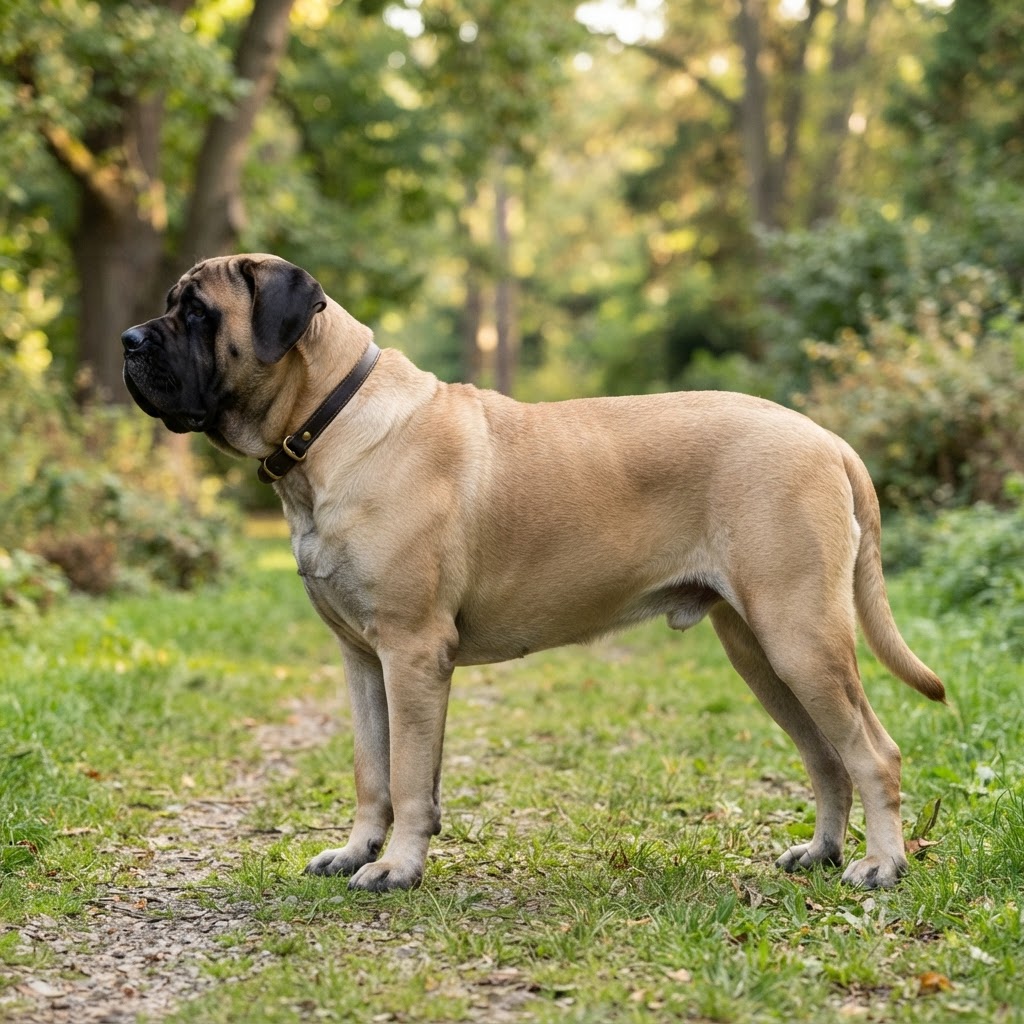
Mastiff
Male: 73-104 kg, Female: 54-77 kg
Dogs: minimum 76 cm; Bitches: minimum 70 cm at the shoulder.
6-10 years
United Kingdom
About the Mastiff
The Mastiff, often referred to as the Old English Mastiff, is one of the most ancient and imposing of all dog breeds. Characterised by its massive head and sturdy, rectangular frame, this 'lion among dogs' exudes a sense of quiet power and nobility. Despite their historical role as fierce guardians and hunters of big game, modern Mastiffs are renowned for their 'gentle giant' persona, forming deep, devoted bonds with their families and exhibiting a remarkably patient and docile nature. Physically, they are the epitome of grandeur and symmetry. Their large, heavy bones and powerful musculature require careful management during their long puppyhood to ensure skeletal health. In a home environment, they are surprisingly low-energy indoors, often preferring to lounge near their owners. Their protective instincts are innate and discerning; they rarely need to bark to deter an intruder, as their sheer physical presence is usually sufficient. Owning a Mastiff is a commitment to providing significant space and high-quality nutrition to support their immense physical needs.
Breed Standard
Key characteristics from the breed standard
In the show ring, the Mastiff must demonstrate 'grandeur and symmetry'—a specific requirement of the ANKC standard. Judges look for a massive, square head with a short, broad muzzle and a distinct black mask that reaches the eyes. The body should be broad and deep, with a level topline and powerful hindquarters. Their movement is unique among giants; it should be 'powerful and easy,' showing a smooth reach and drive that belies their immense weight.
Bred For
Guardian of estates, big game hunter, and war dog.
Temperament
Dignified, calm, affectionate, and protective without being aggressive.
Health Conditions Reported in the Breed
(), Hip and , , (), and , and .
Exercise Needs
Moderate daily exercise consisting of long, steady walks; avoid strenuous activity during high heat or peak growth phases.
Grooming Needs
Low maintenance; weekly brushing with a rubber mitt to manage shedding and regular cleaning of facial wrinkles.
Living Suitability
Requires a home with significant indoor floor space and a secure yard; generally unsuitable for apartment living due to size and mobility needs.
Good with Kids
Excellent with children, often very patient; however, their size means they can accidentally knock over toddlers.
Good with Other Pets
Generally good with other dogs and pets if socialised early, though they may be indifferent or occasionally dominant with same-sex dogs.
Trainability
Highly intelligent but can be independent or stubborn; responds best to positive reinforcement and early, consistent socialization.
Coat & Colours
Short and close-lying; slightly coarser over the neck and shoulders.. Apricot, silver-fawn, or dark fawn-brindle, always with a black mask.
Exercise needs vary by age, fitness, health, weather and individual temperament. Consult your veterinarian for an exercise plan appropriate for your dog.
Things to Consider
Every breed has its quirks — here's what to know
Mastiffs are more likely to experience Gastric Dilatation-Volvulus (Bloat), a life-threatening condition where the stomach twists; owners must be vigilant about slow feeding and avoiding exercise around meal times. They are also predisposed to hip and elbow dysplasia, meaning keeping them at a lean, healthy weight is critical to reduce joint stress. Prospective owners should be prepared for 'Mastiff slobber'—they are heavy droolers, especially after drinking or when food is present, so keeping a 'slobber cloth' handy is a way of life. Their facial wrinkles can trap moisture and debris, making them prone to skin fold dermatitis; daily wiping of the folds is a simple but necessary routine. Additionally, like many giant breeds, they may have a shorter lifespan than smaller dogs, making every year with them particularly precious. While they are docile, their sheer size means they can be 'bulls in a china shop' in small spaces, and their slow-maturing nature requires a patient hand in training.
Feeding Guide for Your Mastiff
Healthy Weight
70-95 kg
Daily Feeding Amount (general starting estimate)
1400-2850 grams
Some owners use smaller divided meals and avoid strenuous activity immediately around feeding. These steps cannot guarantee prevention of gastric dilatation-volvulus. Seek urgent veterinary care if bloat is suspected. Adult Mastiffs generally require 2% to 3% of their ideal body weight in fresh food. For an average 85 kg male, this equates to approximately 1700g to 2550g of food per day. Puppies require specialized feeding schedules to prevent rapid growth, which can lead to joint deformities.
Feeding quantities are general starting estimates only. Individual needs vary with body condition, weight trends, age, health and activity. Ingredient percentages alone do not guarantee complete and balanced nutrition — consult a veterinarian for individualised dietary guidance.
Ingredient percentages alone do not guarantee complete and balanced nutrition. Seek veterinary or qualified canine nutrition guidance for individualised dietary advice. Raw feeding, specific proteins or fresh foods should not be presented as preventing, treating or managing breed health conditions without veterinary diagnosis and supervision.
Majestik's Recommended Feeding Approach
Breed Diet Notes
A high-quality, large-breed specific diet, preferably fresh or raw, focusing on controlled growth in puppies and lean muscle maintenance in adults.
A balanced raw diet for a Mastiff should prioritise high-quality proteins such as Majestik's Beef or Kangaroo to maintain lean muscle without excessive fat. Given their susceptibility to joint issues, the inclusion of glucosamine-rich sources like green-lipped mussels or fish is beneficial. Avoid high-carbohydrate fillers that contribute to unnecessary weight gain, as excess weight is detrimental to their joints.
These are general breed-level notes only. The appropriate food and serving amount depend on the individual dog's age, health, body condition, activity and tolerance.
Majestik Recommendation
Majestik BARF meals follow our practical 70/10/10/10 approach: approximately 70% quality meat and protein ingredients, 10% edible bone, 10% vegetables and 10% offal. This gives customers a convenient fresh-food option without needing to source and portion every ingredient themselves.
Our Beef, Lamb and Roo BARF meals provide convenient fresh-food options, with suitable proteins chosen or rotated according to the individual dog.
Suitable for different needs
- Healthy adult: Majestik adult Beef, Lamb or Roo BARF meal.
- Puppy: Majestik Premium Puppy.
- Senior: Majestik Senior Blend.
- Working or highly active dog: Suitable Majestik adult meal with quantity adjusted to workload and body condition.
- Protein trial: One Majestik protein at a time.
This is a practical starting recommendation for healthy dogs. Individual needs vary with age, health, body condition and activity.
Mastiff Feeding Calculator
Personalised raw and cooked feeding recommendations based on your dog's profile
Ideal — Ribs palpable without excess fat. Visible waist. Abdominal tuck present.
Have a question about your Mastiff? Dog Health AI
Why Majestik?
Fresh, raw pet food made with integrity in South Australia
Australian Made
Made in Two Wells, South Australia
Freshly Prepared
Real meat, organs, bone & wholefood ingredients
No Fillers
No cheap fillers or artificial preservatives
Family Owned
Locally owned and operated
Local Delivery
Delivery across Adelaide & selected areas
Secure Checkout
Secure payment via Shopify checkout
Subscribe & Save on Mastiff Meals
Get your Mastiff's fresh and raw meals delivered every two or four weeks. Small subscriptions are combined into a four-week box. Pause, skip or cancel anytime.
Breed Records & Facts
Biggest Recorded
Zorba (Aicama Zorba of La-Susa) recorded at 155.58 kg (343 lbs) in 1989.
Average Litter Size
8-10 puppies
Mastiff Owner Feedback
Real experiences and tips from Mastiff owners
Other Giant Breeds
References & Sources
Breed information verified against recognised breed authorities and veterinary evidence.
