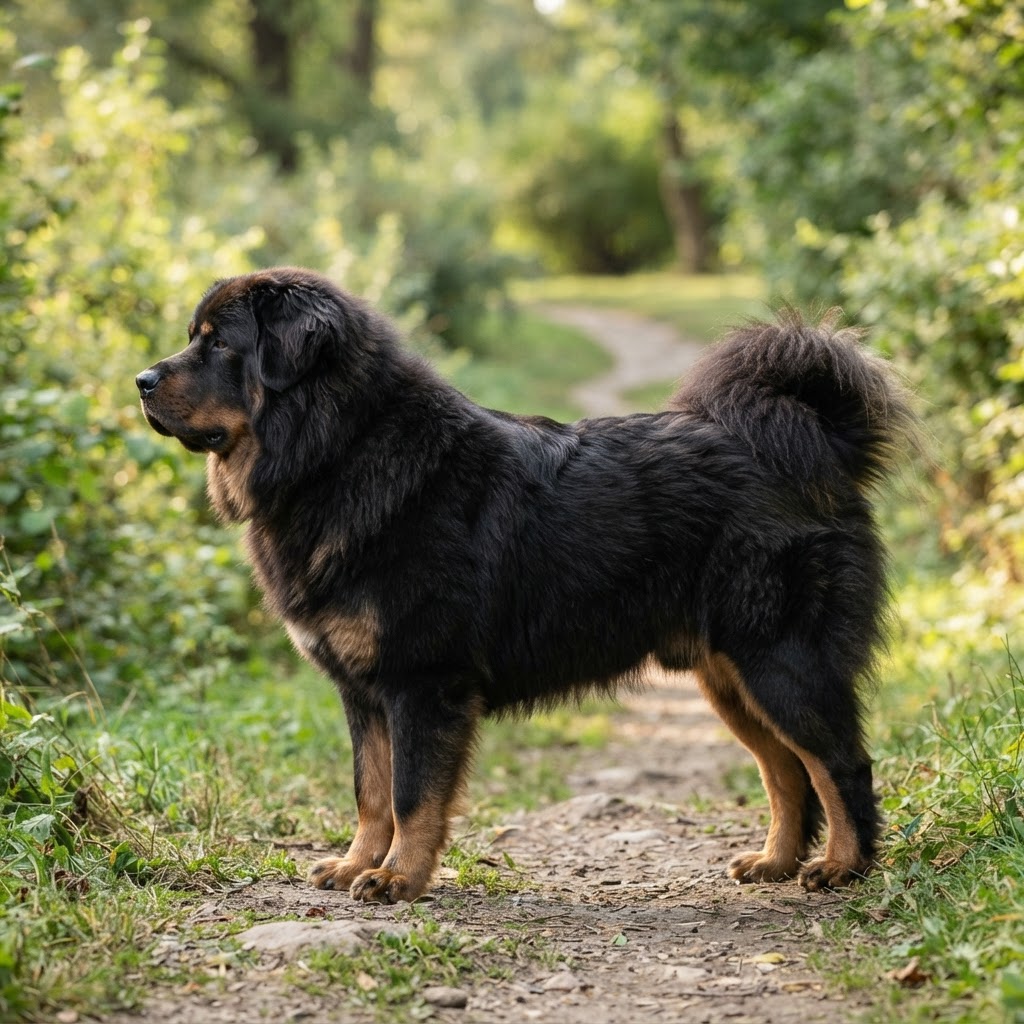
Tibetan Mastiff
Male: 45-73 kg; Female: 34-54 kg
Male: 66 cm minimum; Female: 61 cm minimum at the shoulder.
10-14 years
Tibet
About the Tibetan Mastiff
The Tibetan Mastiff, or Do-Khyi, is a primitive guardian breed that exudes a sense of ancient nobility and immense power. Originating in the harsh climates of the Himalayas, these dogs were developed to be solitary sentinels, capable of protecting flocks and homesteads from formidable predators like wolves and snow leopards. Physically, they are characterized by their massive bone structure, impressive mane-like ruff, and a solemn, watchful expression that commands respect. In a domestic setting, the Tibetan Mastiff is a quiet and composed companion, often described as 'cat-like' in their independence. They are not typical 'eager-to-please' dogs; rather, they are intelligent thinkers who assess situations before acting. They are known for being nocturnal by nature, remaining more alert at night. Owning a Tibetan Mastiff requires a patient leader who understands the breed's instinctual need to protect and their deep-seated independence.
Breed Standard
Key characteristics from the breed standard
In the show ring, the Tibetan Mastiff is a figure of majestic substance and balance. The breed standard emphasizes a heavy, broad head with a marked stop and a deep muzzle, topped by a dense ruff that frames the face. Their movement should be effortless and powerful, covering ground with a light-footed but purposeful stride that belies their giant size. The tail must be set high and curled loosely over the back, covered in long, dense feathering.
In Australia
The Tibetan Mastiff was first introduced to Australia in 1986 following the efforts of dedicated enthusiasts to establish the breed within the Australian National Kennel Council framework, as reported by the Tibetan Mastiff Club of Victoria.
Bred For
Guardian of livestock, monasteries, and villages in the Himalayan mountains.
Temperament
Independent, protective, aloof with strangers, and deeply loyal to family.
Health Conditions Reported in the Breed
Hip and , , and (eyelid issues), Canine Inherited Demyelinative Neuropathy (CIDN), and ().
Exercise Needs
Moderate; they require daily walks for mental stimulation and physical health but are not high-intensity athletes. They prefer patrolling their territory to playing fetch.
Grooming Needs
High; they require at least weekly brushing, increasing to daily during their annual 'blow-out' of the undercoat. Their thick double coat requires thorough attention to prevent matting.
Living Suitability
Requires a large, securely fenced yard or acreage. can adapt to apartment living living due to their size, protective nature, and tendency for nocturnal barking.
Good with Kids
Generally good with their 'own' children, but their protective instincts can be triggered by rough play with visiting children. Supervision is mandatory.
Good with Other Pets
Can be dominant with other dogs of the same sex. Usually tolerant of other household pets if raised with them from a young age.
Trainability
Moderate; they are highly intelligent but independent and stubborn. They require consistent, firm, and patient training without harsh methods.
Coat & Colours
Thick double coat with a heavy, stand-off outer coat and a soft, woolly undercoat.. Black, Black and Tan, Blue, Blue and Tan, Gold, and various shades of Red.
Exercise needs vary by age, fitness, health, weather and individual temperament. Consult your veterinarian for an exercise plan appropriate for your dog.
Things to Consider
Every breed has its quirks — here's what to know
Tibetan Mastiffs are predisposed to hip and elbow dysplasia, which can lead to mobility issues; maintaining a lean weight and choosing a fresh-food diet can help support joint health. Like many deep-chested giant breeds, they are more likely to experience Gastric Dilatation-Volvulus (Bloat), so smaller, frequent meals are recommended. Prospective owners should be aware that this breed is instinctively nocturnal and may bark frequently at night to 'alert' the household to perceived threats. Their heavy double coat leads to significant seasonal shedding, requiring intense grooming sessions to prevent matting and skin irritations like hot spots. They can be quite independent and stubborn during training, often choosing to ignore commands if they don't see a reason to obey. Additionally, they may be sensitive to certain ingredients in commercial kibble, potentially developing skin allergies or digestive upset; many owners find they thrive on a Majestik fresh-food diet tailored to their needs. While they are devoted protectors, their aloofness with strangers requires dedicated socialization to ensure they remain manageable in public settings.
Feeding Guide for Your Tibetan Mastiff
Healthy Weight
34-73 kg
Daily Feeding Amount (general starting estimate)
850g to 1,800g (based on 2-3% of body weight for typical adult ranges)
For an adult Tibetan Mastiff, fresh food intake should be approximately 2-3% of their ideal body weight daily. Some owners use smaller divided meals and avoid strenuous activity immediately around feeding. These steps cannot guarantee prevention of gastric dilatation-volvulus. Seek urgent veterinary care if bloat is suspected. Puppies require higher percentages and specific calcium-to-phosphorus ratios for giant-breed growth.
Feeding quantities are general starting estimates only. Individual needs vary with body condition, weight trends, age, health and activity. Ingredient percentages alone do not guarantee complete and balanced nutrition — consult a veterinarian for individualised dietary guidance.
Ingredient percentages alone do not guarantee complete and balanced nutrition. Seek veterinary or qualified canine nutrition guidance for individualised dietary advice. Raw feeding, specific proteins or fresh foods should not be presented as preventing, treating or managing breed health conditions without veterinary diagnosis and supervision.
Majestik's Recommended Feeding Approach
Breed Diet Notes
High-quality protein-rich diet; many thrive on fresh, raw diets that mirror their ancestral intake of lean meats and organ meats while avoiding excessive fillers that contribute to weight gain.
Majestik Pet Food's range of lean beef, kangaroo, and lamb provides excellent protein sources. Kangaroo is particularly beneficial for its low-fat content, helping to manage weight. Inclusion of leafy greens and antioxidants can support their immune system, while raw meaty bones like lamb necks help maintain dental hygiene and provide essential minerals.
These are general breed-level notes only. The appropriate food and serving amount depend on the individual dog's age, health, body condition, activity and tolerance.
Majestik Recommendation
Majestik BARF meals follow our practical 70/10/10/10 approach: approximately 70% quality meat and protein ingredients, 10% edible bone, 10% vegetables and 10% offal. This gives customers a convenient fresh-food option without needing to source and portion every ingredient themselves.
Our Beef, Lamb and Roo BARF meals provide convenient fresh-food options, with suitable proteins chosen or rotated according to the individual dog.
Suitable for different needs
- Healthy adult: Majestik adult Beef, Lamb or Roo BARF meal.
- Puppy: Majestik Premium Puppy.
- Senior: Majestik Senior Blend.
- Working or highly active dog: Suitable Majestik adult meal with quantity adjusted to workload and body condition.
- Protein trial: One Majestik protein at a time.
Recommended Majestik BARF Meals


This is a practical starting recommendation for healthy dogs. Individual needs vary with age, health, body condition and activity.
Tibetan Mastiff Feeding Calculator
Personalised raw and cooked feeding recommendations based on your dog's profile
Ideal — Ribs palpable without excess fat. Visible waist. Abdominal tuck present.
Have a question about your Tibetan Mastiff? Dog Health AI
Why Majestik?
Fresh, raw pet food made with integrity in South Australia
Australian Made
Made in Two Wells, South Australia
Freshly Prepared
Real meat, organs, bone & wholefood ingredients
No Fillers
No cheap fillers or artificial preservatives
Family Owned
Locally owned and operated
Local Delivery
Delivery across Adelaide & selected areas
Secure Checkout
Secure payment via Shopify checkout
Subscribe & Save on Tibetan Mastiff Meals
Get your Tibetan Mastiff's fresh and raw meals delivered every two or four weeks. Small subscriptions are combined into a four-week box. Pause, skip or cancel anytime.
Breed Records & Facts
Average Litter Size
5-10 puppies
Tibetan Mastiff Owner Feedback
Real experiences and tips from Tibetan Mastiff owners
No reviews yet
Be the first to share your experience with this breed
Other Giant Breeds
References & Sources
Breed information verified against recognised breed authorities and veterinary evidence.